
Search ×
Home Istanbul
Topkapı Palace
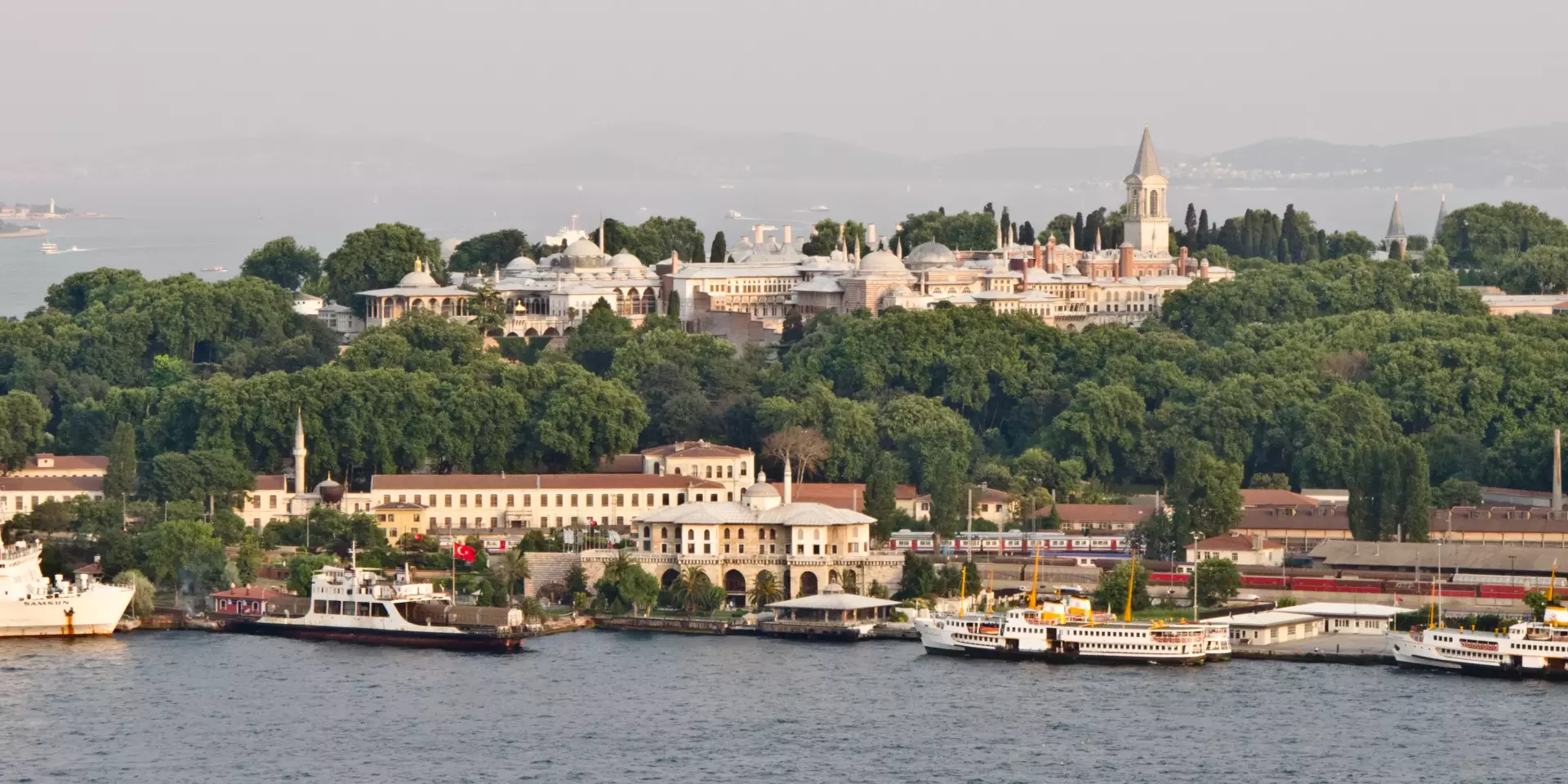
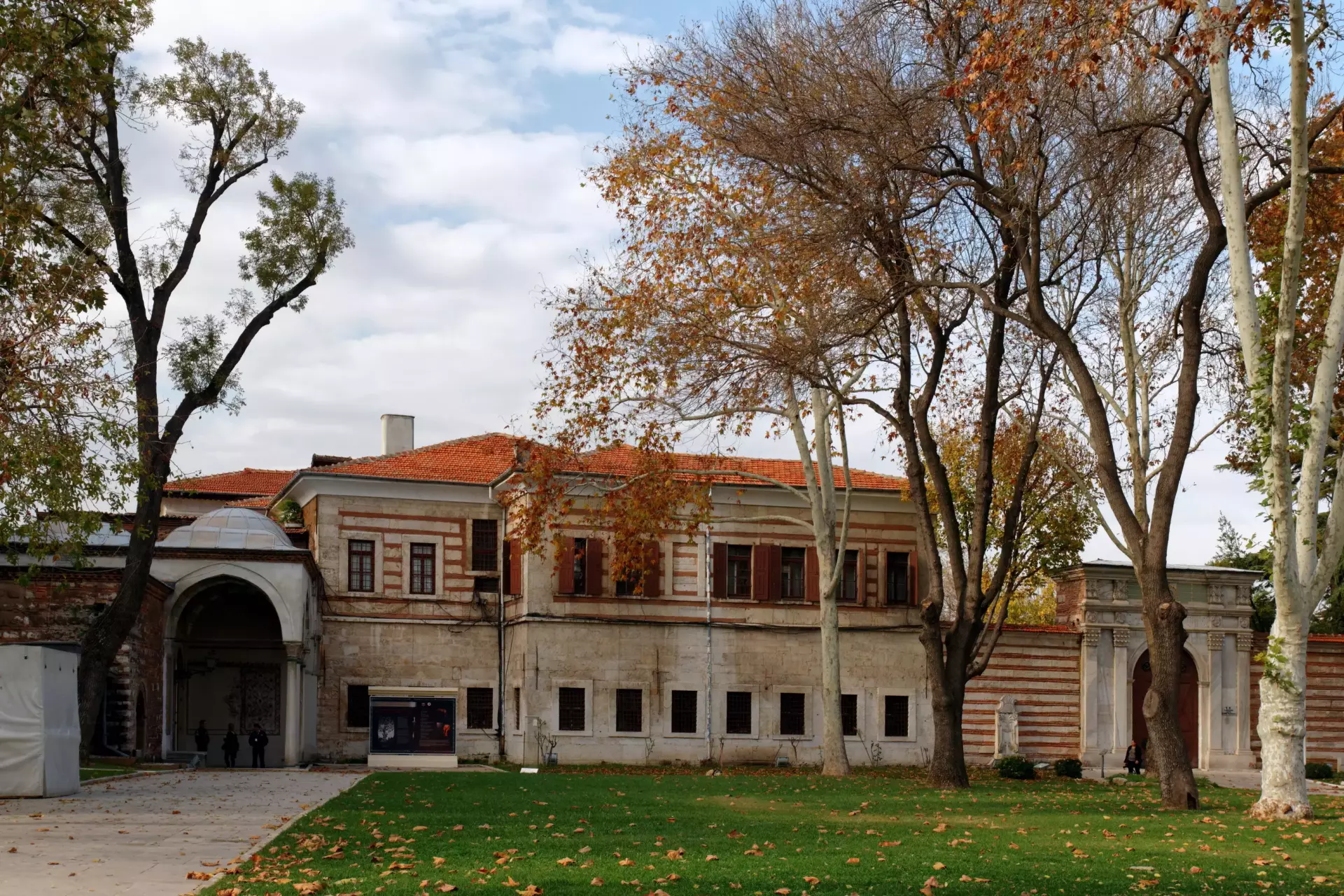
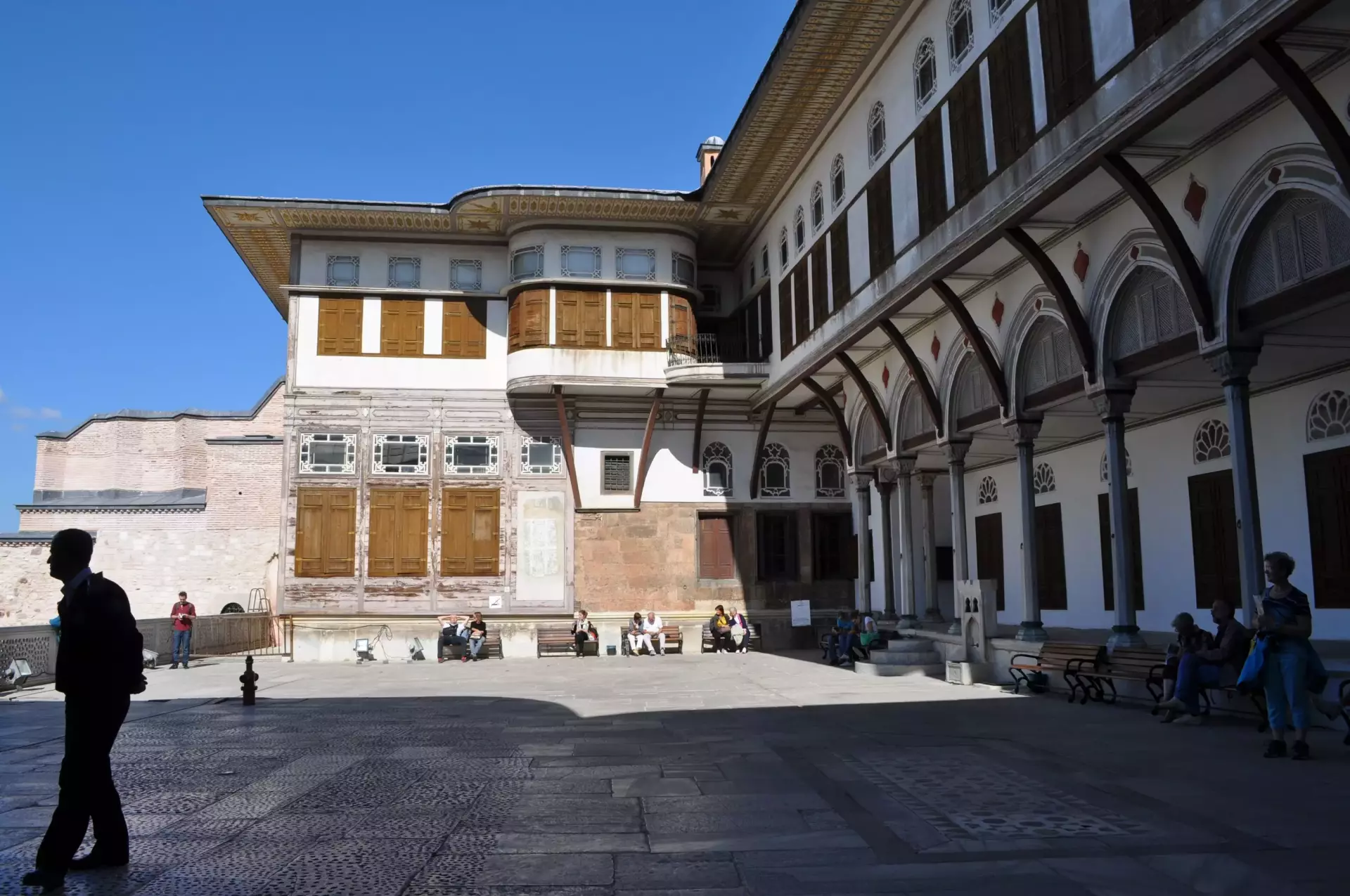
The Topkapı Palace in Istanbul served as the primary residence of the Ottoman Sultans for approximately 400 years (1465-1856) of their 624-year reign. The Imperial Harem, part of the sultan's private apartments, contained over 400 rooms and housed the sultan's mother, the Valide Sultan, his concubines and wives, his family, and their servants. The harem consisted of interconnected buildings and structures with hallways and courtyards, offering specific living spaces for each service team and hierarchical group. Although the exact number of rooms is unknown, it likely exceeds 100, only a few of which are open to the public. These apartments were assigned to the harem eunuchs, the Chief Harem Eunuch, the concubines, the queen mother, the sultan's consorts, the princes, and the favorites. Entry beyond the harem gates was restricted to the sultan, the queen mother, the sultan's consorts and favorites, the princes, the concubines, and the eunuchs guarding the harem. The harem wing was added at the end of the 16th century, with many rooms and features designed by Mimar Sinan. The harem section opens into the Second Courtyard, also accessed by the Gate of Carriages. Over time, the structures expanded towards the Golden Horn side, forming a complex that reflects the stylistic evolution of palace design from the 15th century to the early 19th century. Parts of the harem were redecorated in an Italian-inspired Ottoman Baroque style under sultans Mahmud I and Osman III, contrasting with the classical Ottoman decor.
Español:  Palacio de Topkapı, Estambul, Turquía.English:  Topkapı  Palace, Istanbul, Turkey.Հայերեն:  Թոփքափը ամրոց, Ստամբուլ, ԹուրքիաTürkçe:  Topkapı Sarayı, İstanbul, Türkiye.
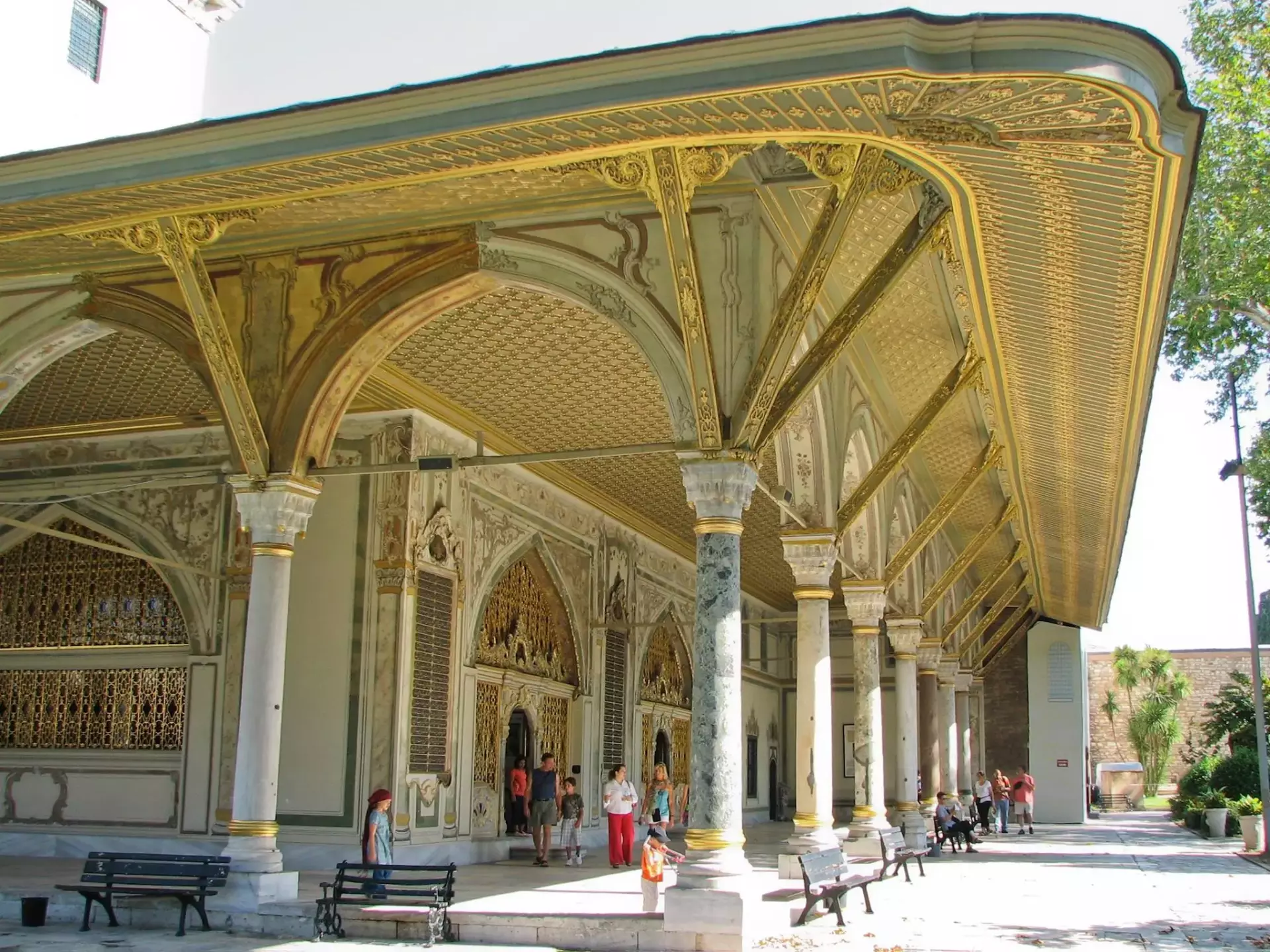
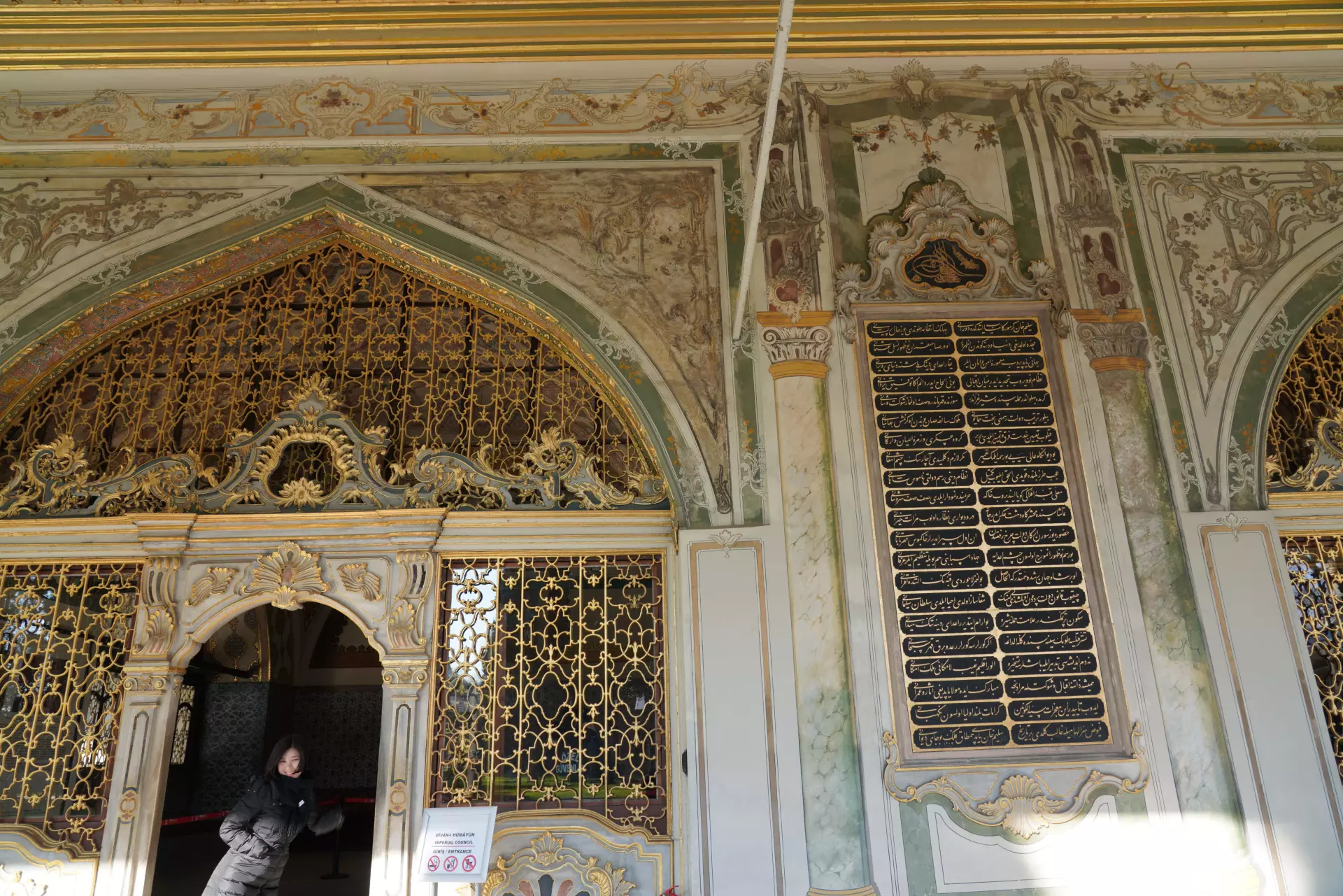
বাংলা:  ইস্তাম্বুলের তোপকাপি প্রাসাদের ইম্পেরিয়াল কাউন্সিলের বহির্ভাগ
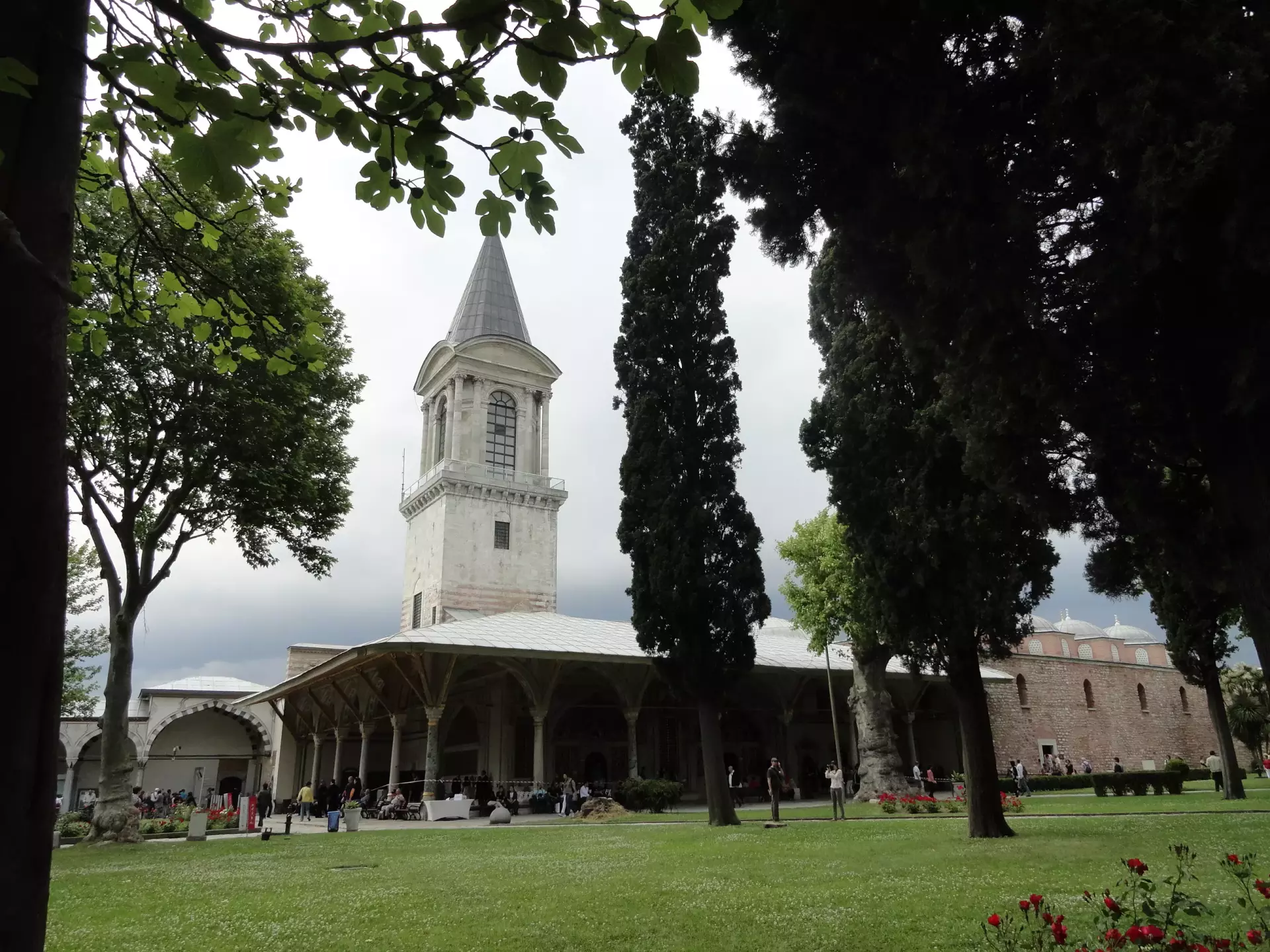
On focus is the famous Tower of Justice (Adalet Kulesi in Turkish) in the second courtyard in Topkapi Palace (Topkapi Sarayi in Turkish) in Istanbul, Turkey. It is in between the Harem and the kitchen of the palace.   By the founder of   www.techsurprise.com/
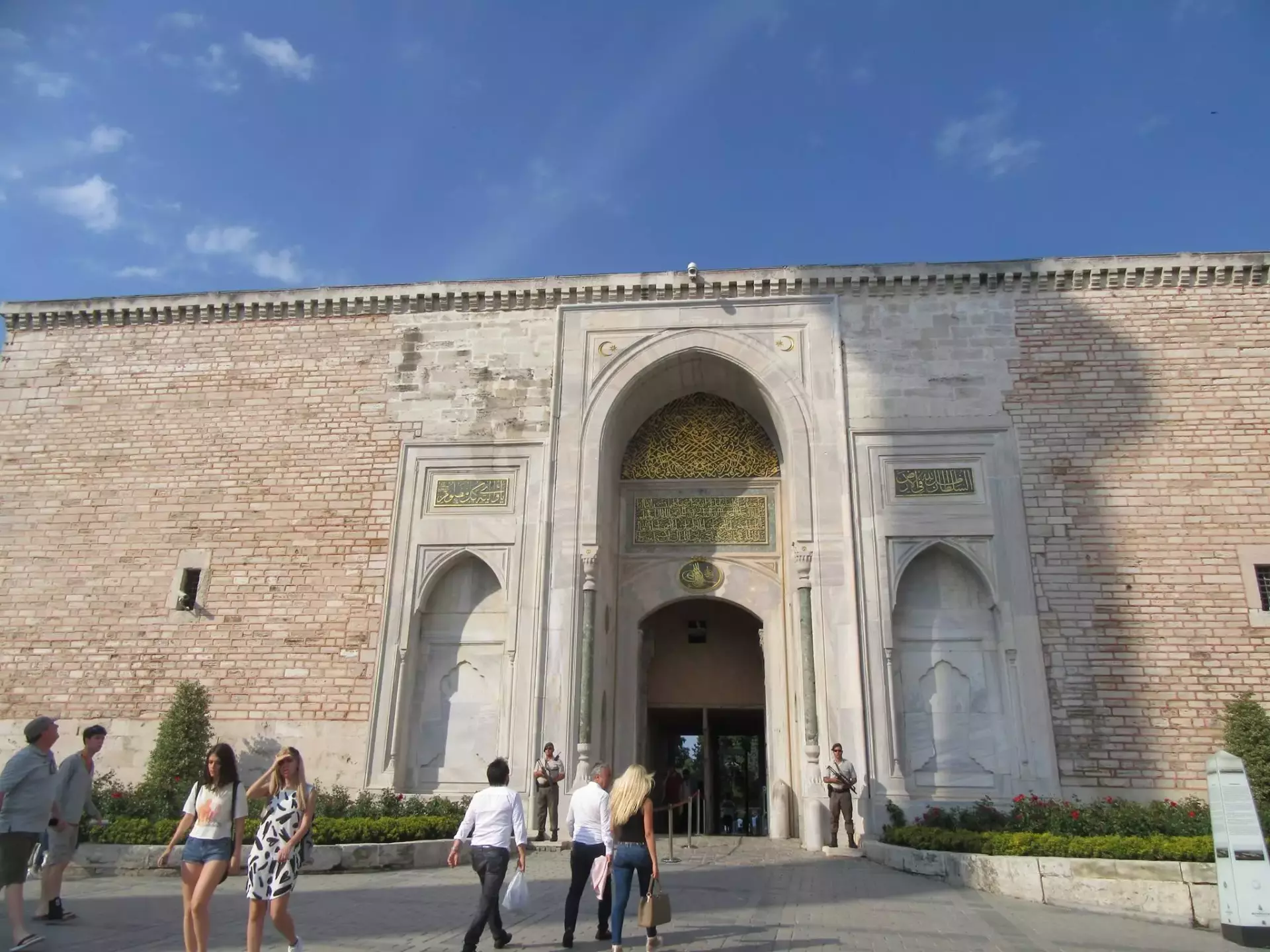
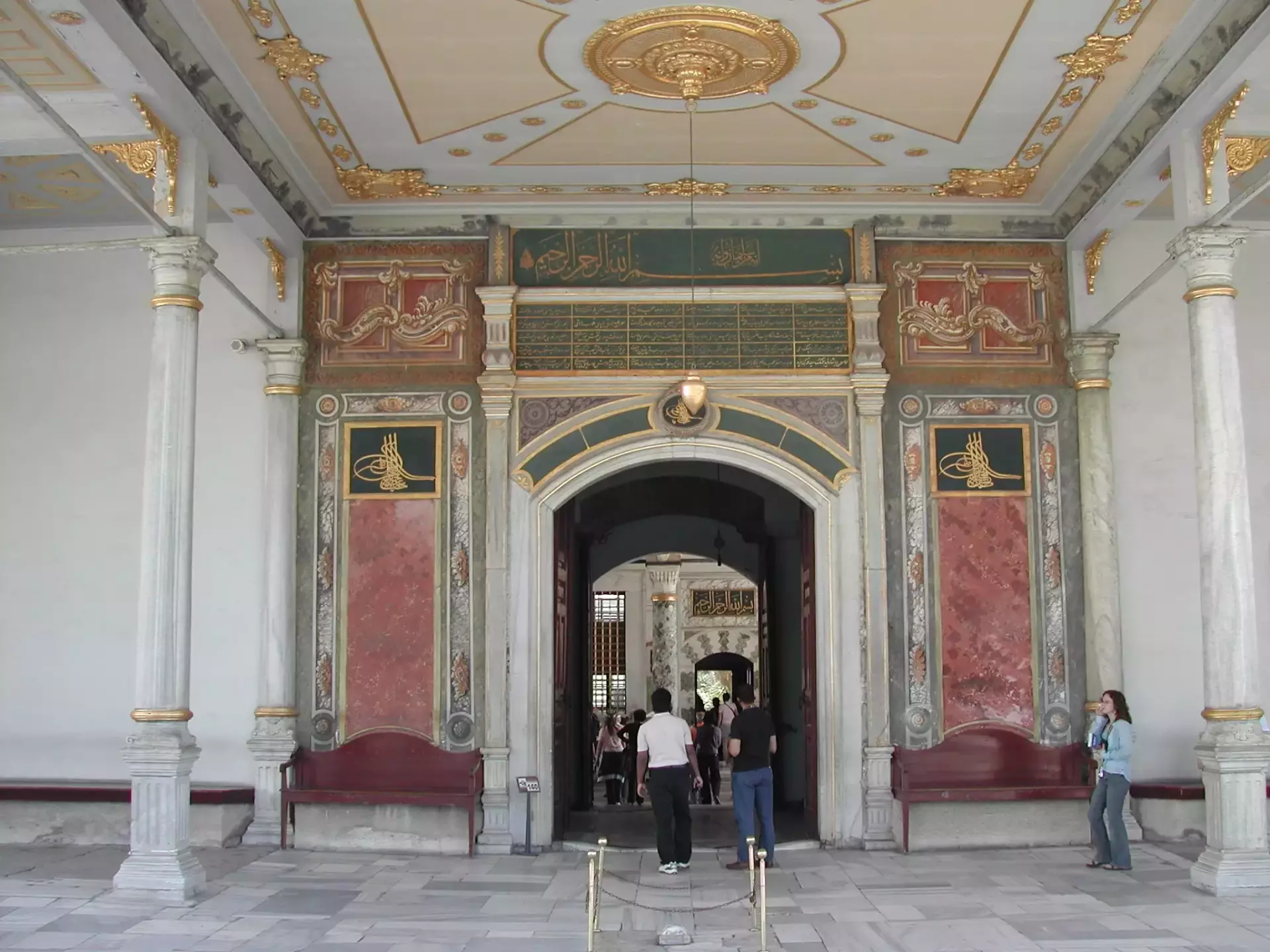
বাংলা:  ইম্পেরিয়াল গেট(তোপকাপি প্রাসাদ,ইস্তাম্বুল)।
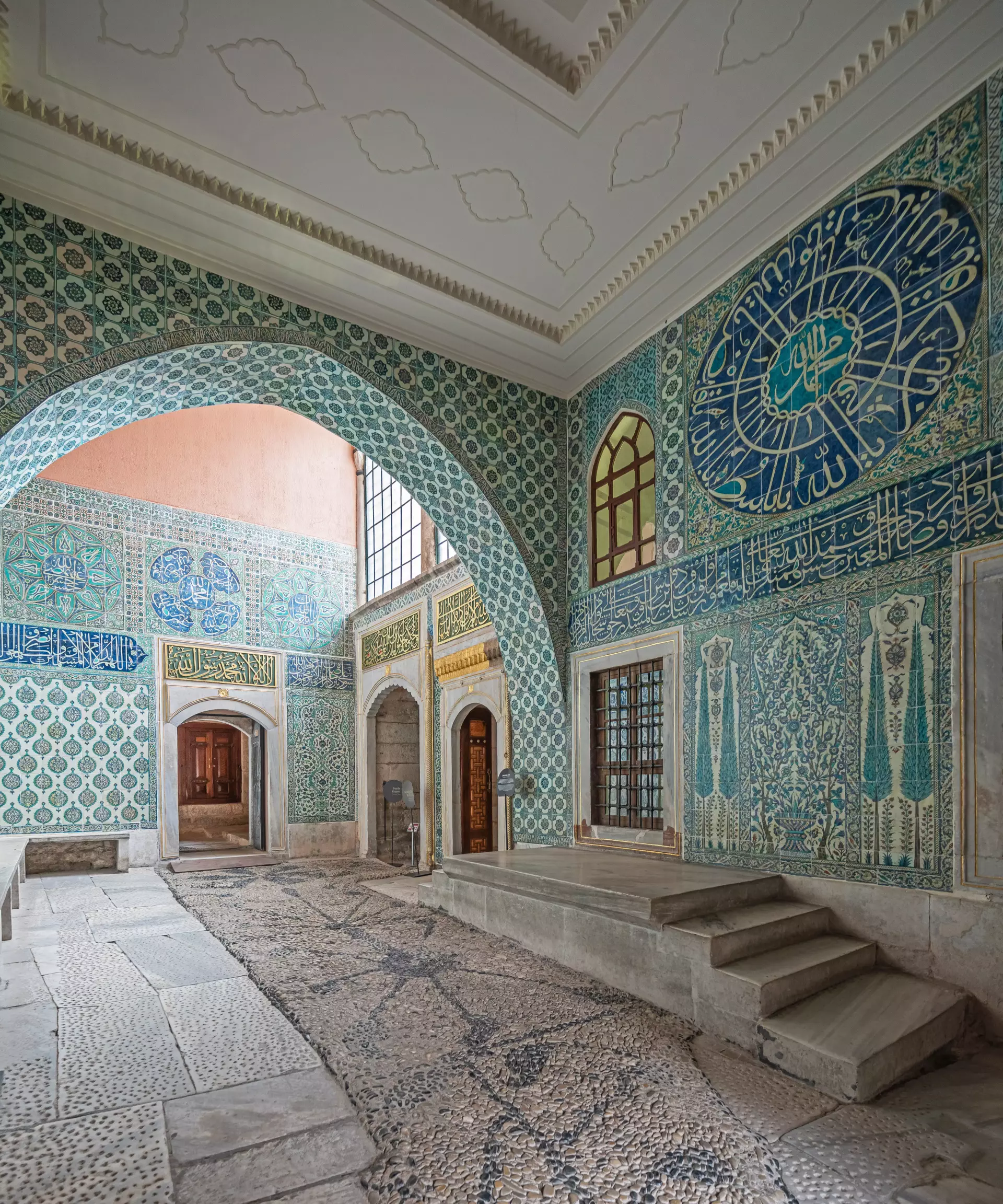
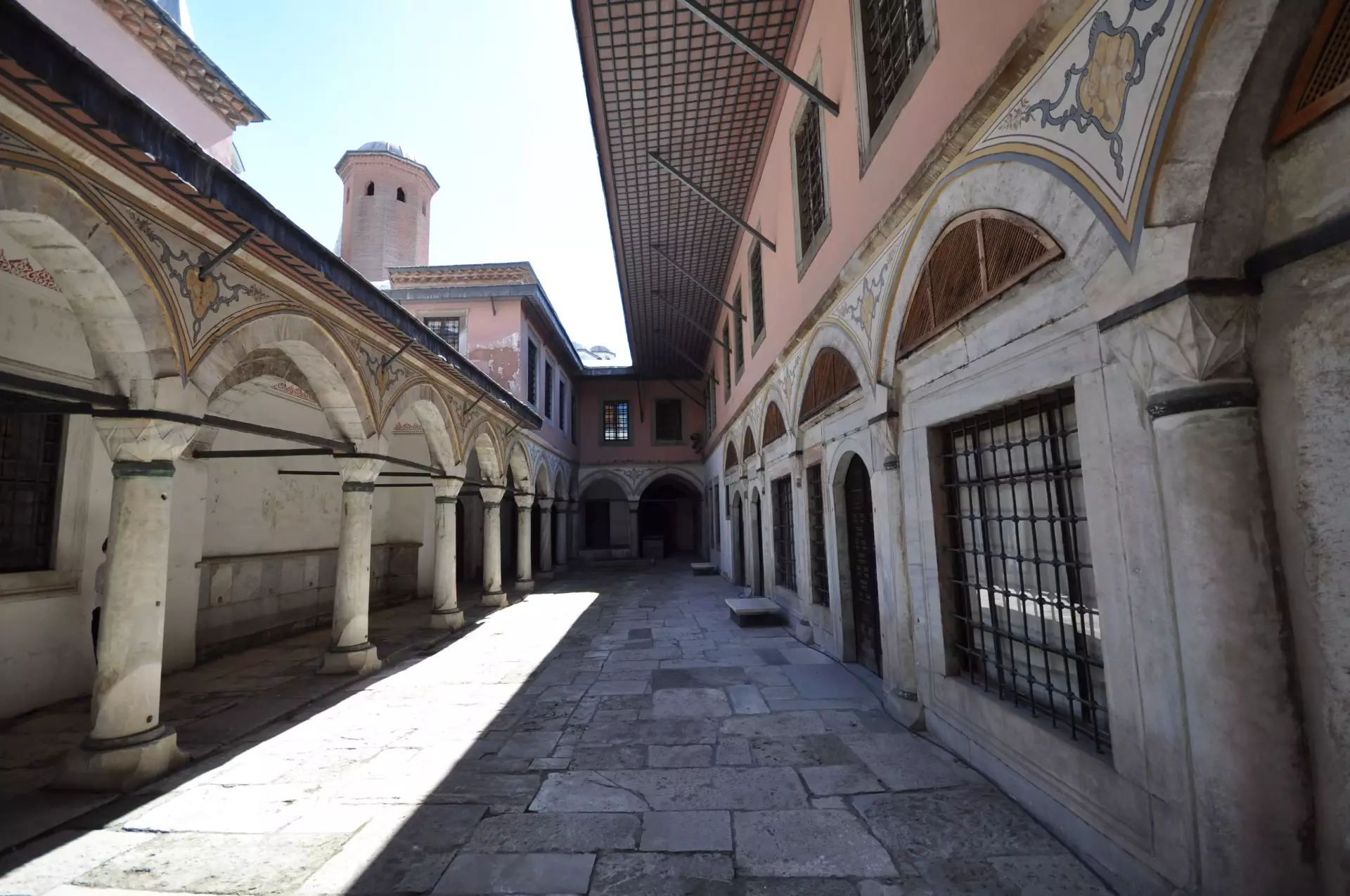
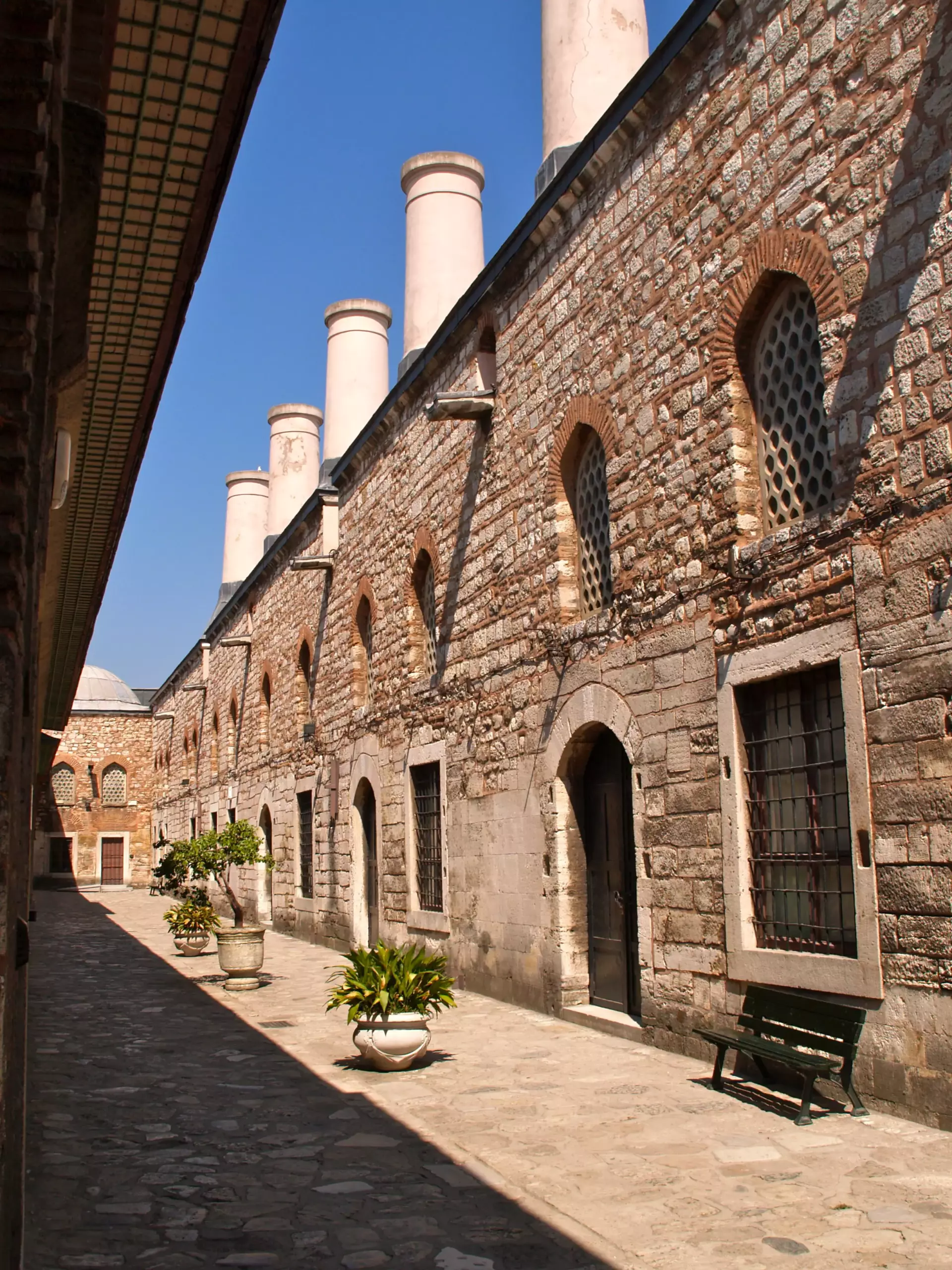
English:  Eunuchs' Courtyard in Harem of Topkapı Palace in Istanbul, Turkey Русский:  Двор евнухов в Гареме дворца Топкапы в Стамбуле, Турция
The Topkapı Palace is a large museum in Istanbul, Turkey. In the 15th and 16th centuries it served as the main residence and administrative headquarters of the Ottoman sultans. (Wikipedia)
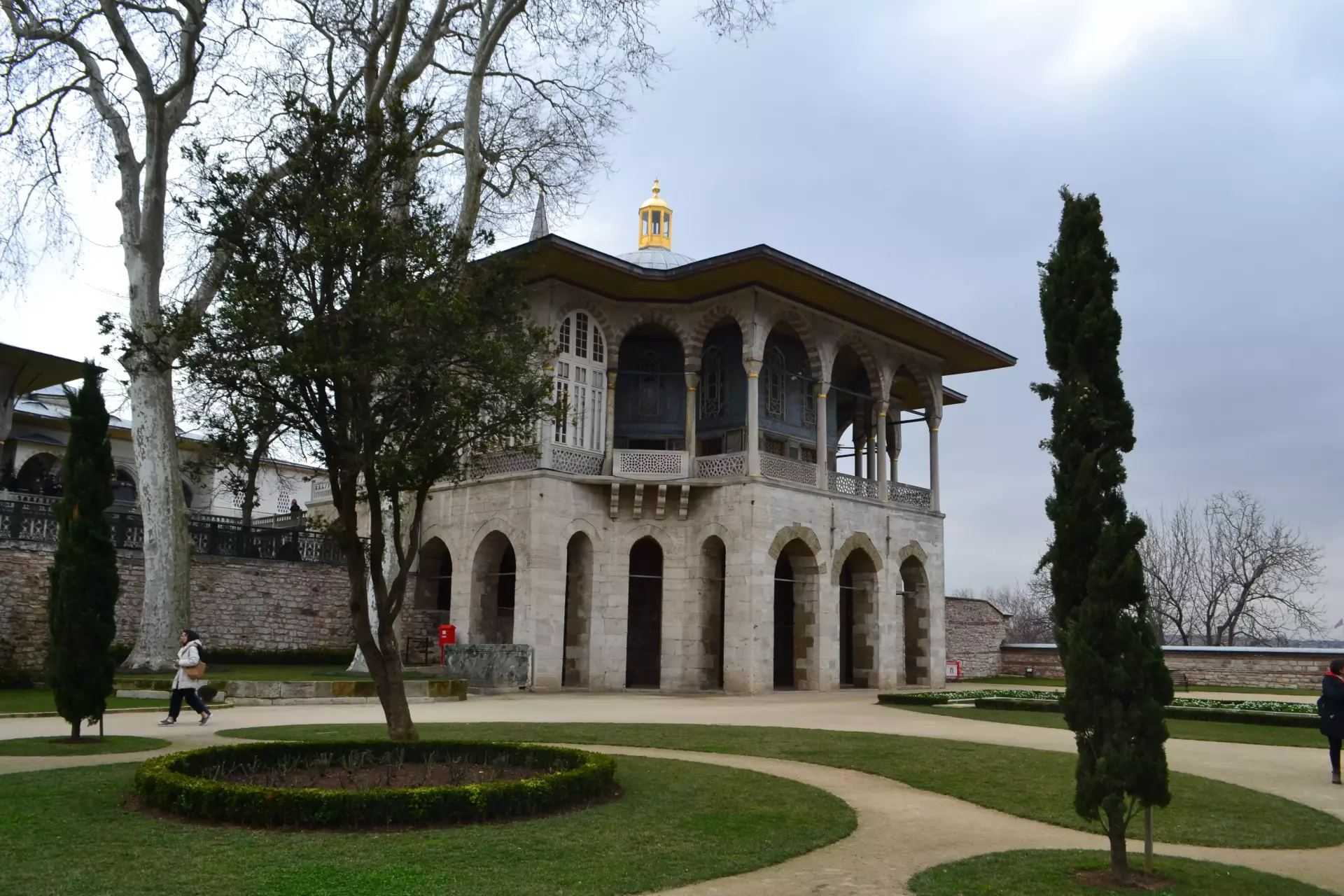
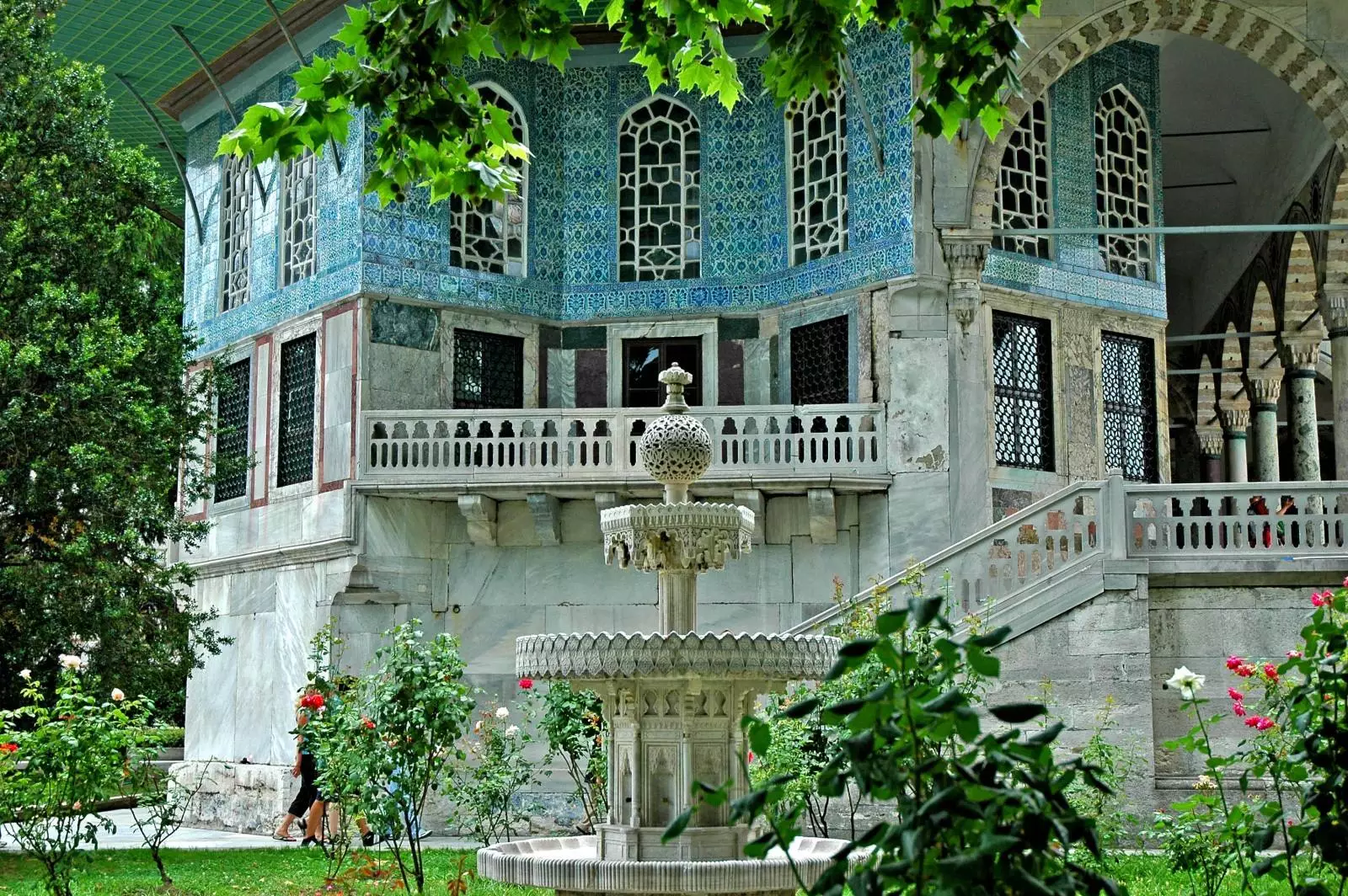
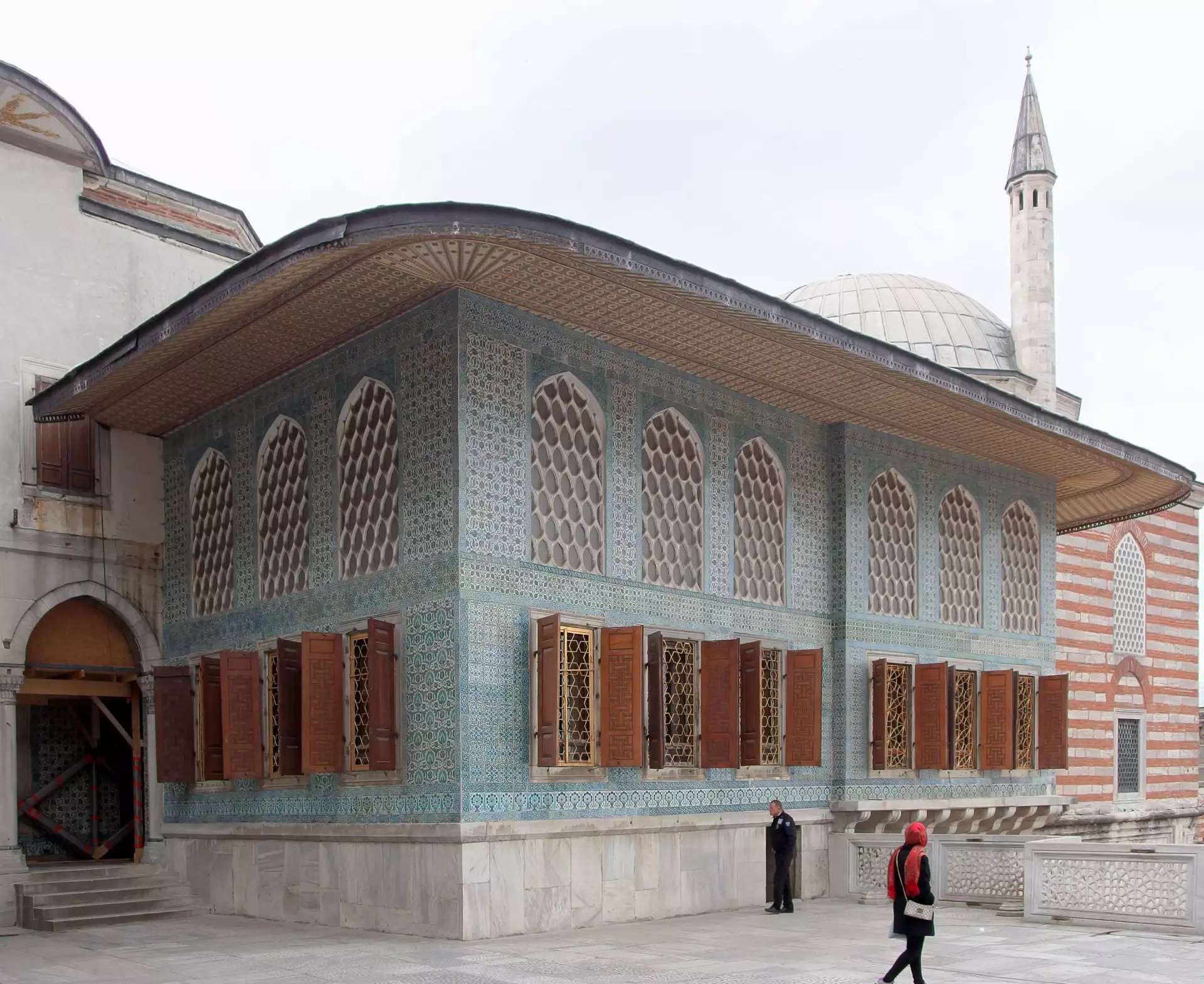
English:  Bağdat Köşkü, or Kiosk of Baghdad, located in Topkapı Palace.
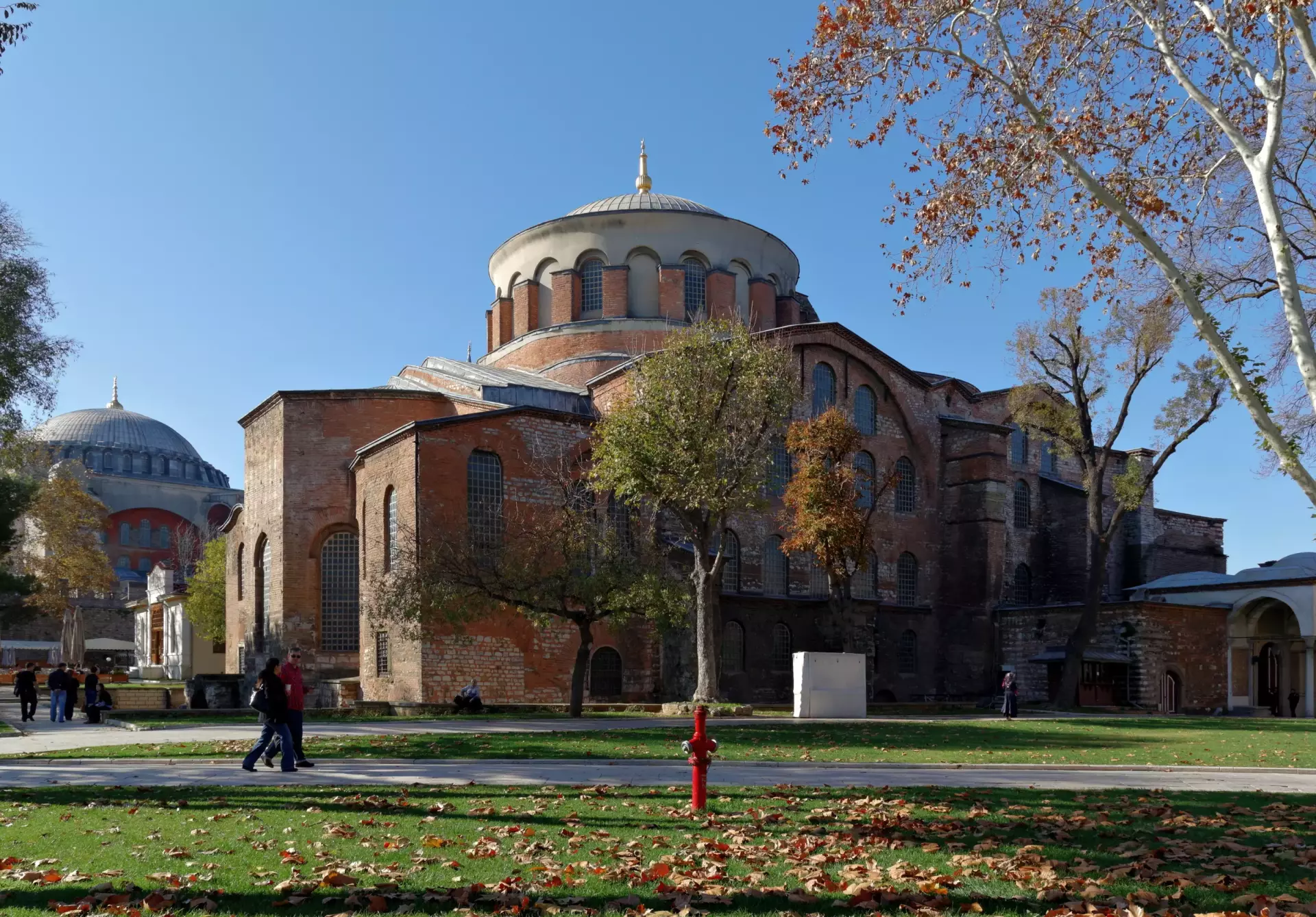
Русский:  Стамбул. Церковь Святой ИриныEnglish:  Istanbul. Hagia Irene
Русский:  Стамбул. Топкапы. Монетный дворEnglish:  Istanbul. Topkapı Palace. Royal Mint of Ottoman Empire
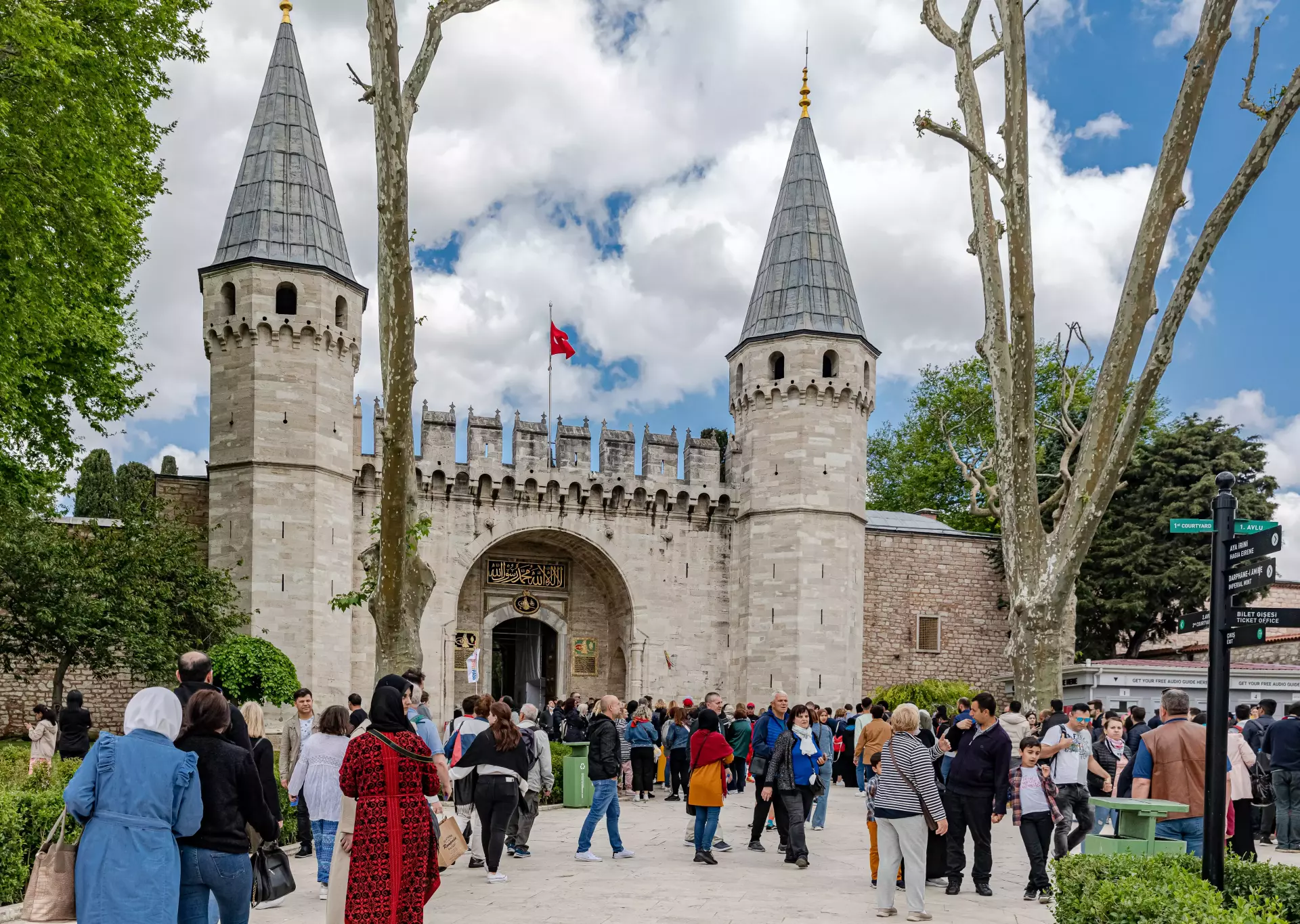
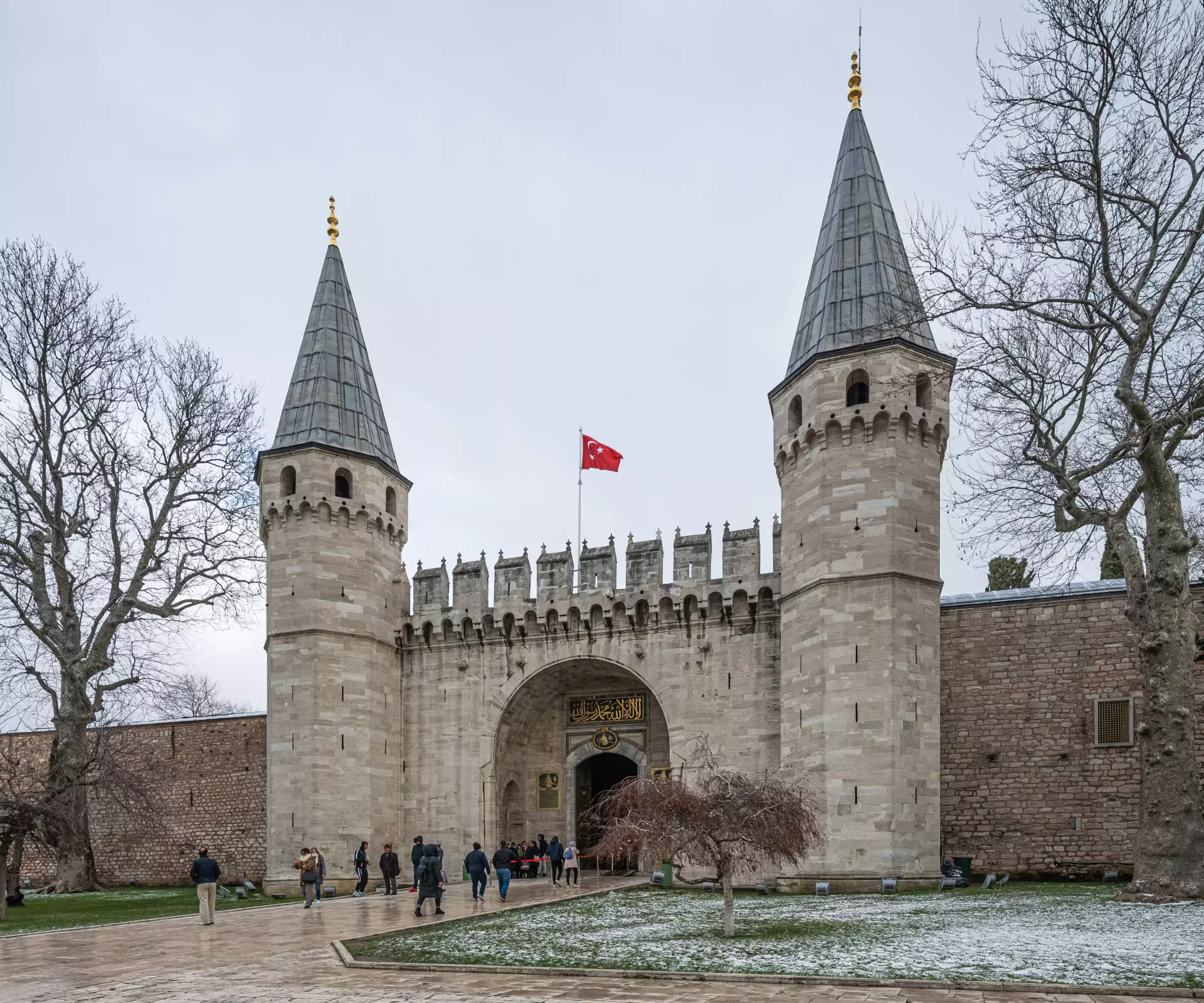
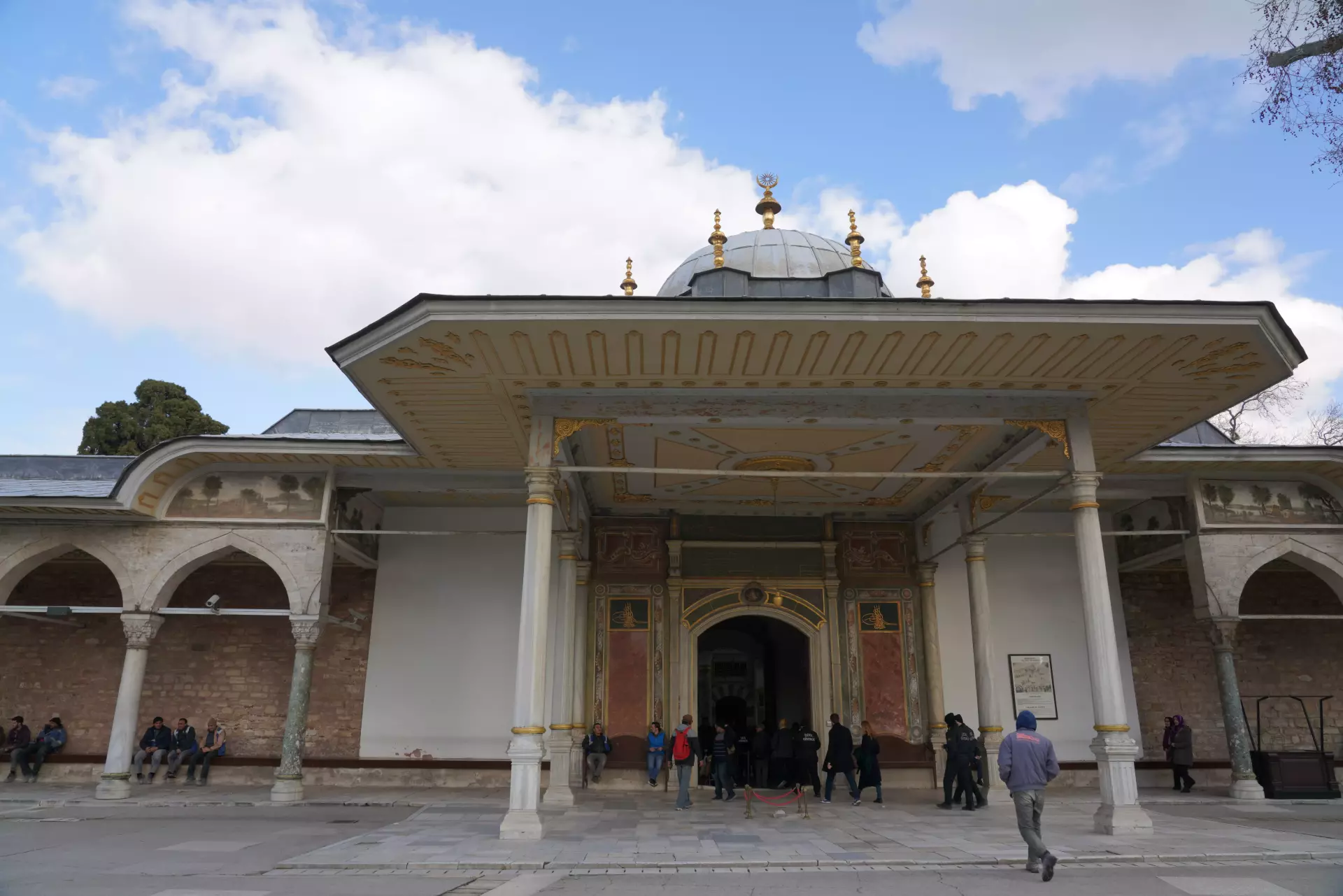
English:  Salutation Gate of Topkapı Palace in Istanbul, Turkey Русский:  Ворота Приветствия дворца Топкапы в Стамбуле, Турция
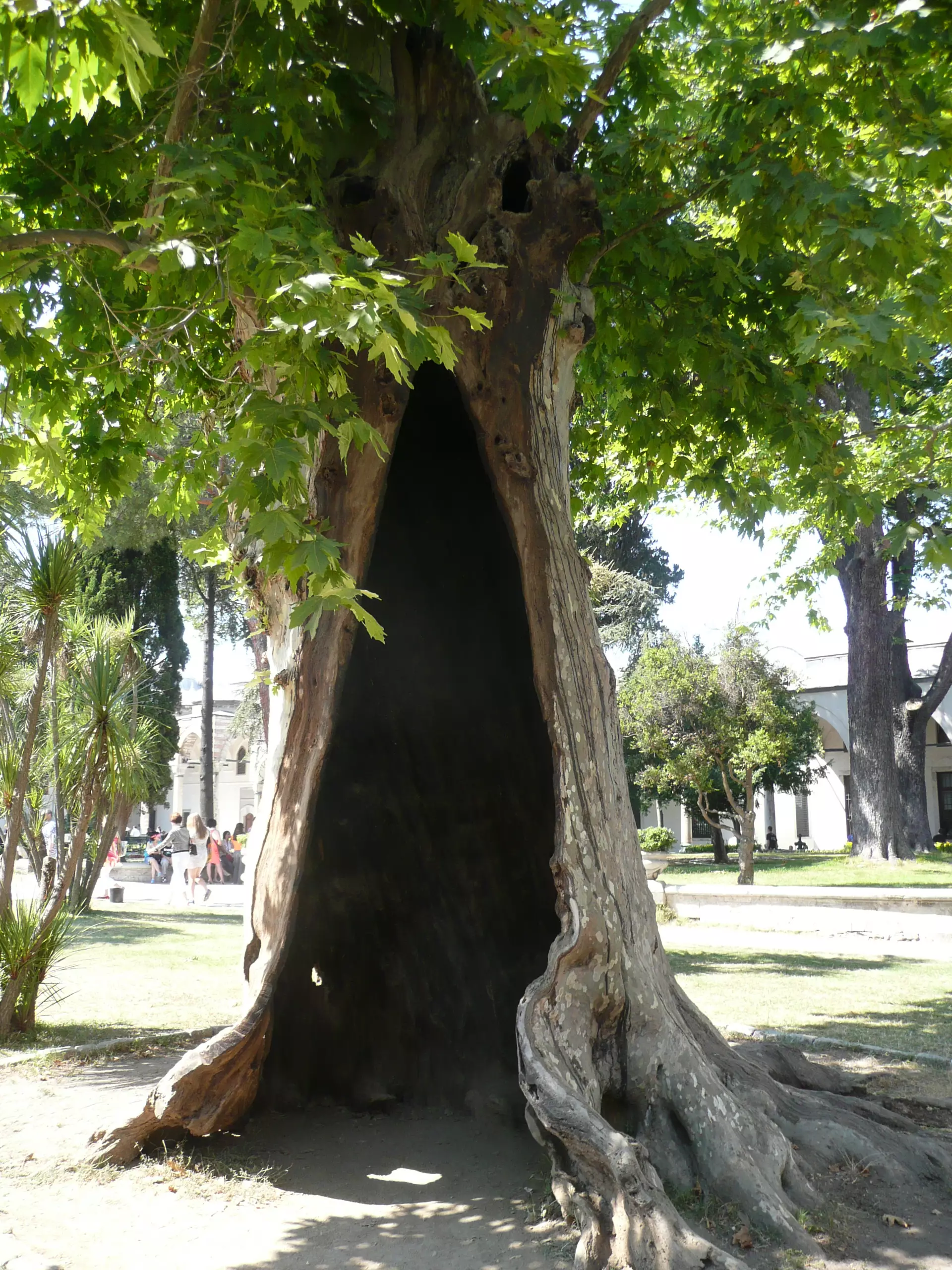
One of the hollow trees in the Topkapi Palace in Istanbul.
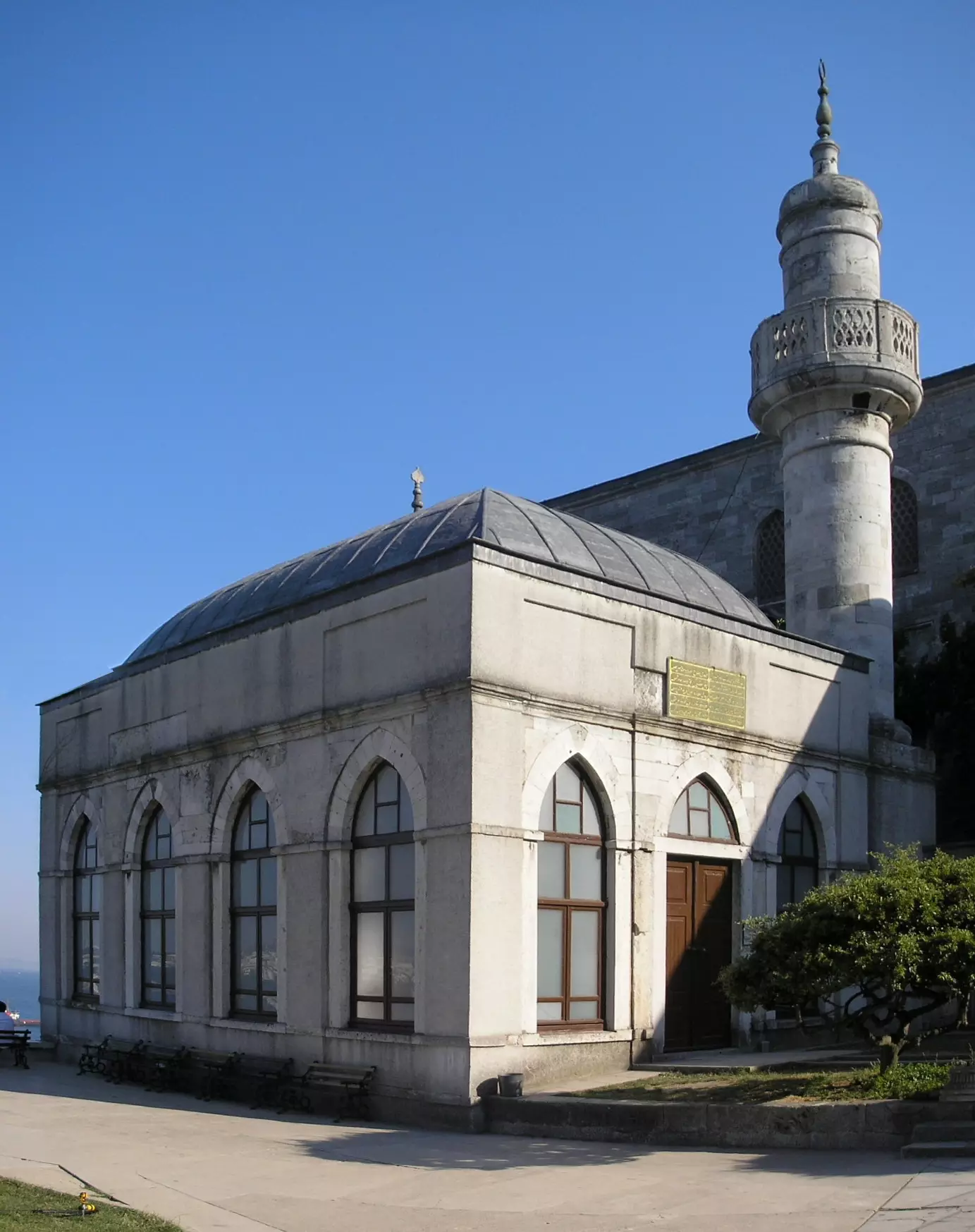
The Imperial Sofa Mosque (Sofa-i Hümâyûn Camii) in the fourth court of the Topkapi Palace, Istanbul.
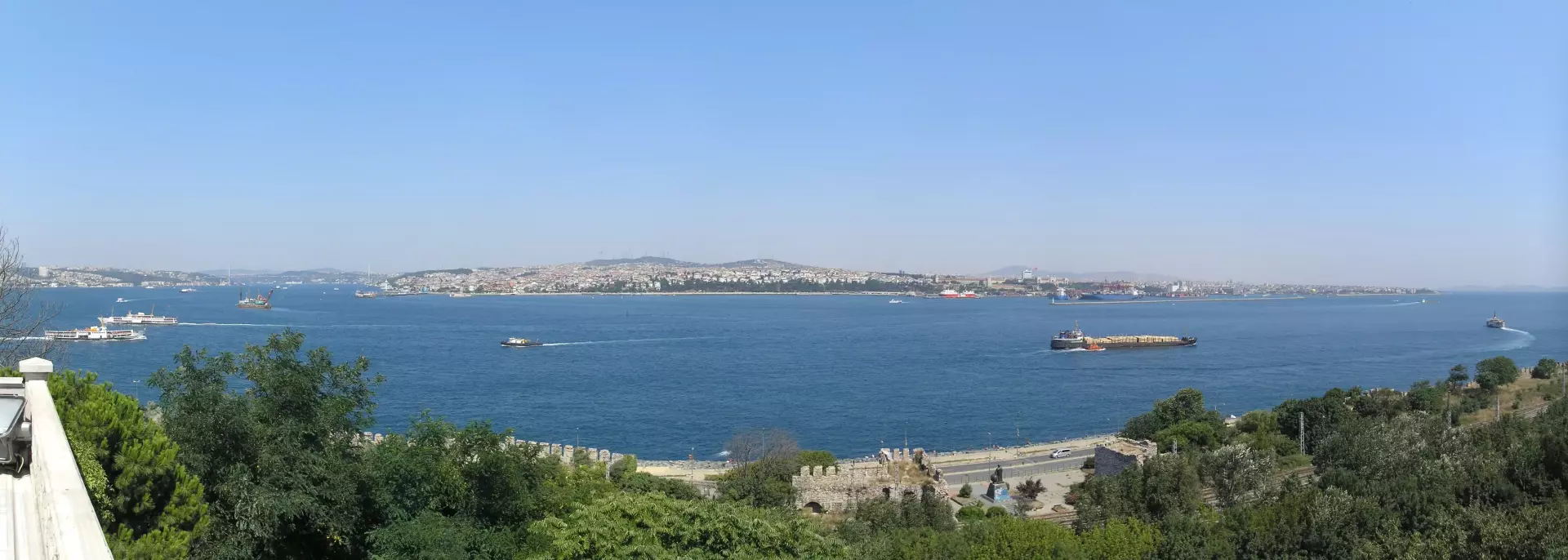
View of the Bosphorus, as seen from the terrace of the fourth court of the Topkapi Palace, Istanbul. Visible on the other side is Asia.
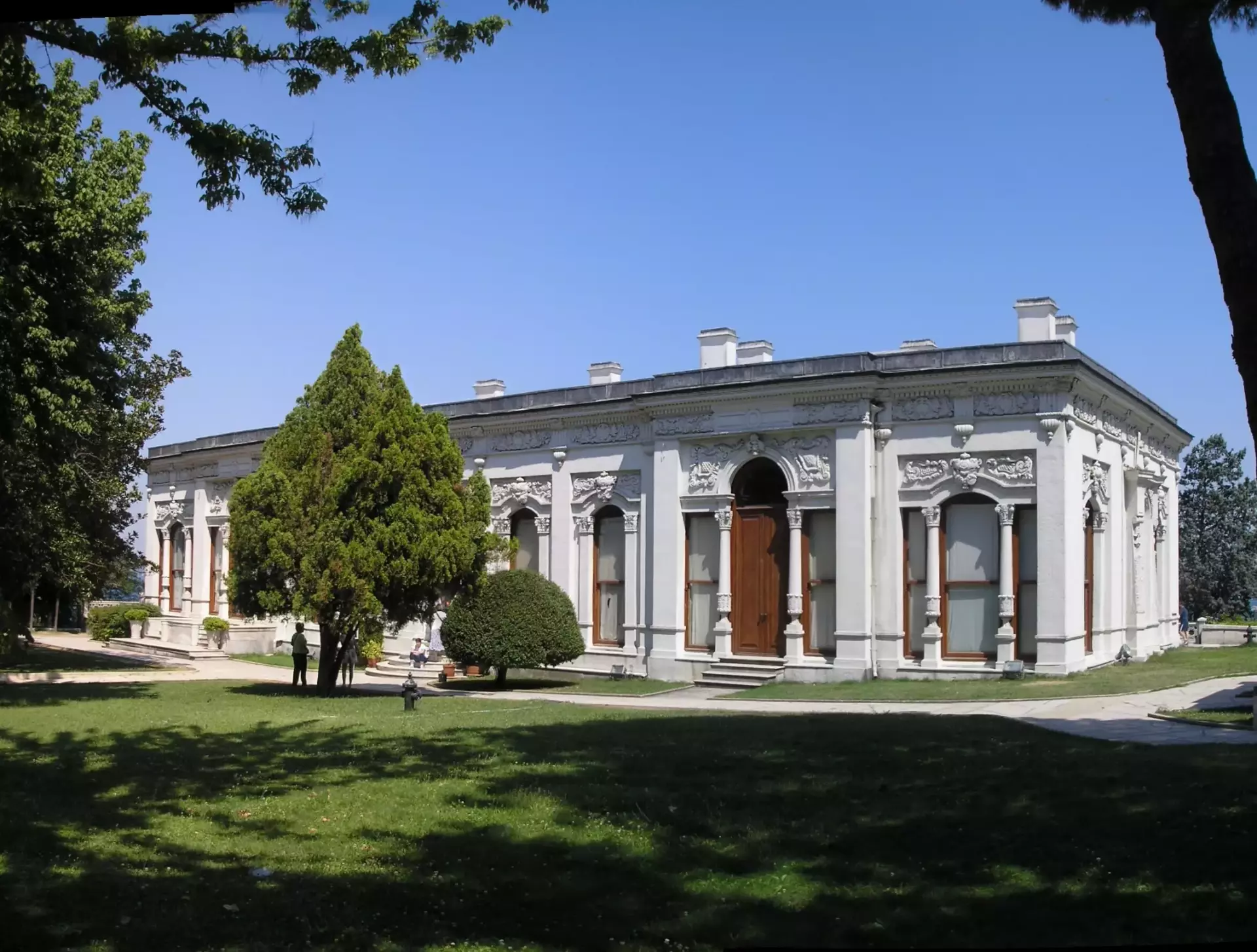
The Grand Pavilion (Mecidiye Köşkü) in the fourth court of the Topkapi Palace, Istanbul This  panoramic image was created with Autostitch (stitched images may differ from reality).
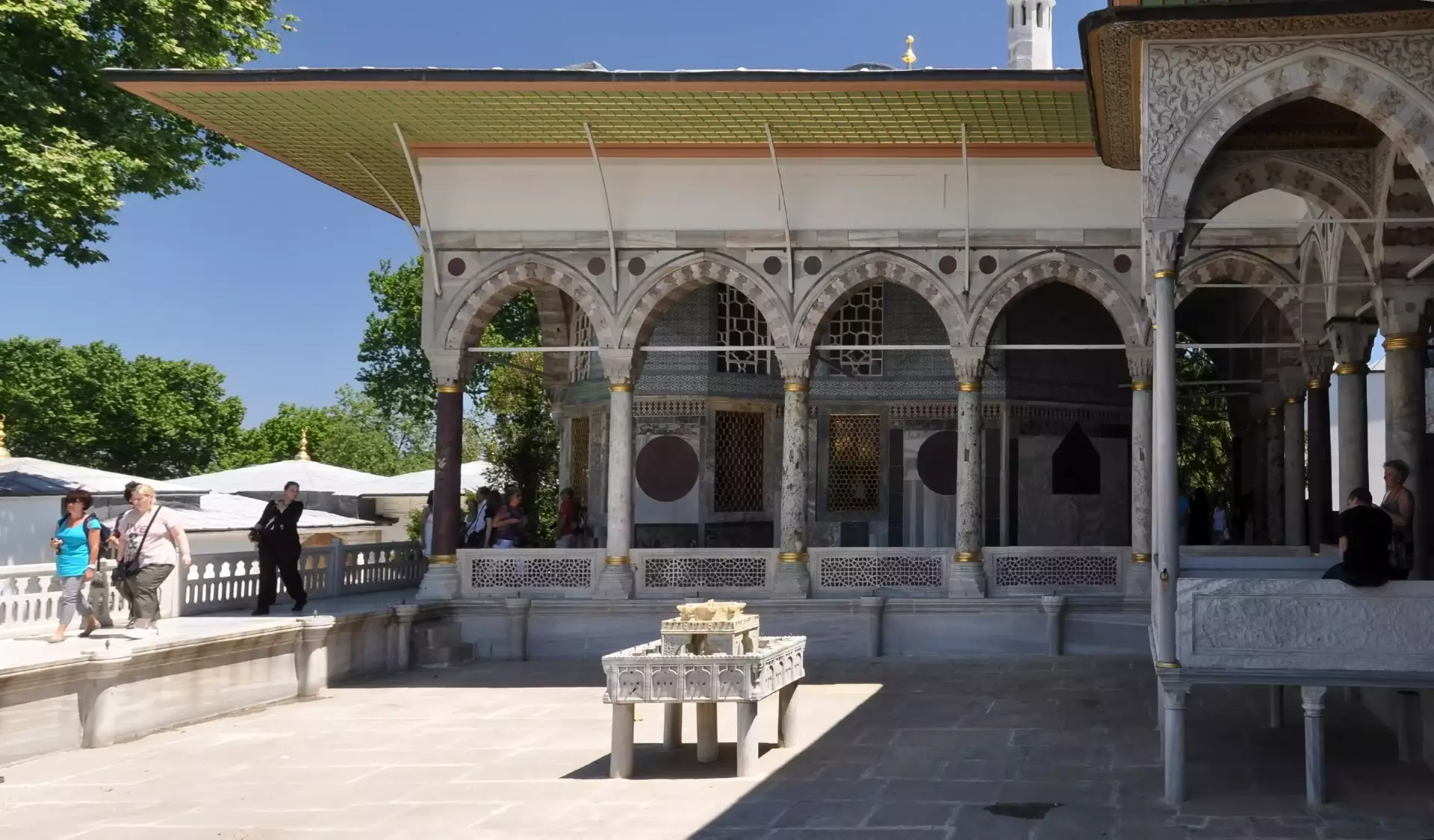
English:  Yerevan Kiosk (Revan Köşkü) in the Fourth Courtyard of the  Topkapı Palace in Istanbul, Turkey. Français :  Kiosque d'Erevan (Revan Köşkü) dans la quatrième cour du Palais de Topkapı à Istanbul en Turquie.
English:  Topkapı Palace, Istanbul, Turkey Українська:  Топкапи, Стамбул, Туреччина
বাংলা:  রেভান কিওস্ক(তোপকাপি প্রাসাদ,ইস্তাম্বুল)।
English:  Circumcision Pavilion of Topkapı Palace in Istanbul, Turkey Русский:  Павильон Обрезания во дворце Топкапы в Стамбуле, Турция
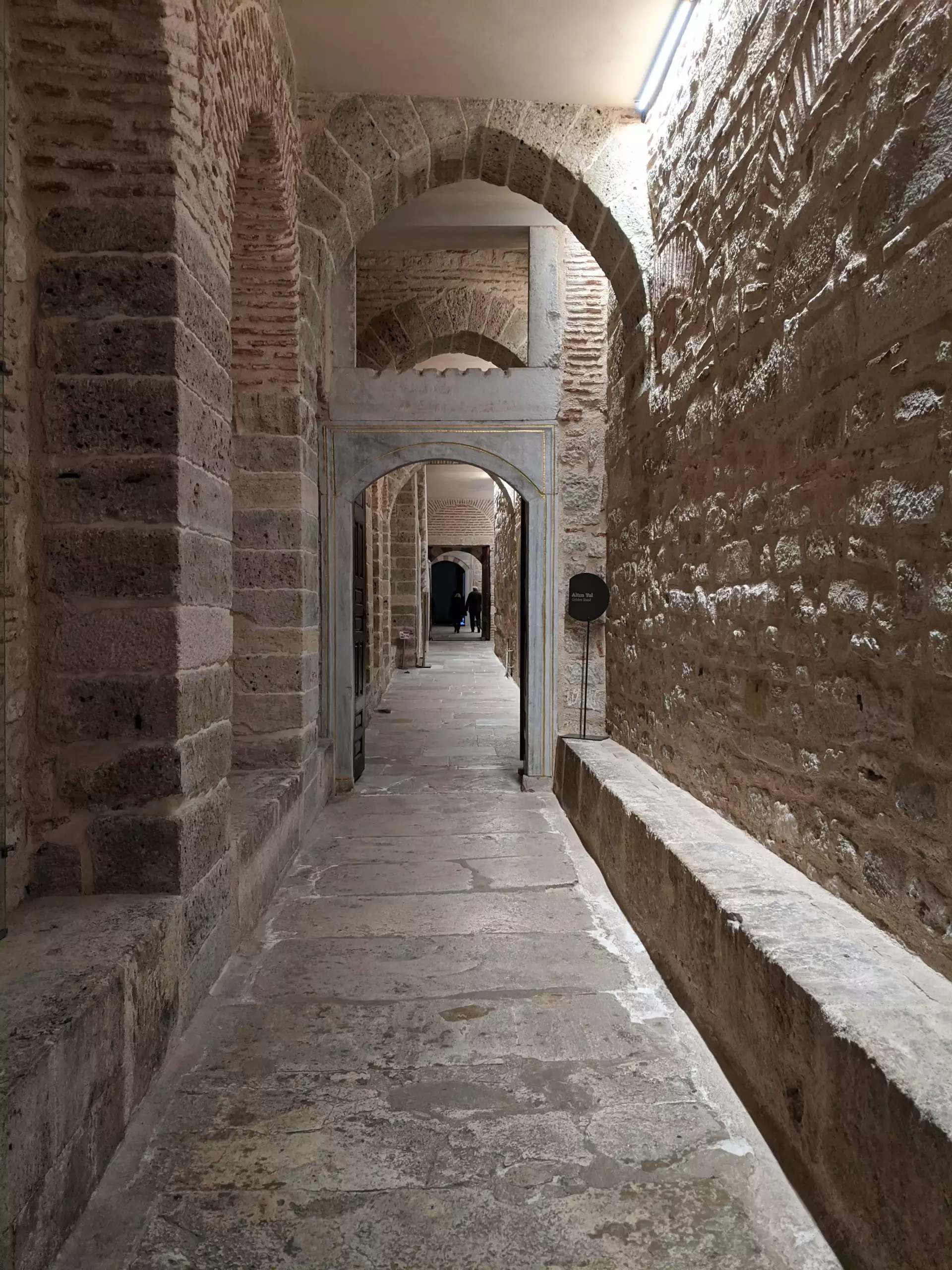
English:  The "Golden Road" (Altınyol) in the Topkapi Palace
Topkapi Palace
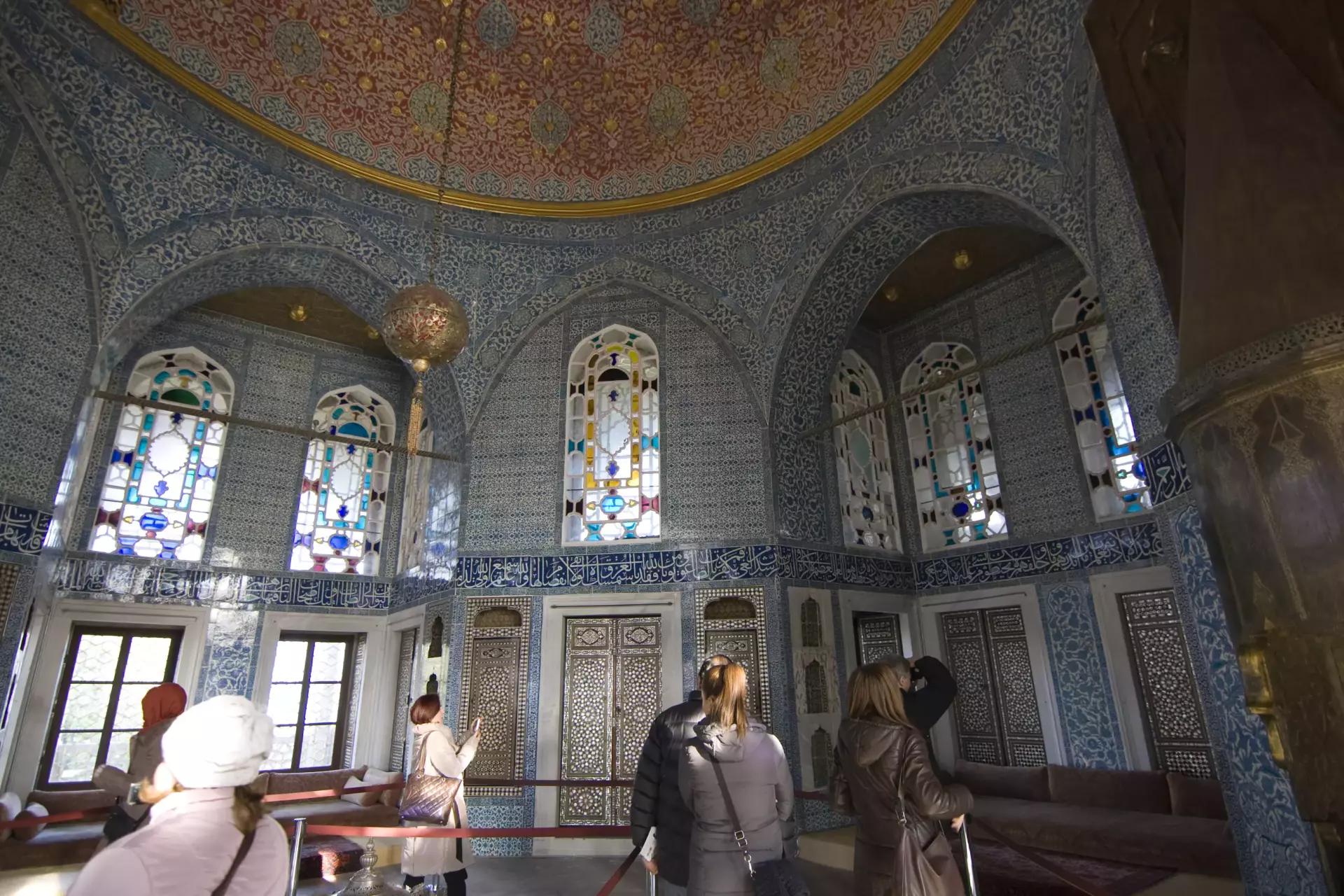
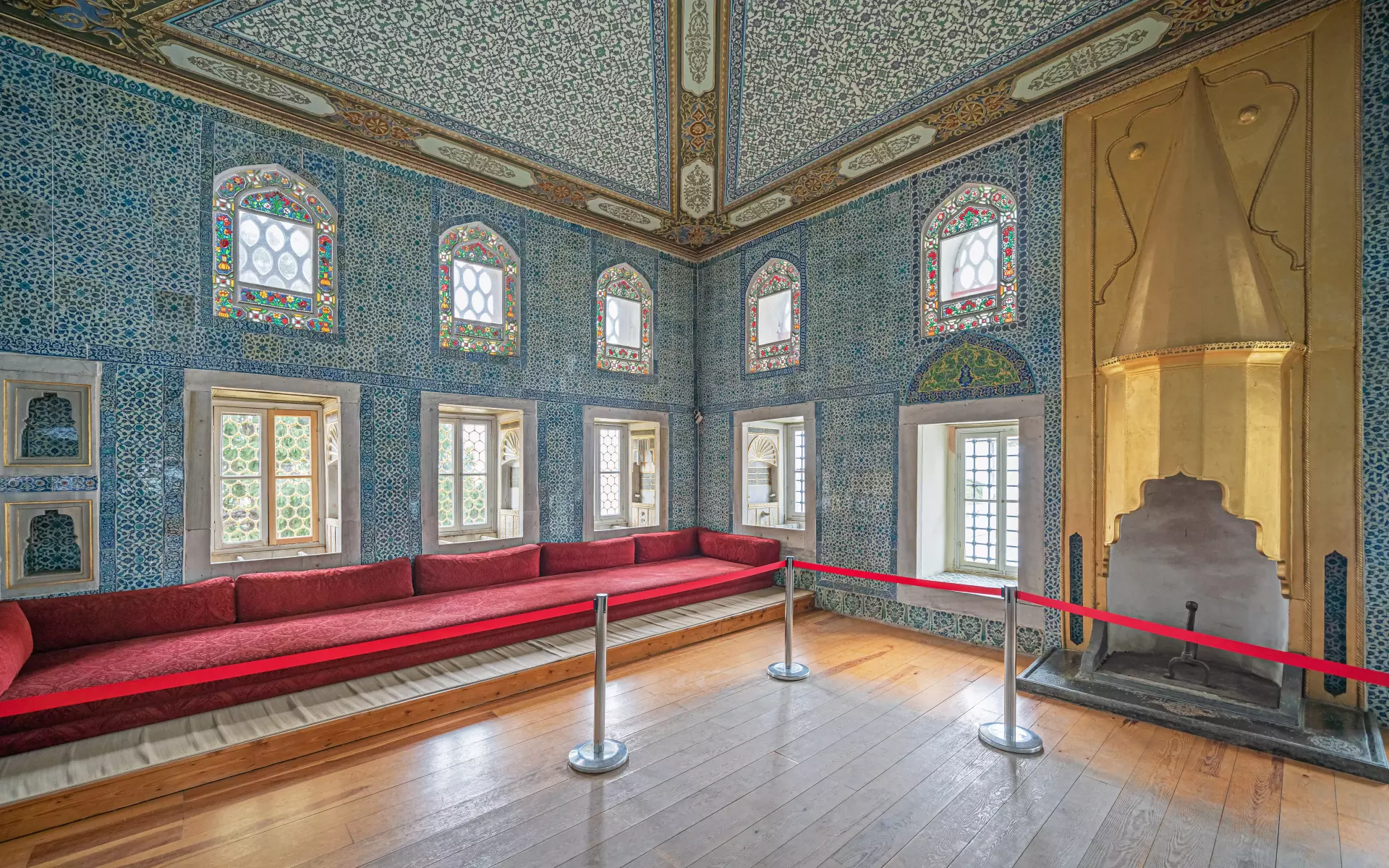
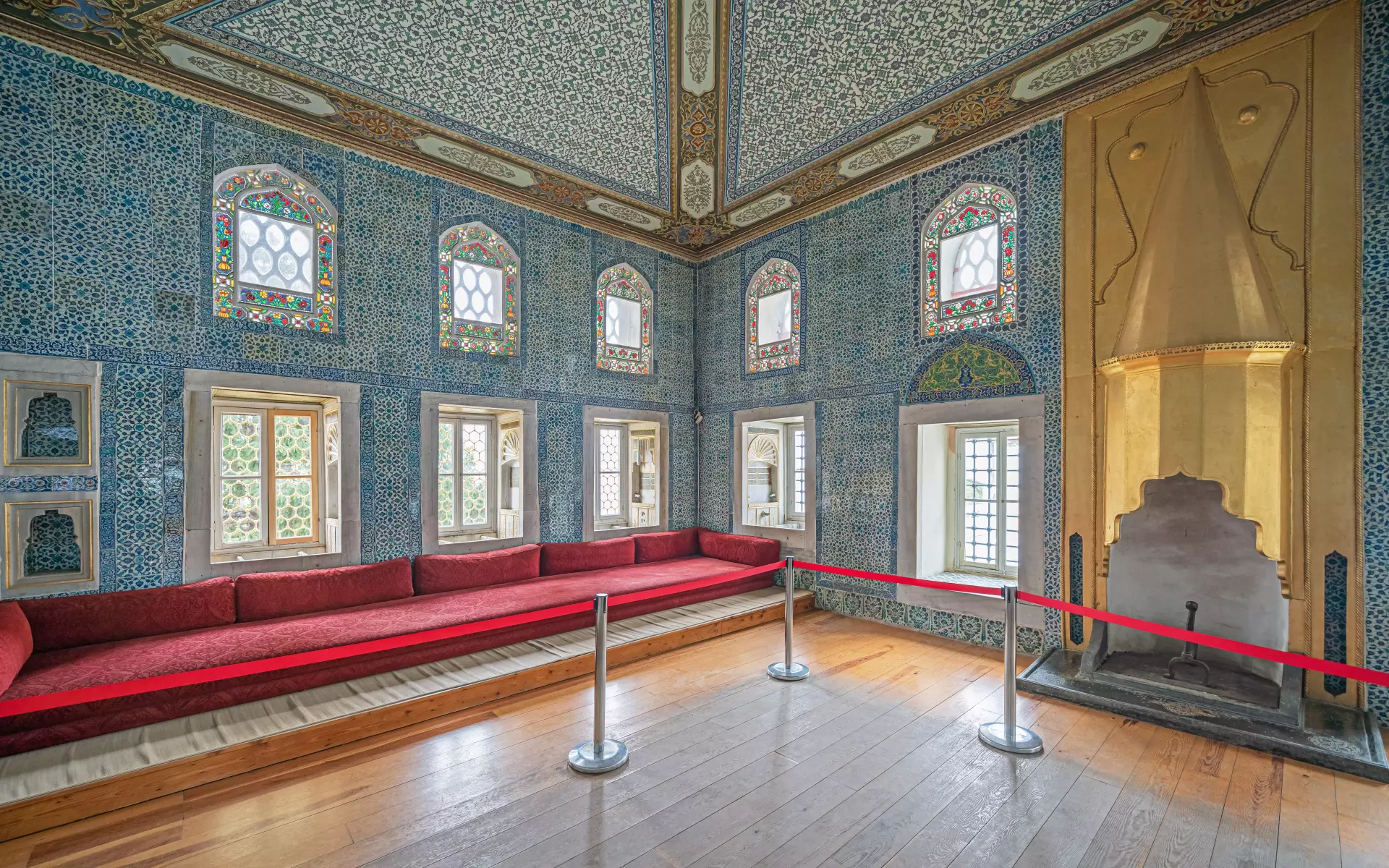
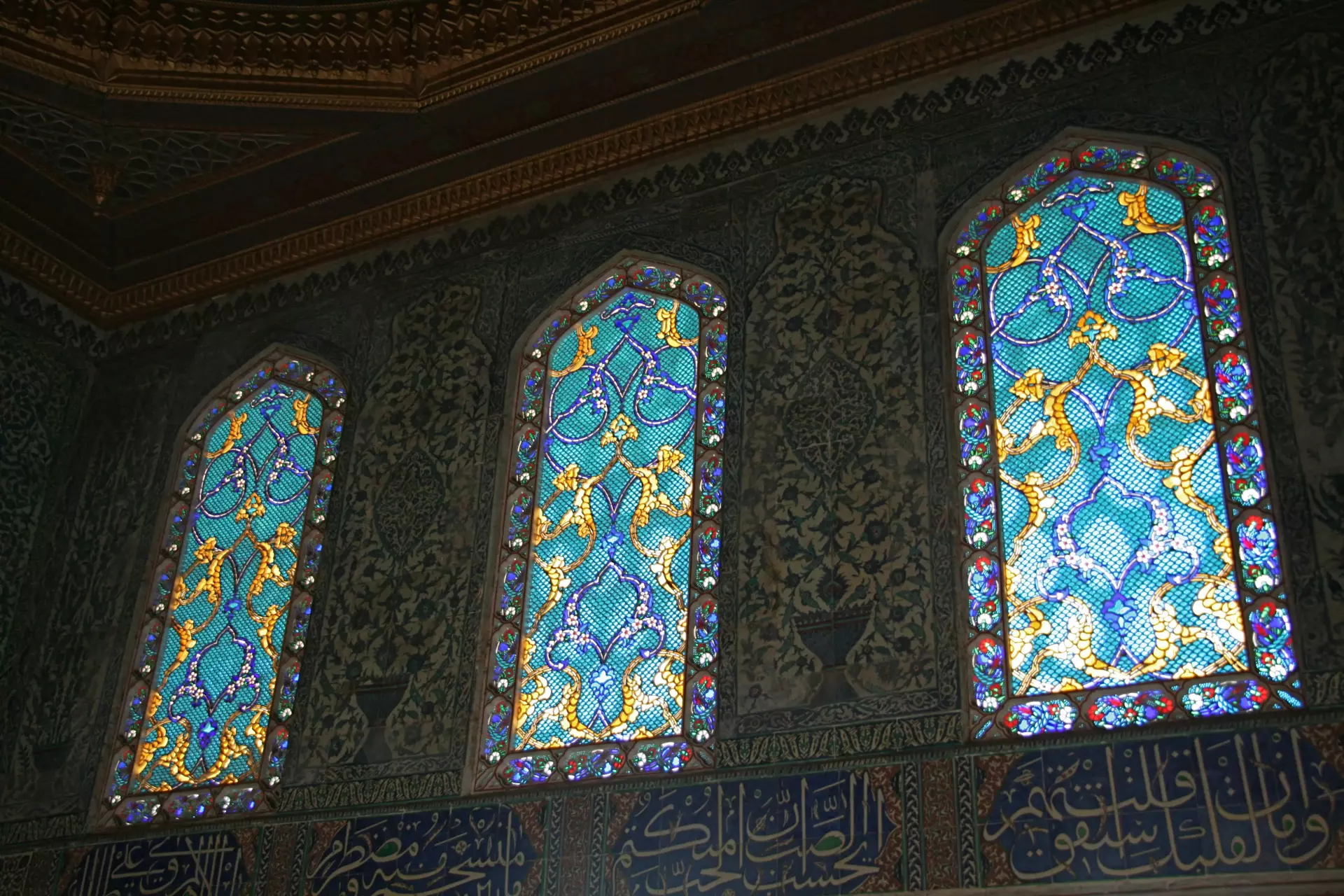
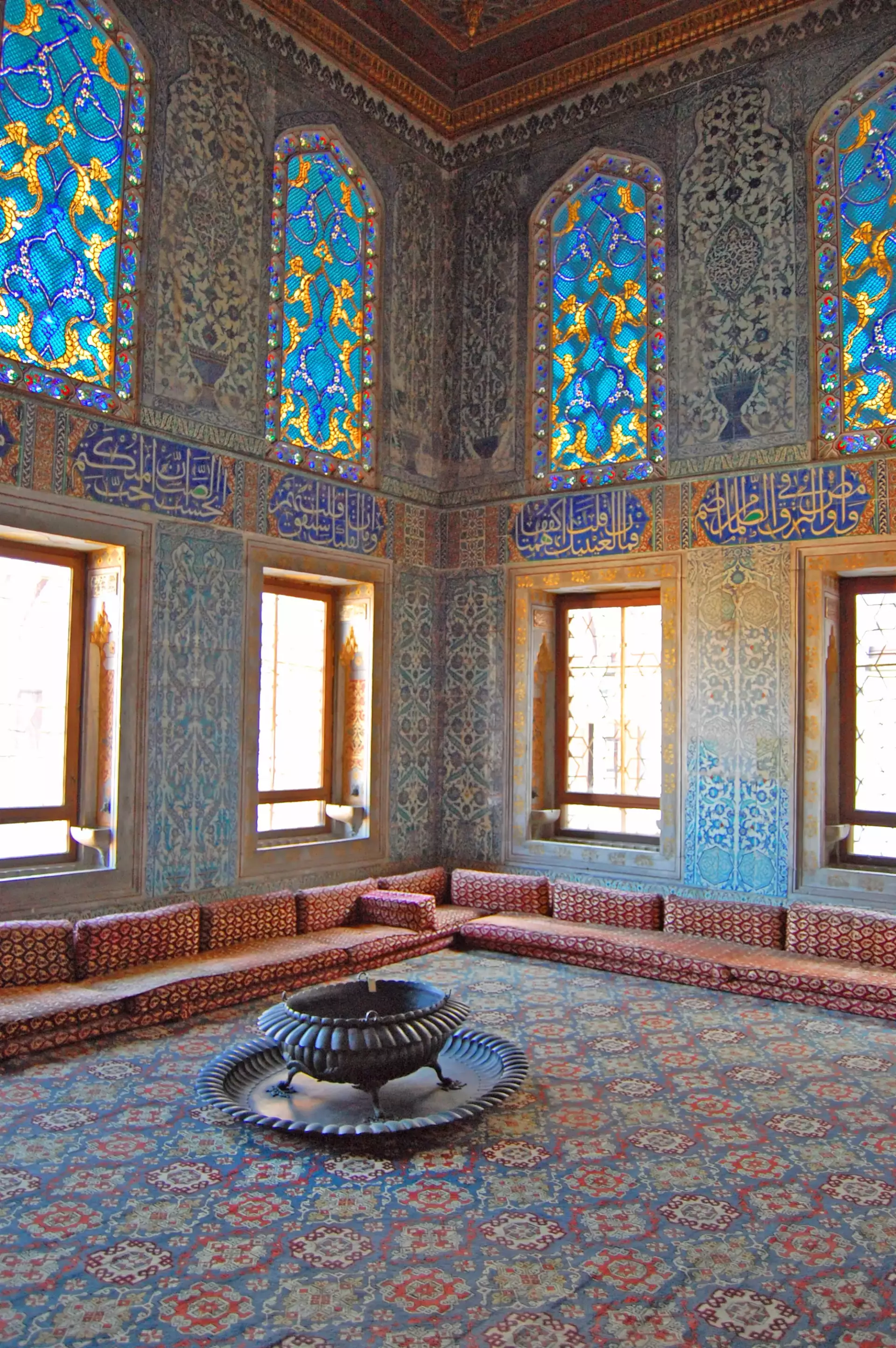
English:  View of stain glass and walls in the Twin Kiosk in the Topkapı Palace in Istanbul
English:  2013-12-04 in Istanbul.
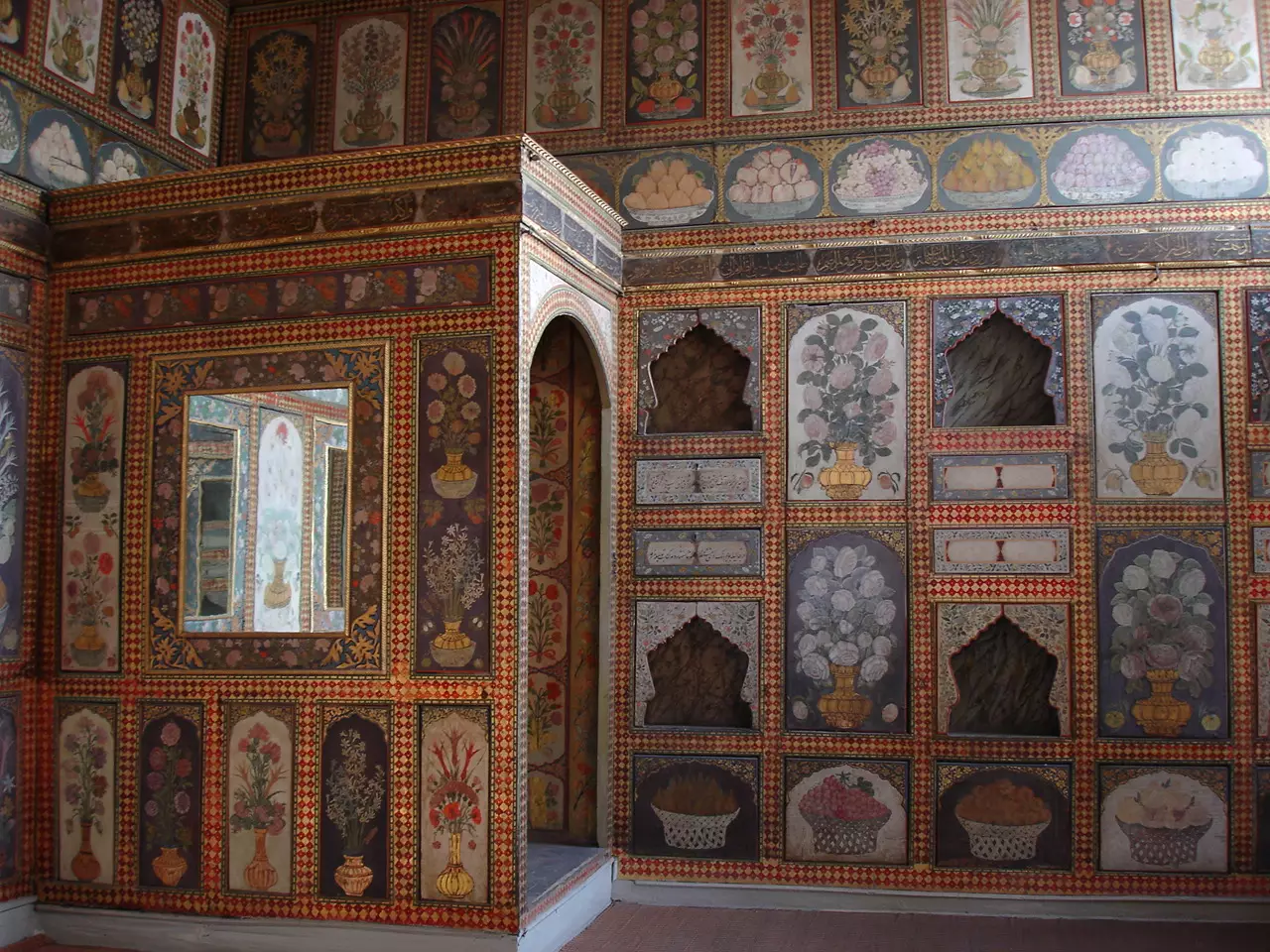
Italiano:  Istanbul - Palazzo del Topkapı - Harem. La "Sala dei Frutti" (costruita fra il 1718 e il 1730), che prende il nome dalla decorazione dipinta a fiori e frutti. Foto di: Giovanni Dall'Orto 27-5-2006. English:  Istanbul - Topkapi Palace - Harem. The "Fruit Hall", built between 1718 and 1730, taking its name from the decoration painted with fruits and flowers. Picture by: Giovanni Dall'Orto, May 27 2006.
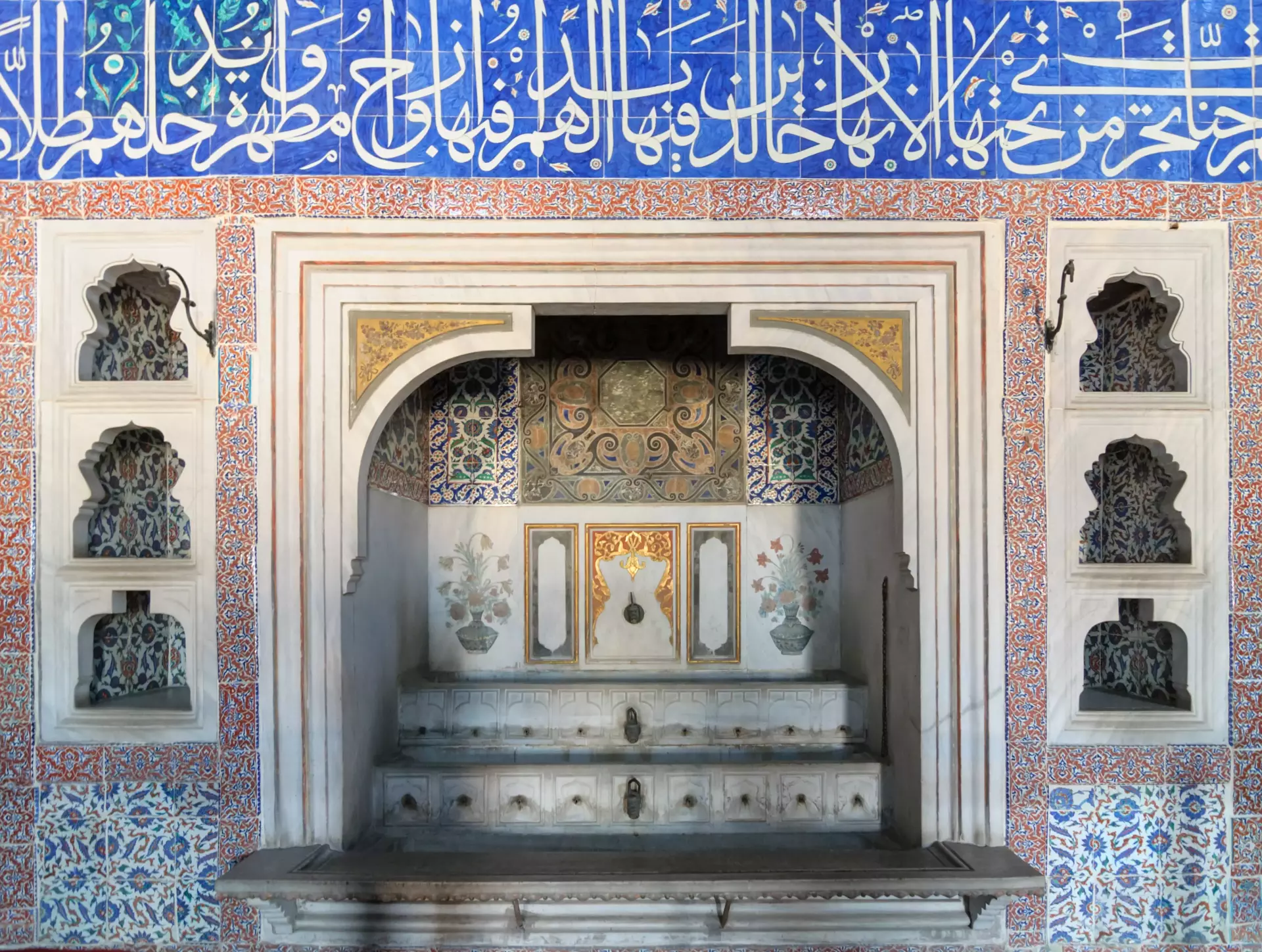
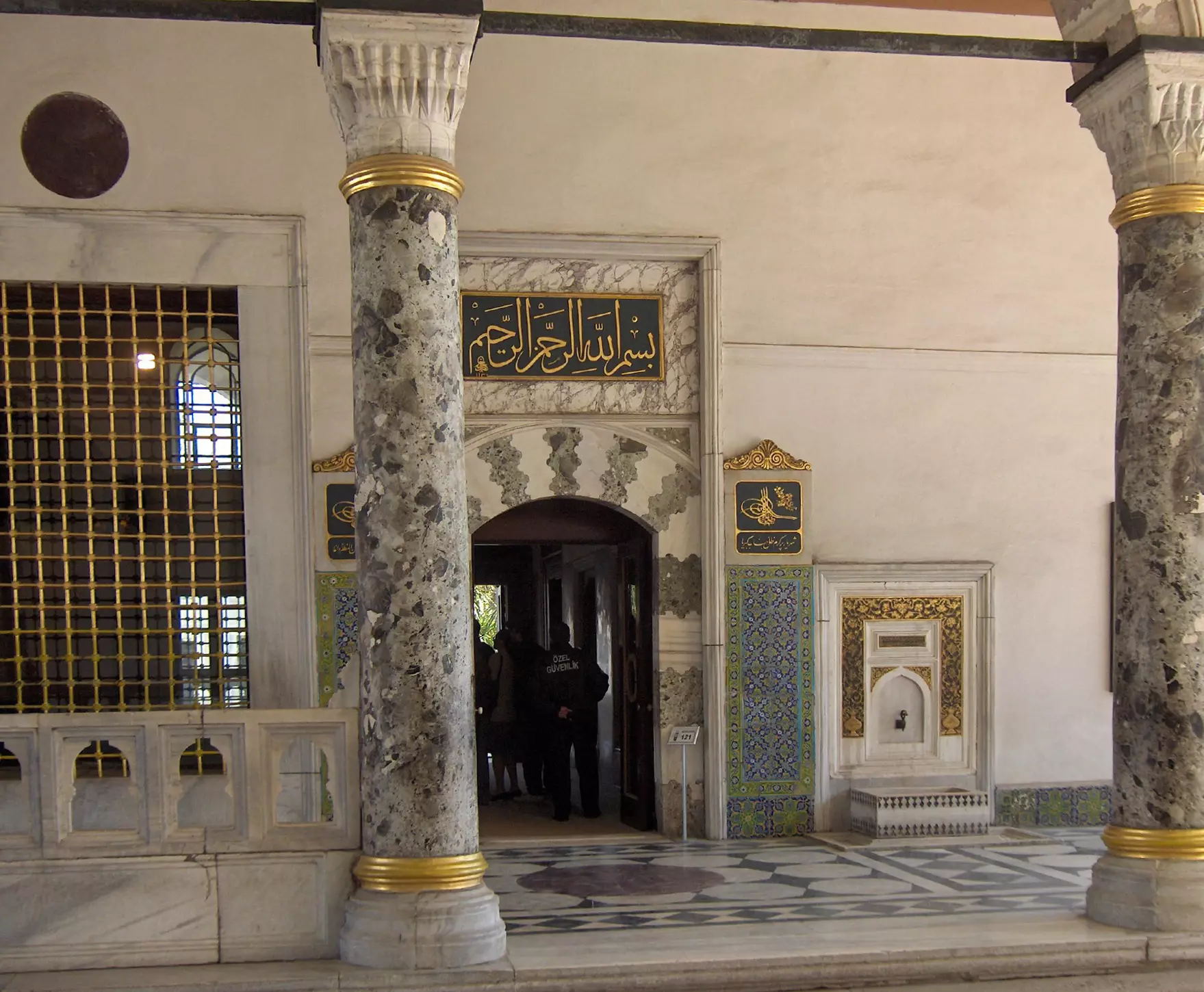
Français :  La fontaine de la chambre privée de Murad III (III. Murad Has Odası), dans le harem du palais de Topkapı (Istanbul, Turquie) English:  The fountain of the privy chamber of Murat III (III. Murad Has Odası) in the harem of Topkapı Palace, Istanbul, Turkey.
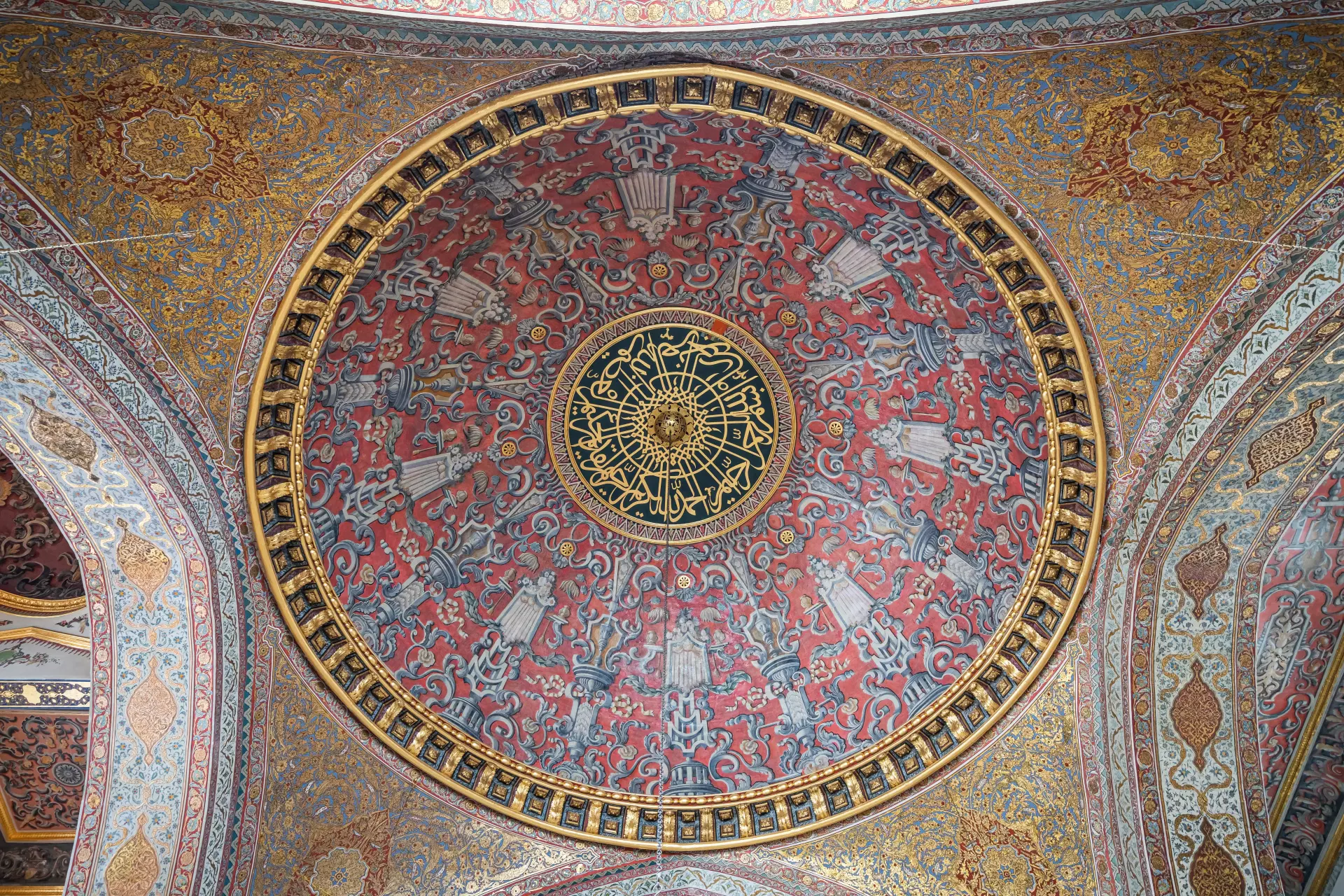
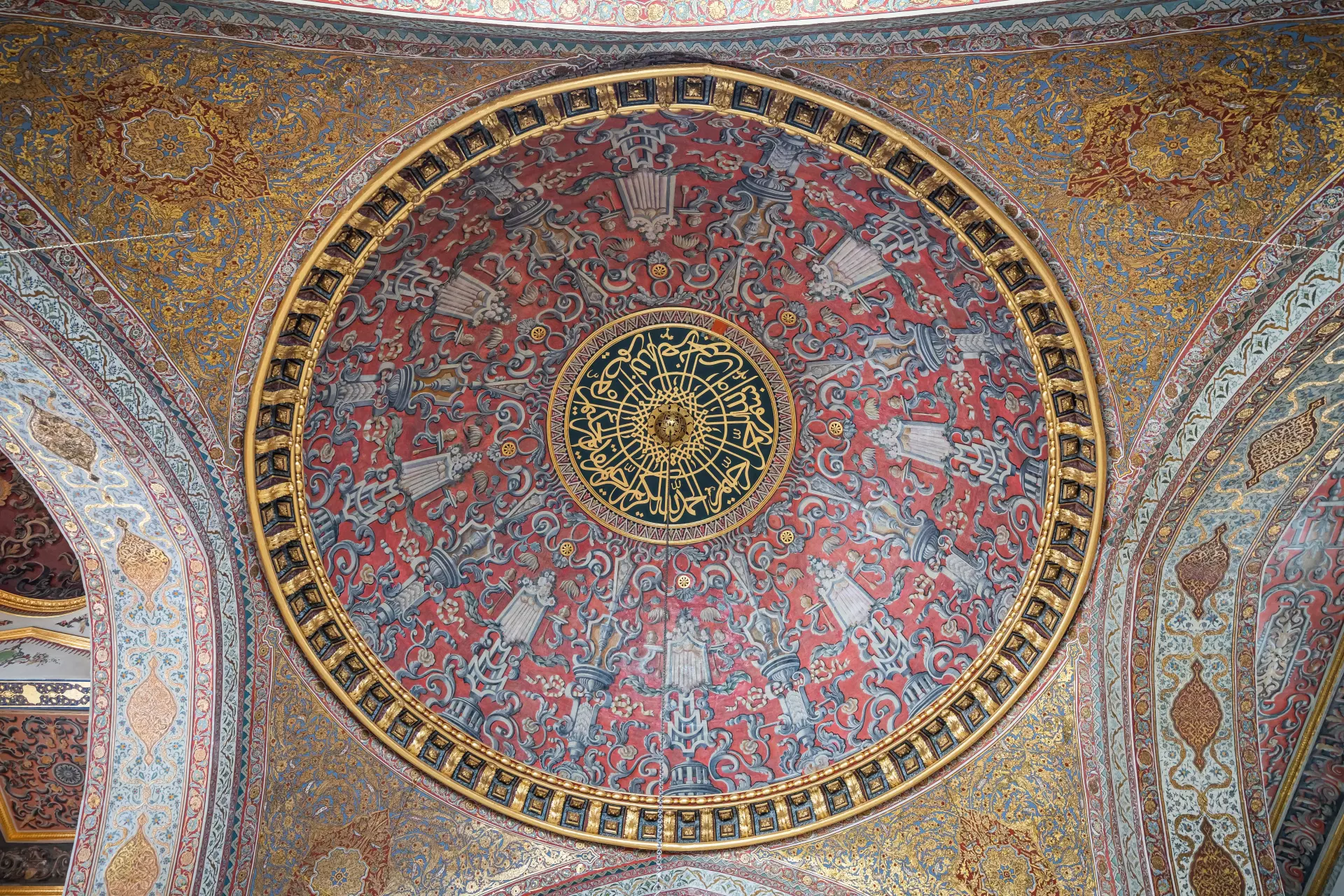
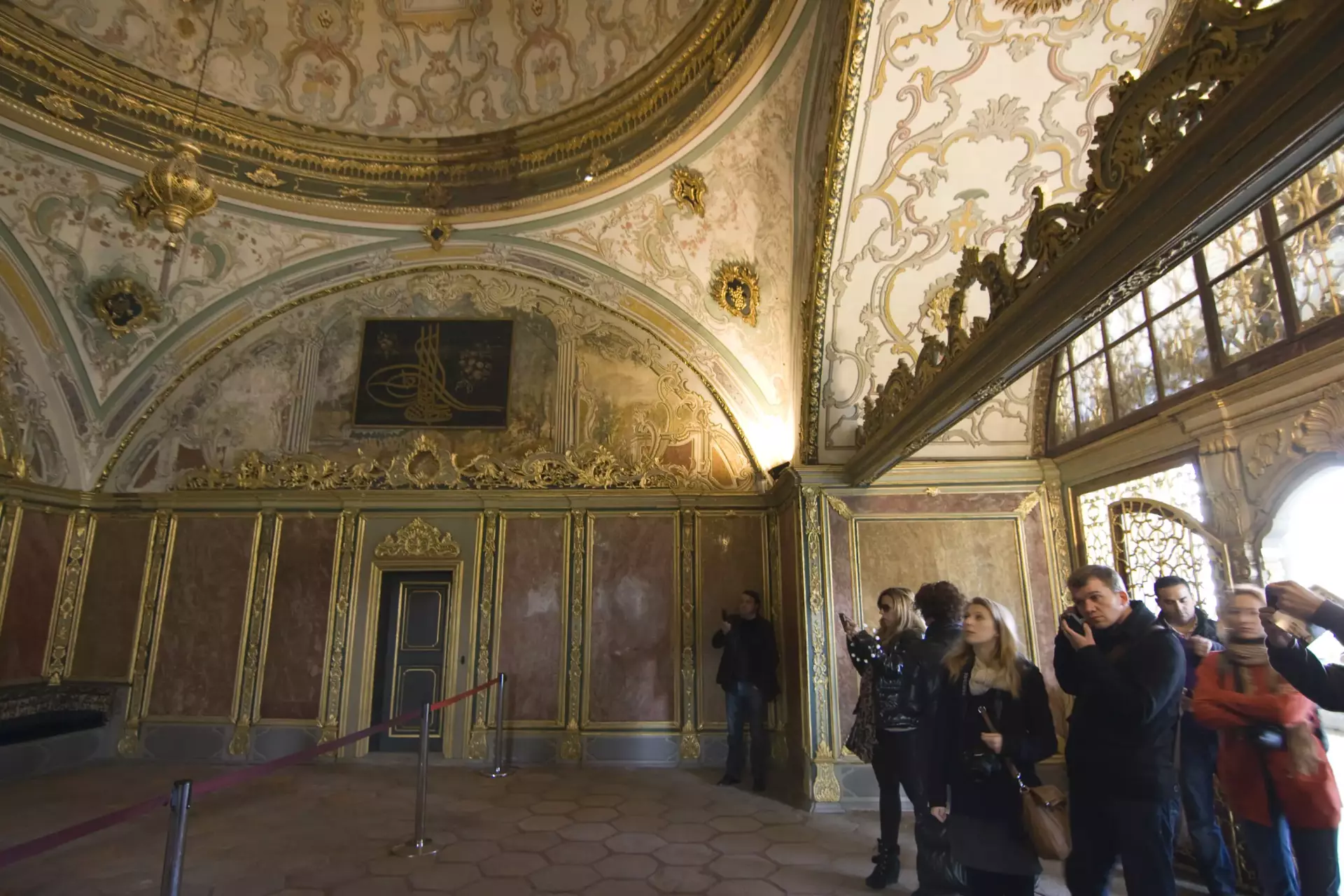
English:  Dome of the Imperial Hall in Harem of Topkapı Palace in Istanbul, Turkey Русский:  Купол Тронного зала в Гареме дворца Топкапы в Стамбуле, Турция
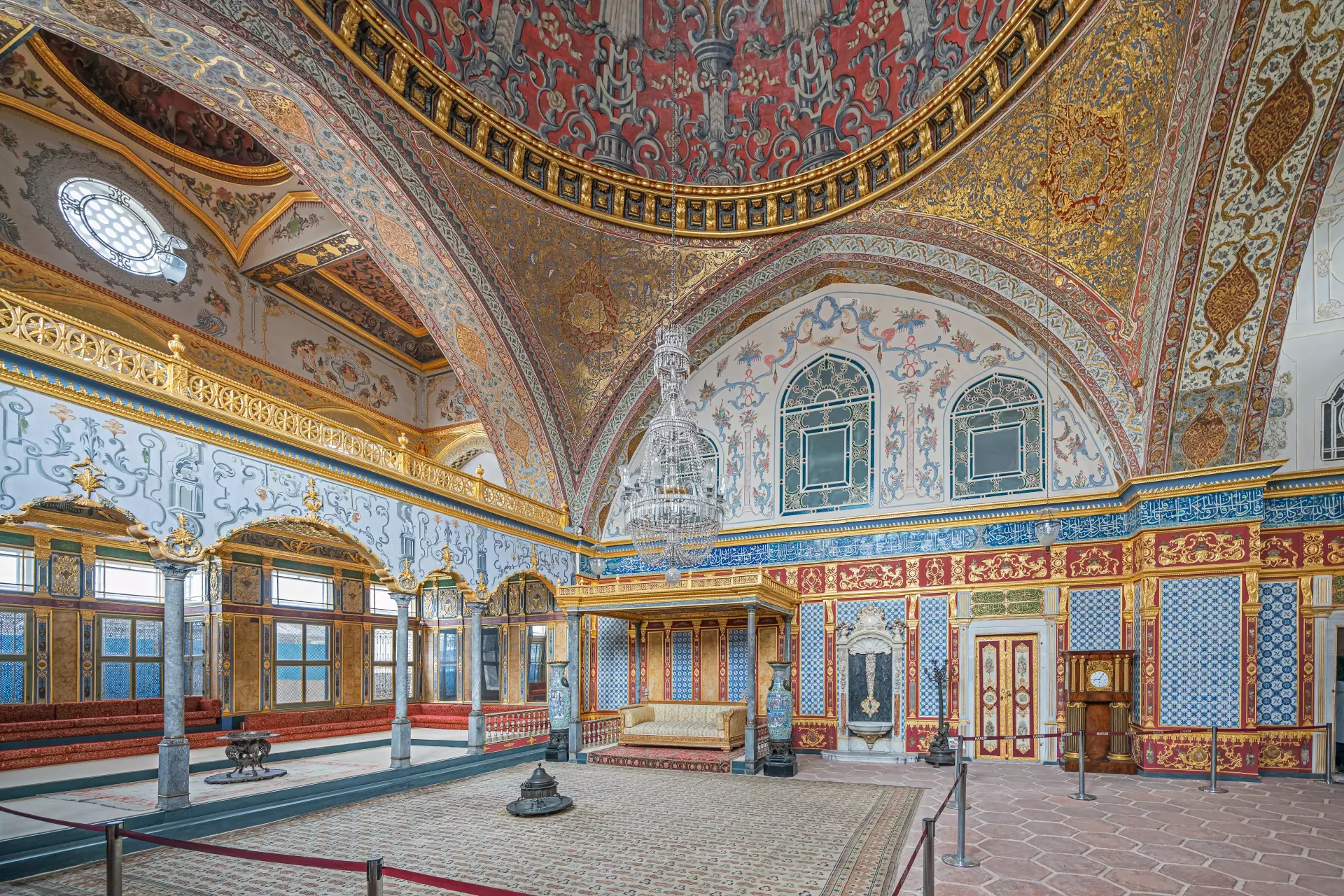
English:  Imperial Hall in Harem of Topkapı Palace in Istanbul, Turkey Русский:  Тронный зал в Гареме дворца Топкапы в Стамбуле, Турция
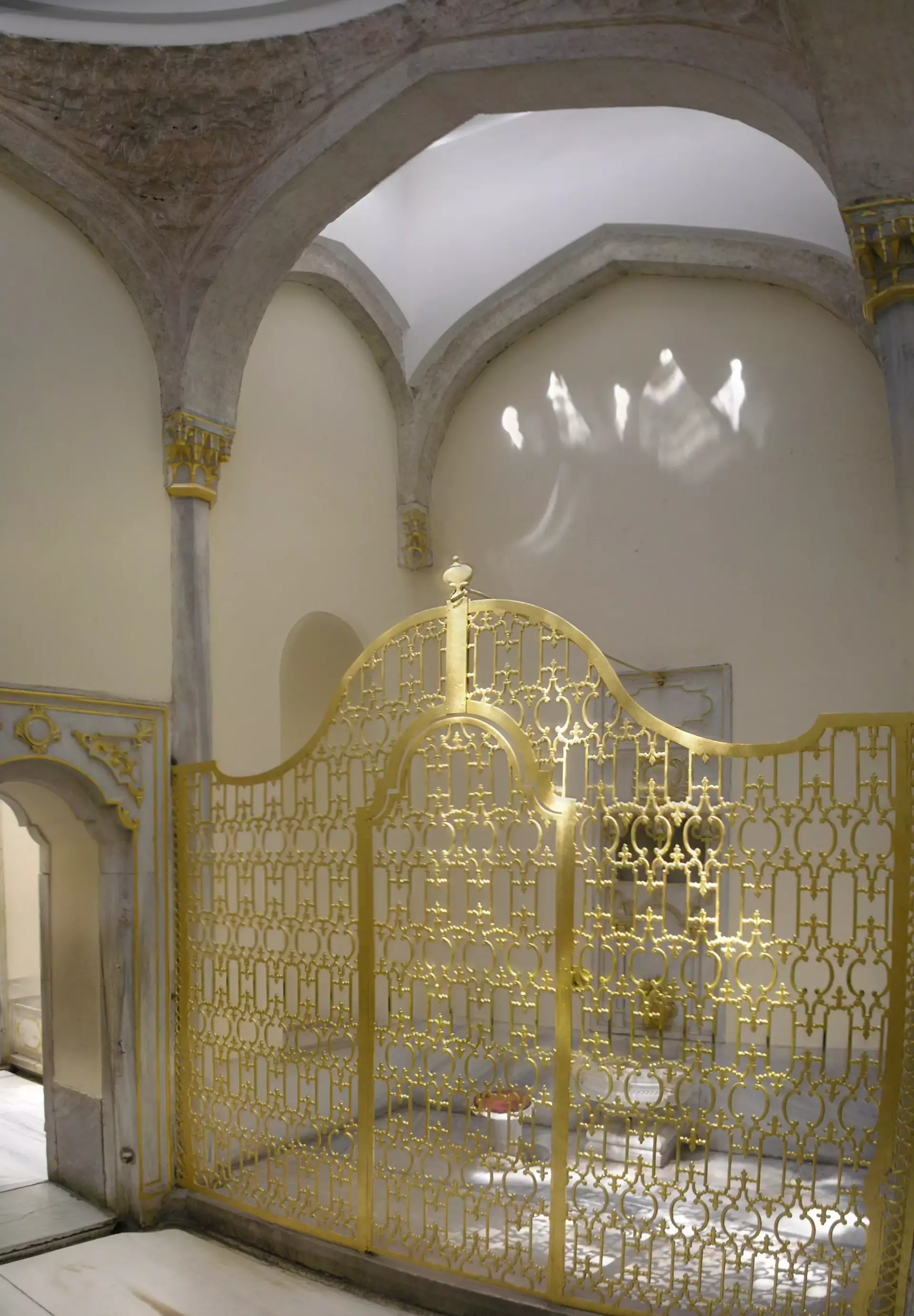
The gilded cage door of the private bath of the Valide Sultan (Queen Mother), in the Topkapi Palace, Istanbul. Only she would hold the key and lock herself up during her bath so that nobody could kill her.
The Topkapı Palace is a large palace in Istanbul that was the primary residence of the Ottoman Sultans for approximately 400 years (1465-1856) of their 624-year reign.  The Imperial Harem (Harem-i Hümayûn) occupied one of the sections of the private apartments of the sultan; it contained more than 400 rooms. The harem was home to the sultan's mother, the Valide Sultan; the concubines and wives of the sultan; and the rest of his family, including children; and their servants. The harem consists of a series of buildings and structures, connected through hallways and courtyards. Every service team and hierarchical group residing in the harem had its own living space clustered around a courtyard. The number of rooms is not determined, with probably over 100, of which only a few are open to the public. These apartments (Daires) were occupied respectively by the harem eunuchs, the Chief Harem Eunuch (Darüssaade Ağası), the concubines, the queen mother, the sultan's consorts, the princes and the favourites. There was no trespassing beyond the gates of the harem, except for the sultan, the queen mother, the sultan's consorts and favourites, the princes and the concubines as well as the eunuchs guarding the harem. The harem wing was only added at the end of the 16th century. Many of the rooms and features in the Harem were designed by Mimar Sinan. The harem section opens into the Second Courtyard (Divan Meydanı), which the Gate of Carriages (Arabalar Kapısı) also opens to. The structures expanded over time towards the Golden Horn side and evolved into a huge complex. The buildings added to this complex from its initial date of construction in the 15th century until the early 19th century capture the stylistic development of palace design and decoration. Parts of the harem were redecorated under the sultans Mahmud I and Osman III in an Italian-inspired Ottoman Baroque style. These decorations contrast with those of the Ottoman classical age [Wikipedia.org]
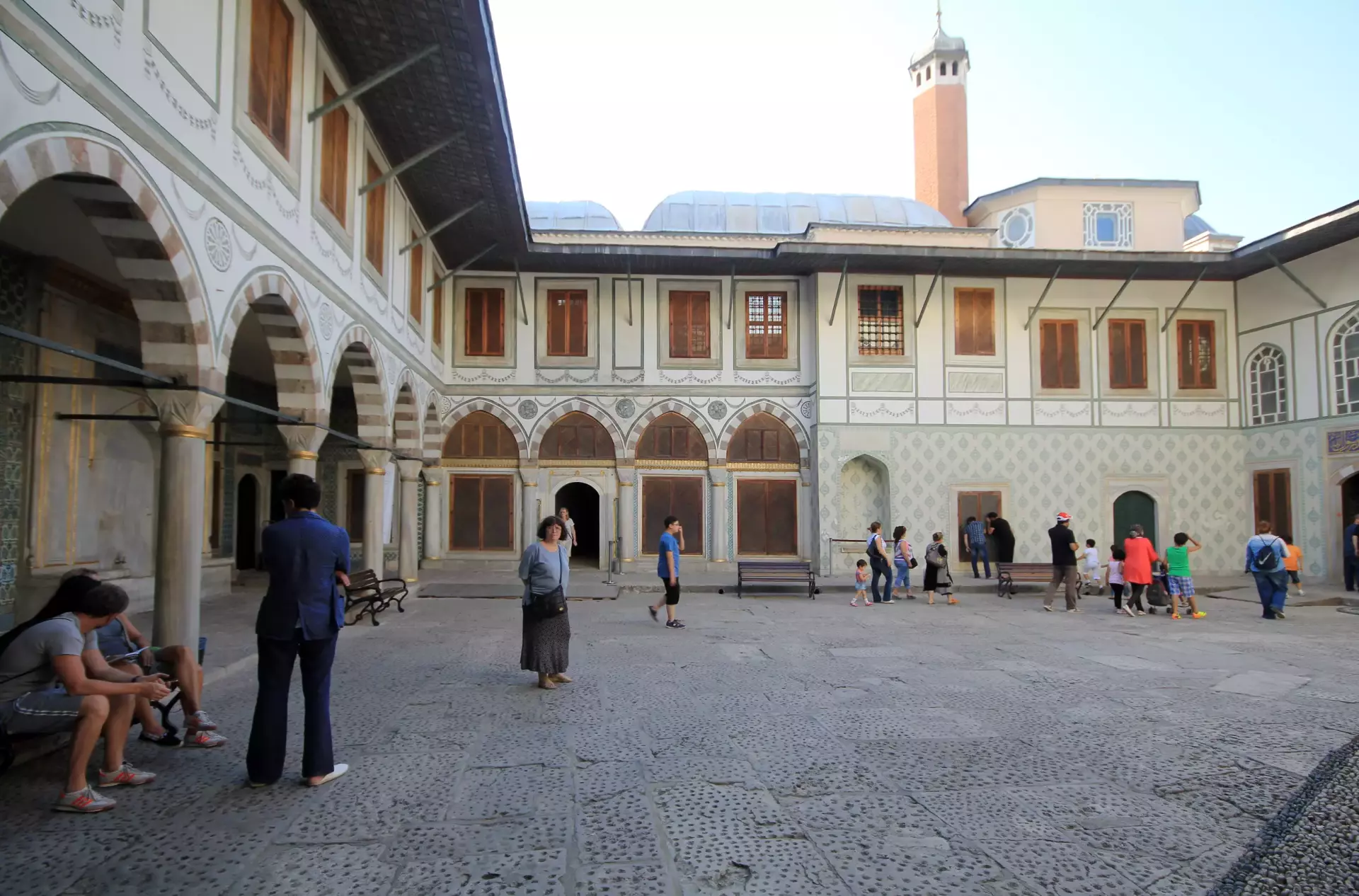
English:  Countyard in Apartments of the Queen Mother in Harem of Topkapı Palace in Istanbul, Turkey Čeština:  Nádvoří apartmánů královny matky v harému  paláce Topkapi  v tureckém Istanbulu
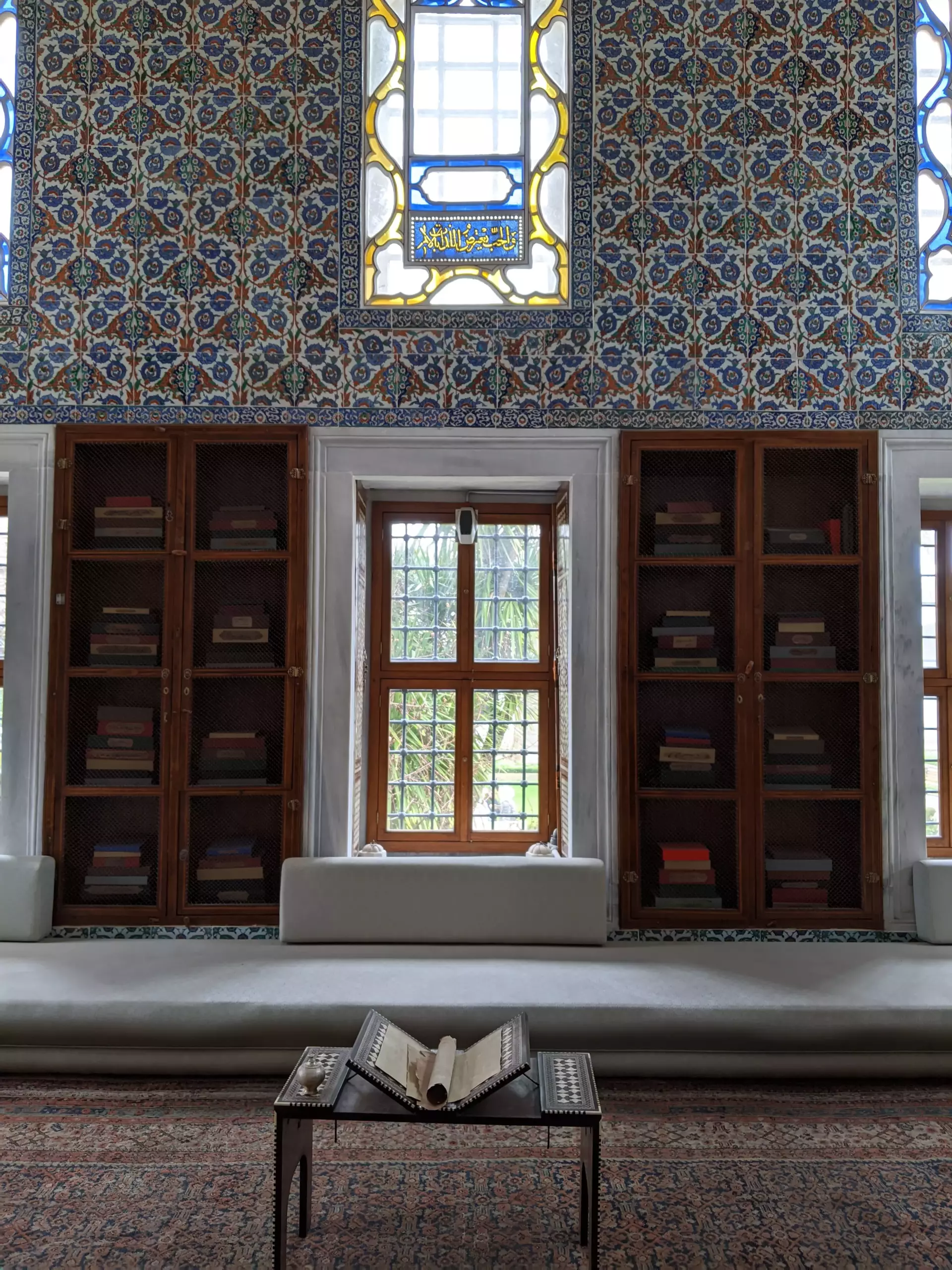
English:  Reconstruction of an Ottoman style library, in the Topkapı Palace museum    Topkapı Palace         Native name Topkapı   Parent institution Historic Areas of Istanbul   Location Istanbul , Turkey  Coordinates 41° 00′ 46.8″ N, 28° 59′ 02.4″ E     Established 1460   Website www.millisaraylar.gov.tr/en/palaces/topkapi-palace   Authority file  : Q170495 GND: 4263672-3 NKC: kn20030303021    institution QS:P195,Q170495
Another room in the harem in Topkapi Palace.
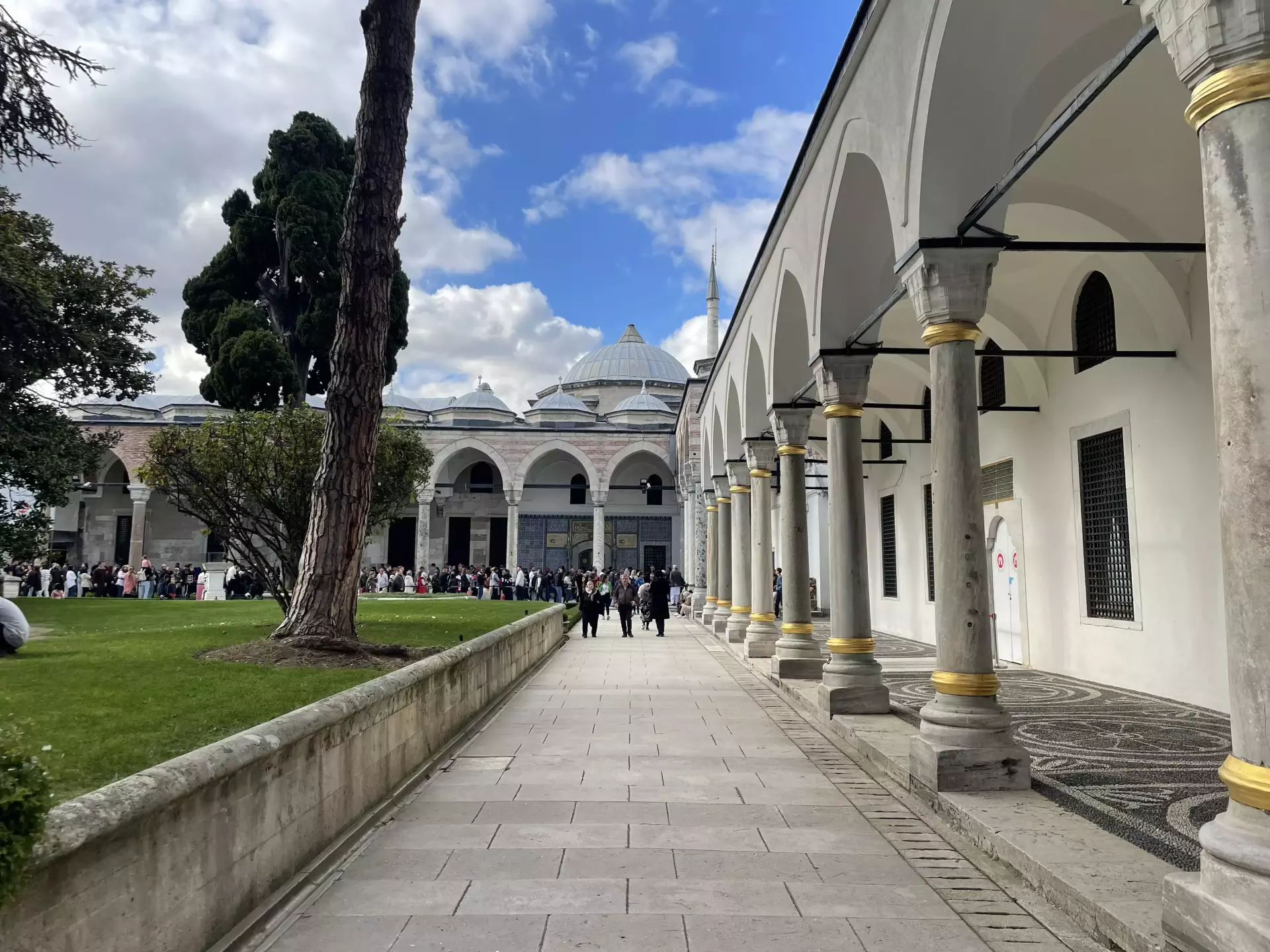
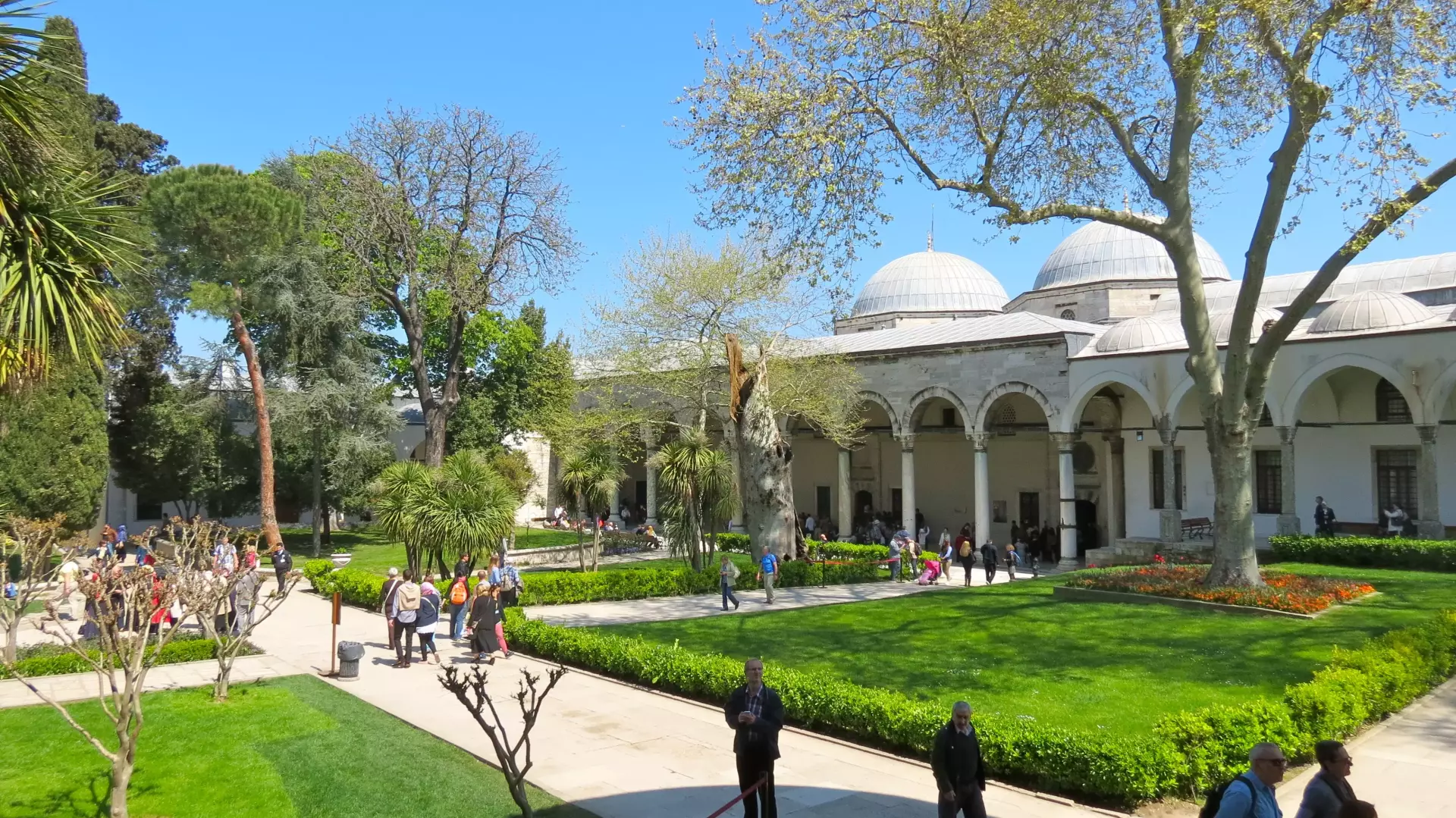
English:  Third Courtyard of the Topkapı Palace
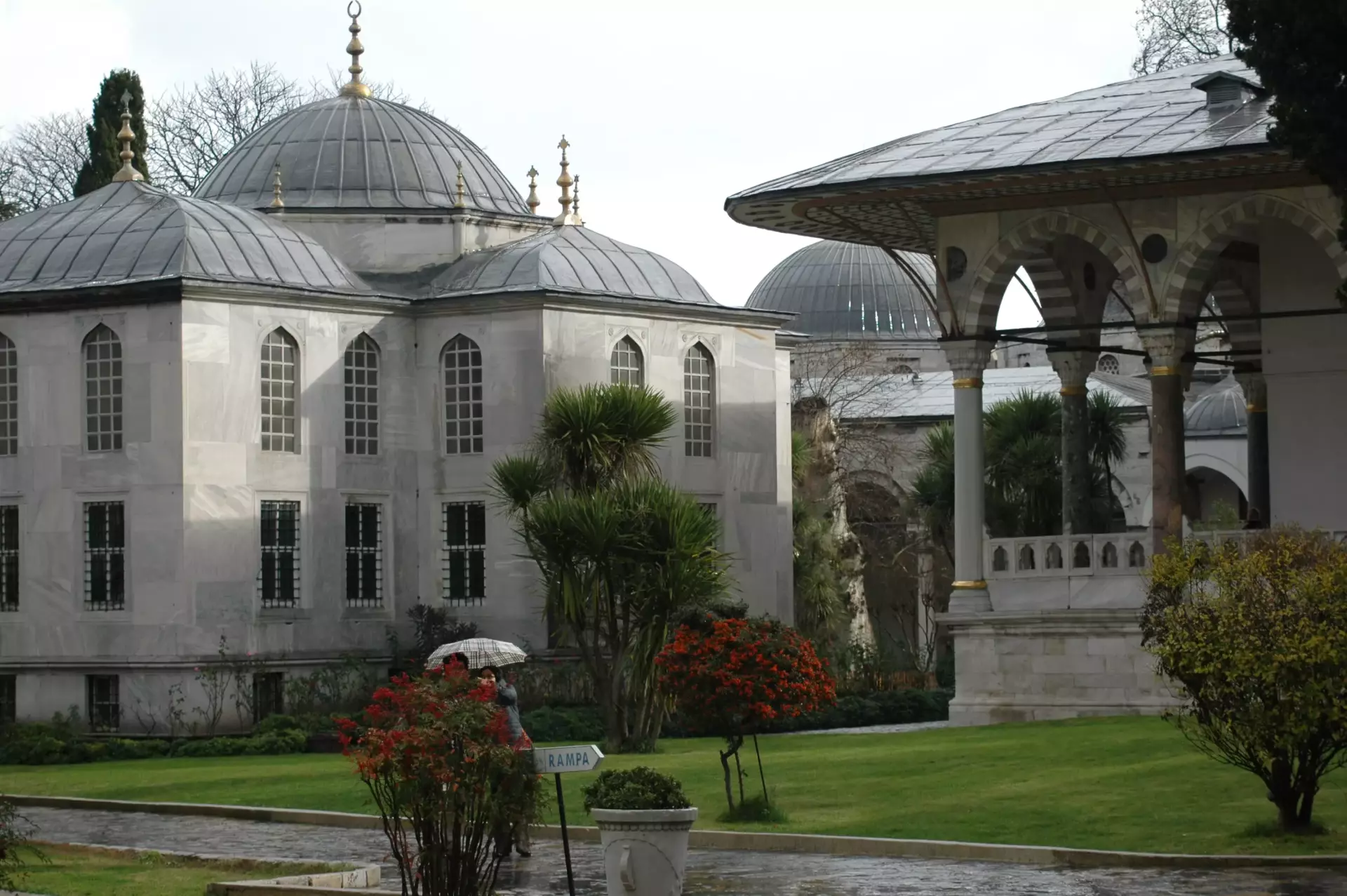
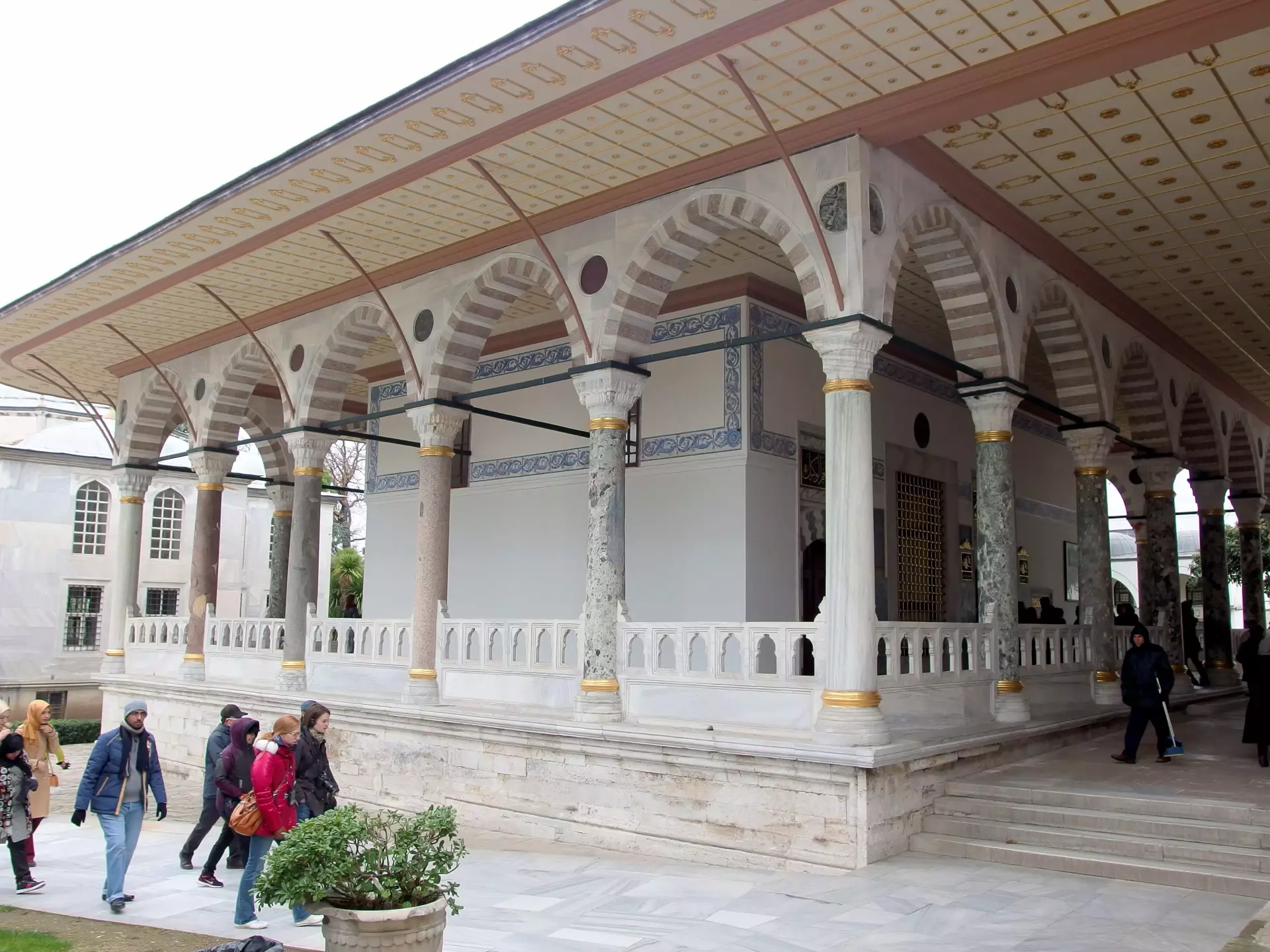
Library of Ahmed III on the left, the Audience Chamber on the right. Located in the Third Court;  Topkapi palace; Istanbul, Turkey      Català:  Interior del palau
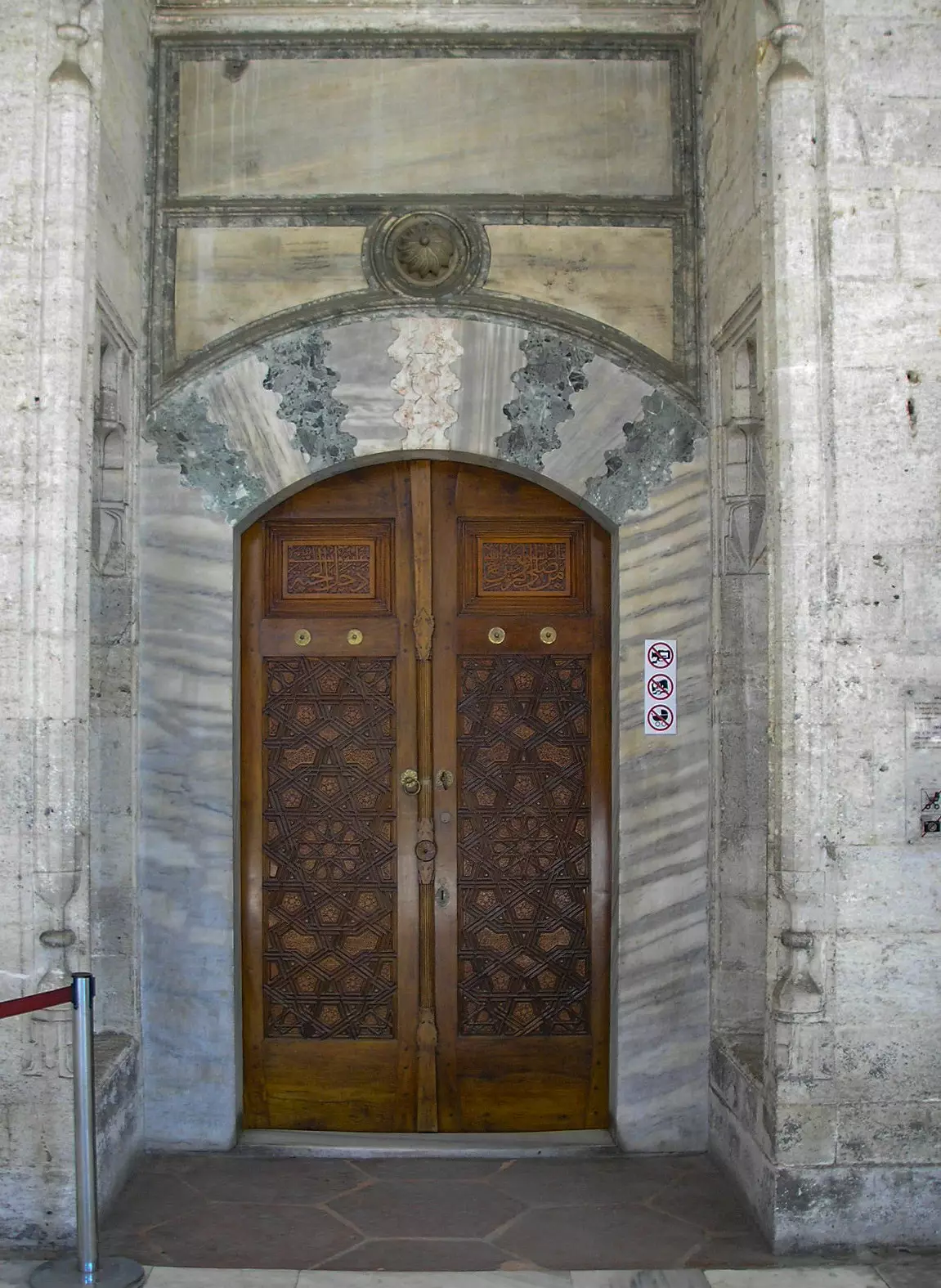
One of the doors leading into the Conqueror’s Pavilion, also called the Conqueror's Kiosk (Fatih Köşkü) and the arcade of the pavilion in front is one of the finest pavilions built under Sultan Mehmed the Conqueror and one of the oldest buildings inside the palace. It was built circa in  1460, when the palace was first constructed, and was also used to store works of art and treasure. Until today it houses the Imperial Treasury.
Tokpabi Palace
Arz Odasi seen in the third  court; Topkapı Palace, Istanbul, Turkey
English:  2013-12-04 in Istanbul.
20180115_Topkapi_8175
English:  Istanbul, Topkapi: la porta della felicità Italiano:  Istanbul, Topkapi: la porta della felicità
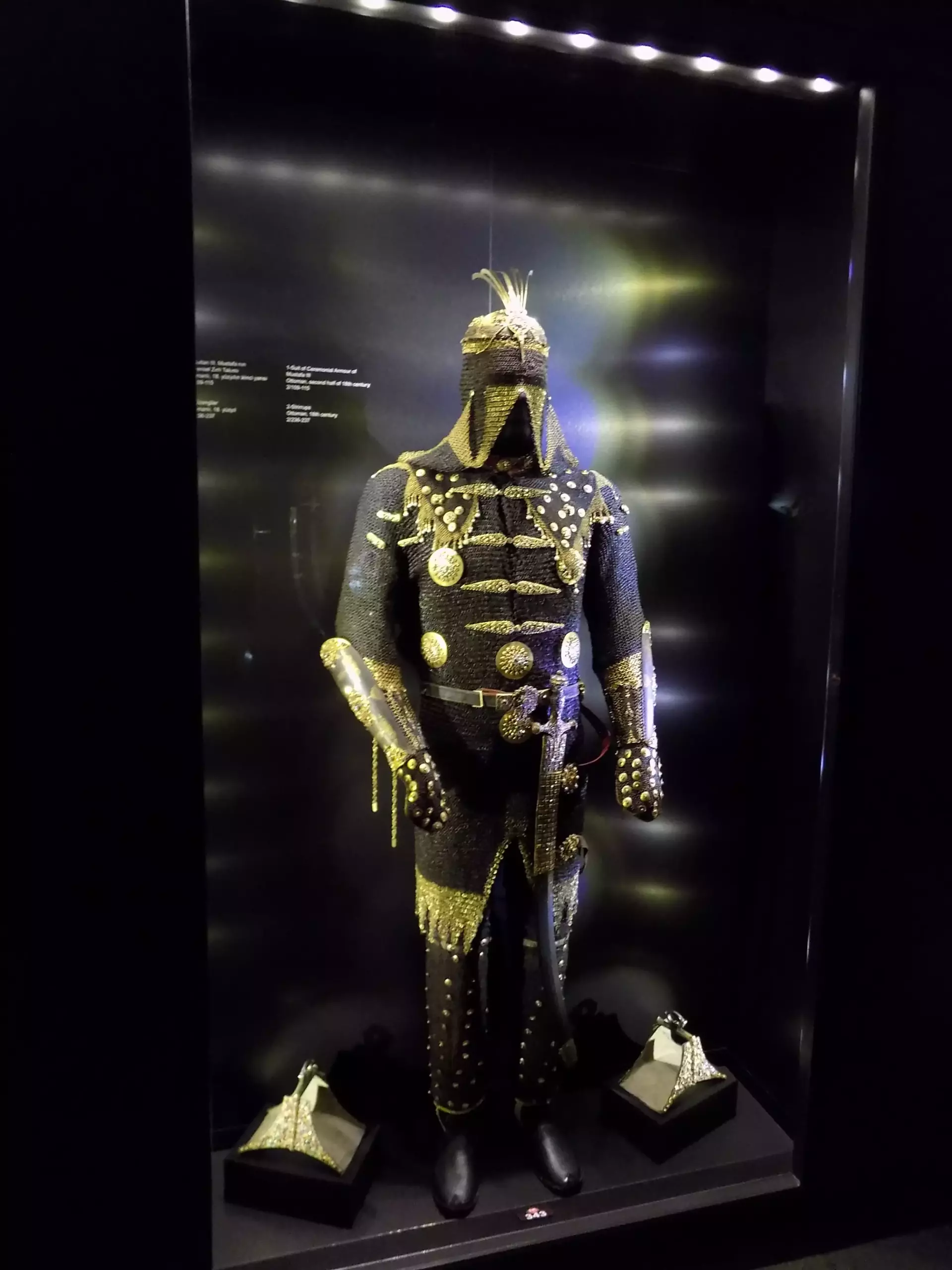
Türkçe:  Topkapı Sarayı Müzesinde sergilenen III. Mustafa'nın tören zırhı.
English:  Topkapı Palace, Istanbul, Turkey Українська:  Топкапи, Стамбул, Туреччина
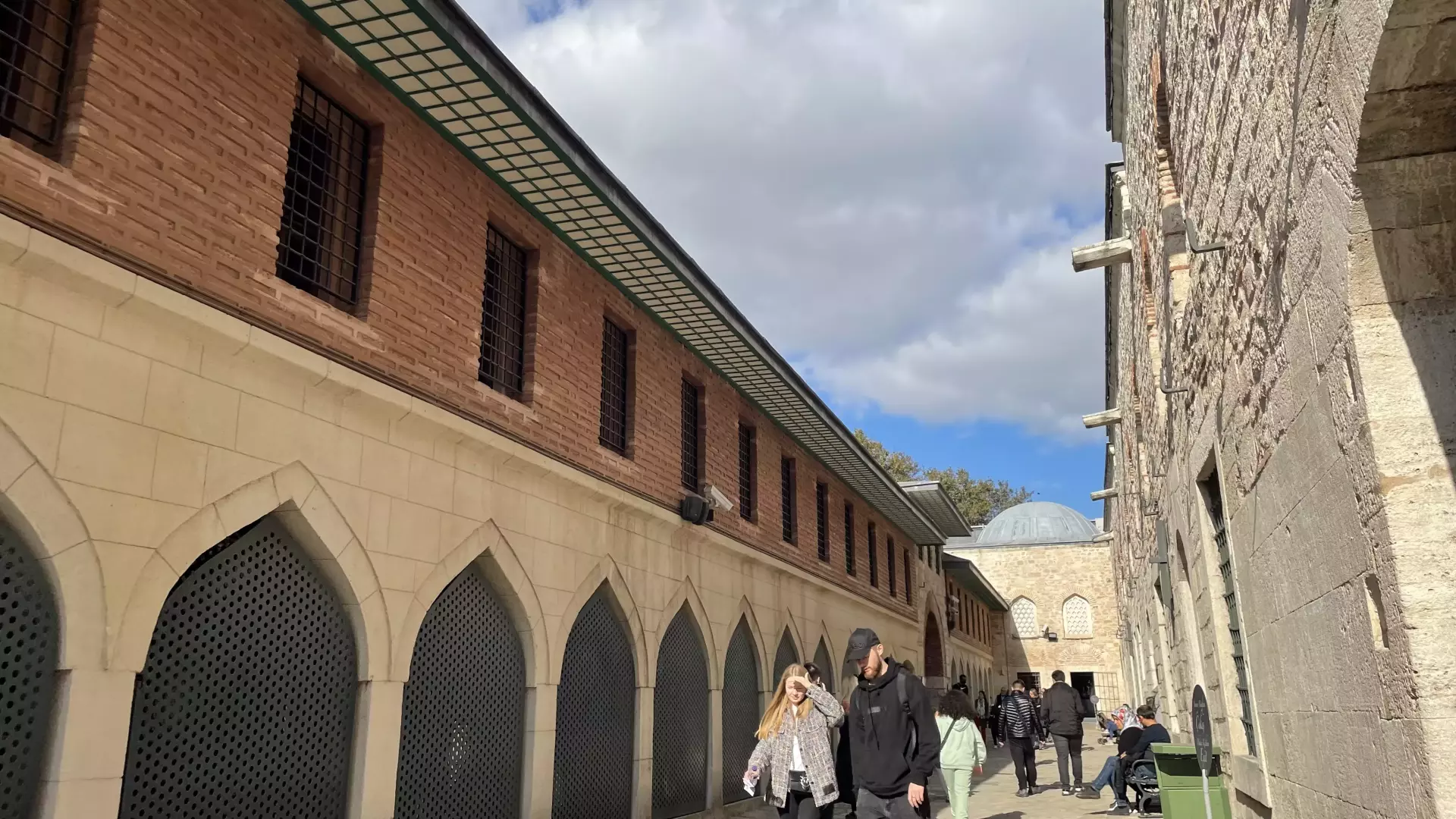
English:  The kitchens of Topkapı Palace
Turkey, Istanbul, Topkapi Palace
20180115_Topkapi_8030

Topkapı Palace

Istanbul, Turkey

Topkapı Palace served as the imperial residence of Ottoman sultans for 400 years. This grand complex is known for its rich decorations, stunning architecture, and fascinating exhibitions that highlight the artistry and lifestyle of a powerful empire.

The Four Courts of Topkapı Palace

The palace is divided into four main courtyards, each more impressive than the last. The journey begins with the first and second courts, where visitors can explore the famous Harem and the State Treasury. Inside the treasury, a remarkable weaponry collection is on display, showcasing arms and armor from centuries past.

Moving into the third court, the focus shifts to the Imperial Treasury. This area holds some of the palace’s most prized possessions, including sacred relics from both Islamic and Christian traditions. Intricate jewelry, ornate artifacts, and meaningful religious items offer a glimpse into the spiritual and cultural life of the sultans.

Spectacular Views and Practical Tips

The fourth court provides breathtaking views across the Bosphorus, offering a serene contrast to the opulence found within the palace walls. Visitors can spend several hours exploring the grounds, discovering hidden gardens, and admiring the panoramic scenery.

For those planning a visit, it’s helpful to bring water, as refreshments from the museum kiosk can be quite expensive.

Source - https://en.wikipedia.org/wiki/Topkap%C4%B1_Palace

Developed by Reflex.com.ua
Contacts
  • info@reflex.com.ua
Social media