
Search ×
Home London
Victoria and Albert Museum
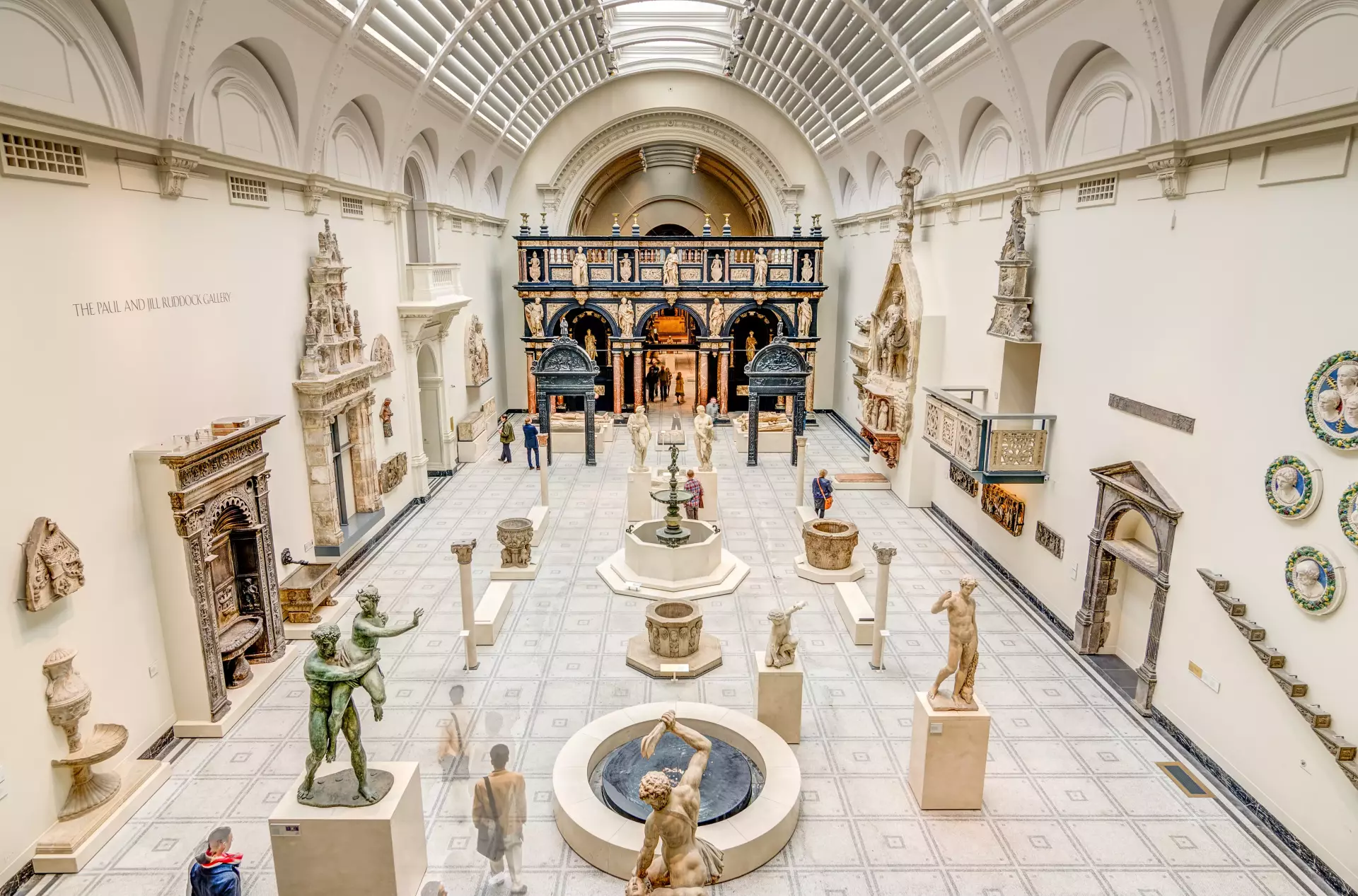
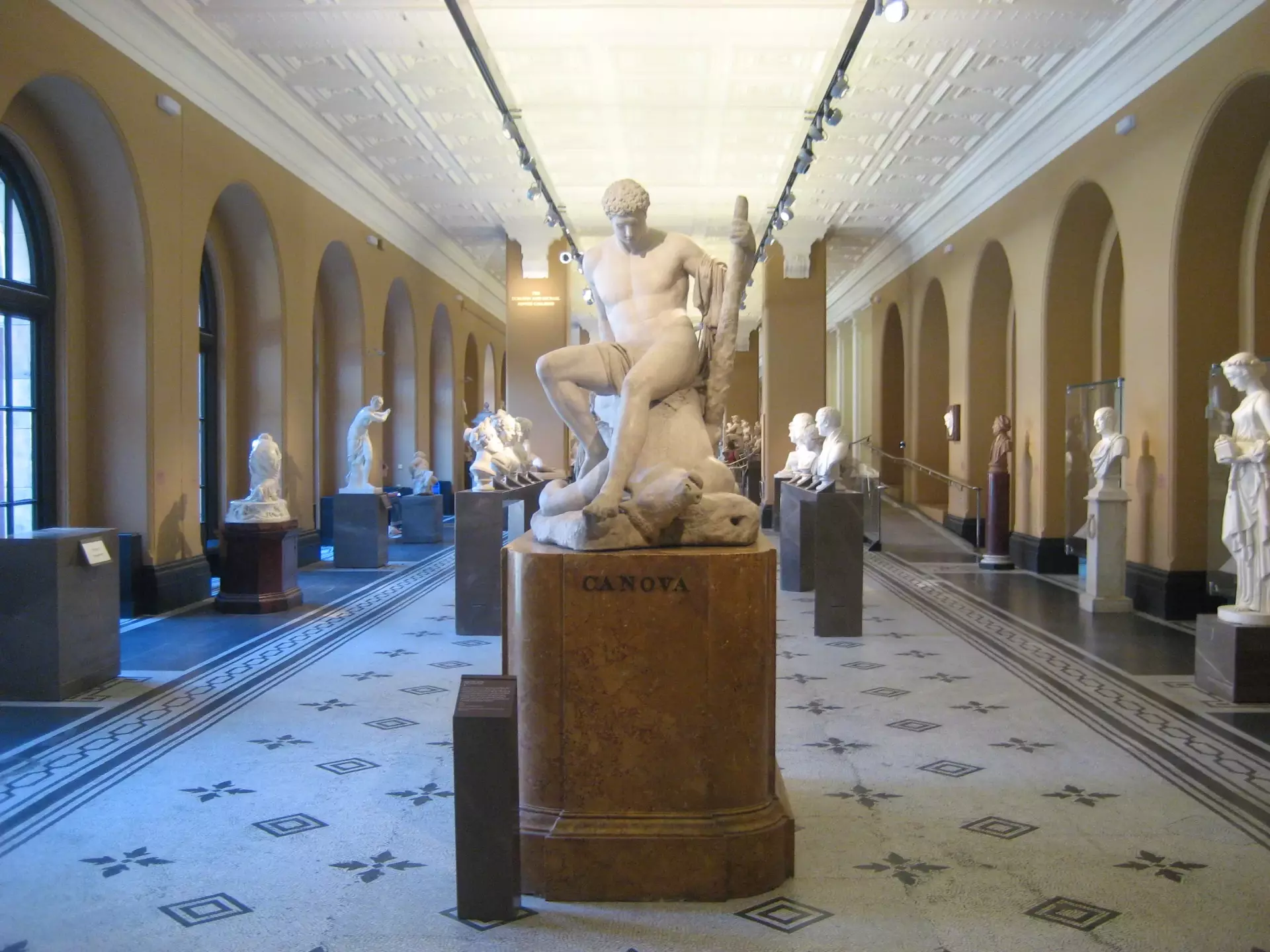
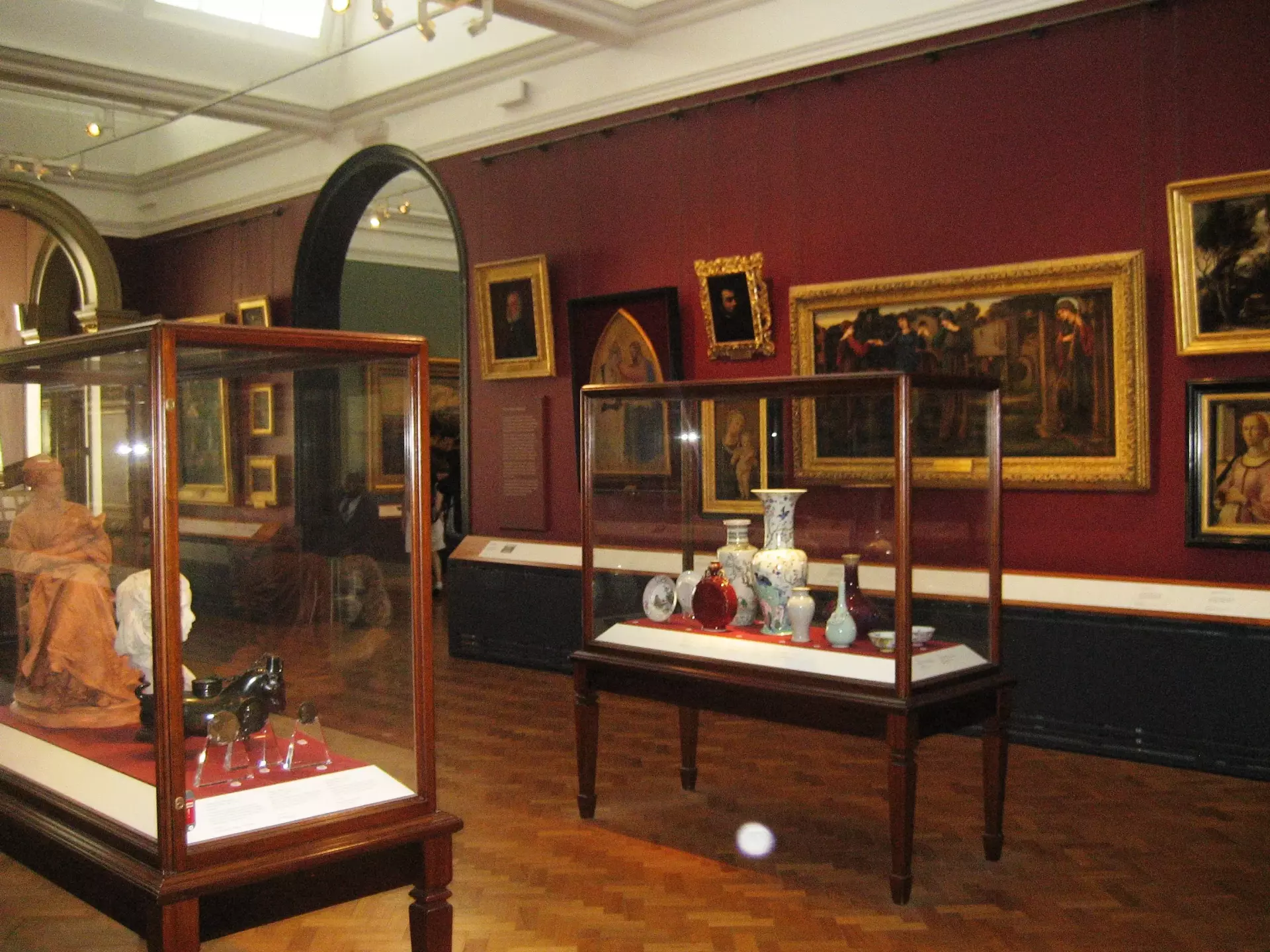
Room 50a in the Victoria and Albert Museum.
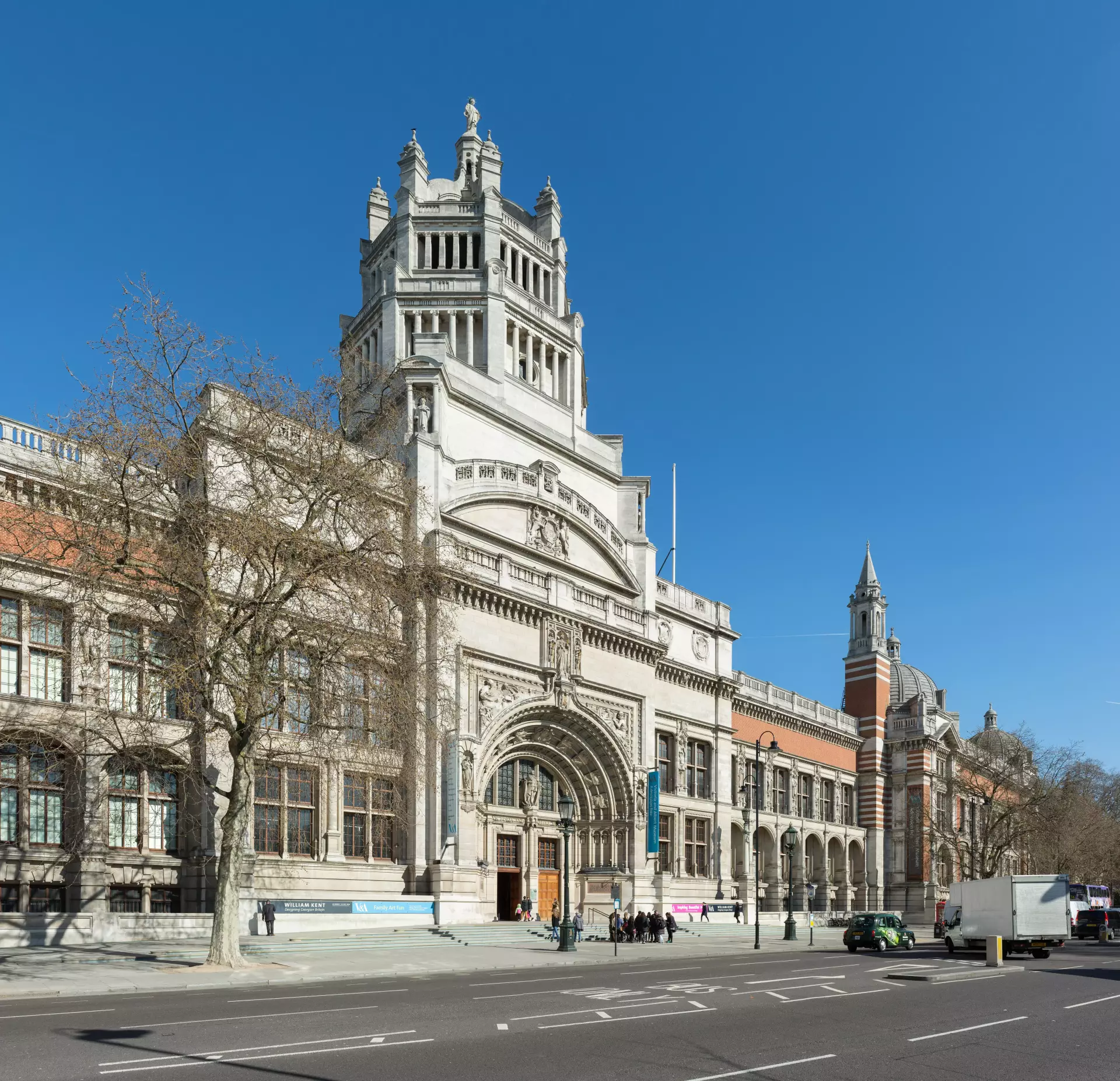
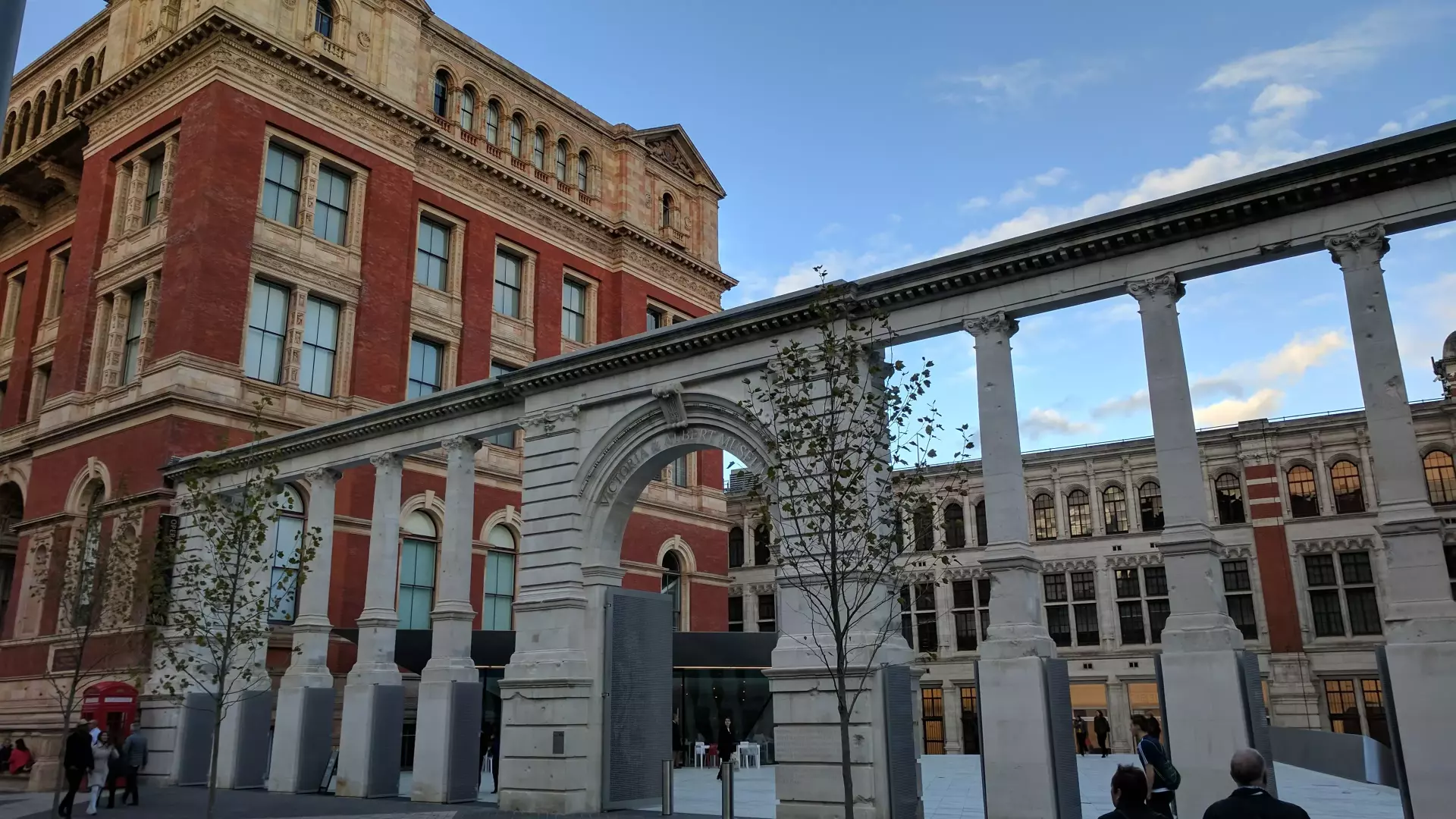
The southern entrance of the Victoria and Albert Museum in London, England.
London - Victoria and Albert Museum.
Victoria and Albert Museum
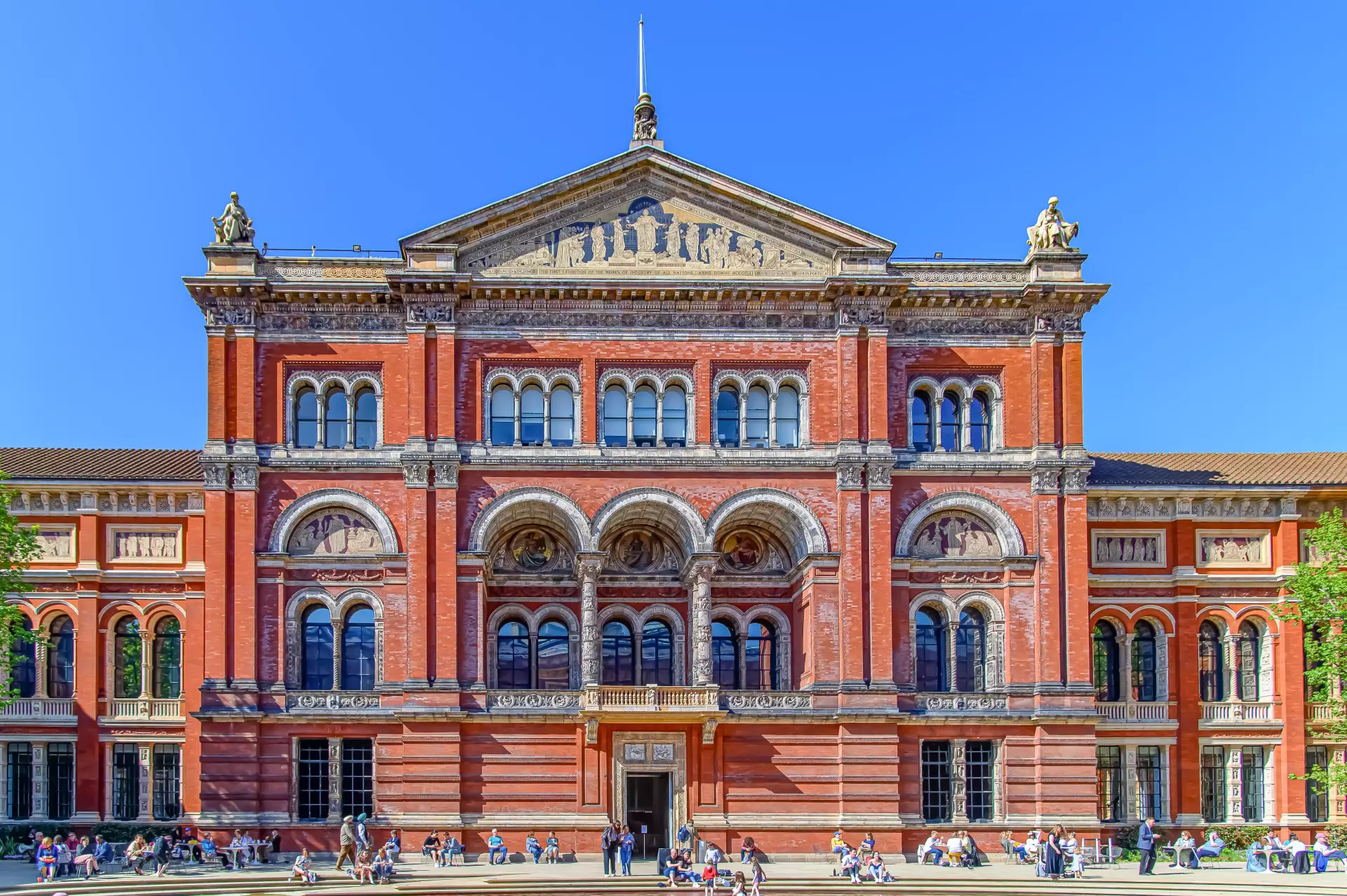
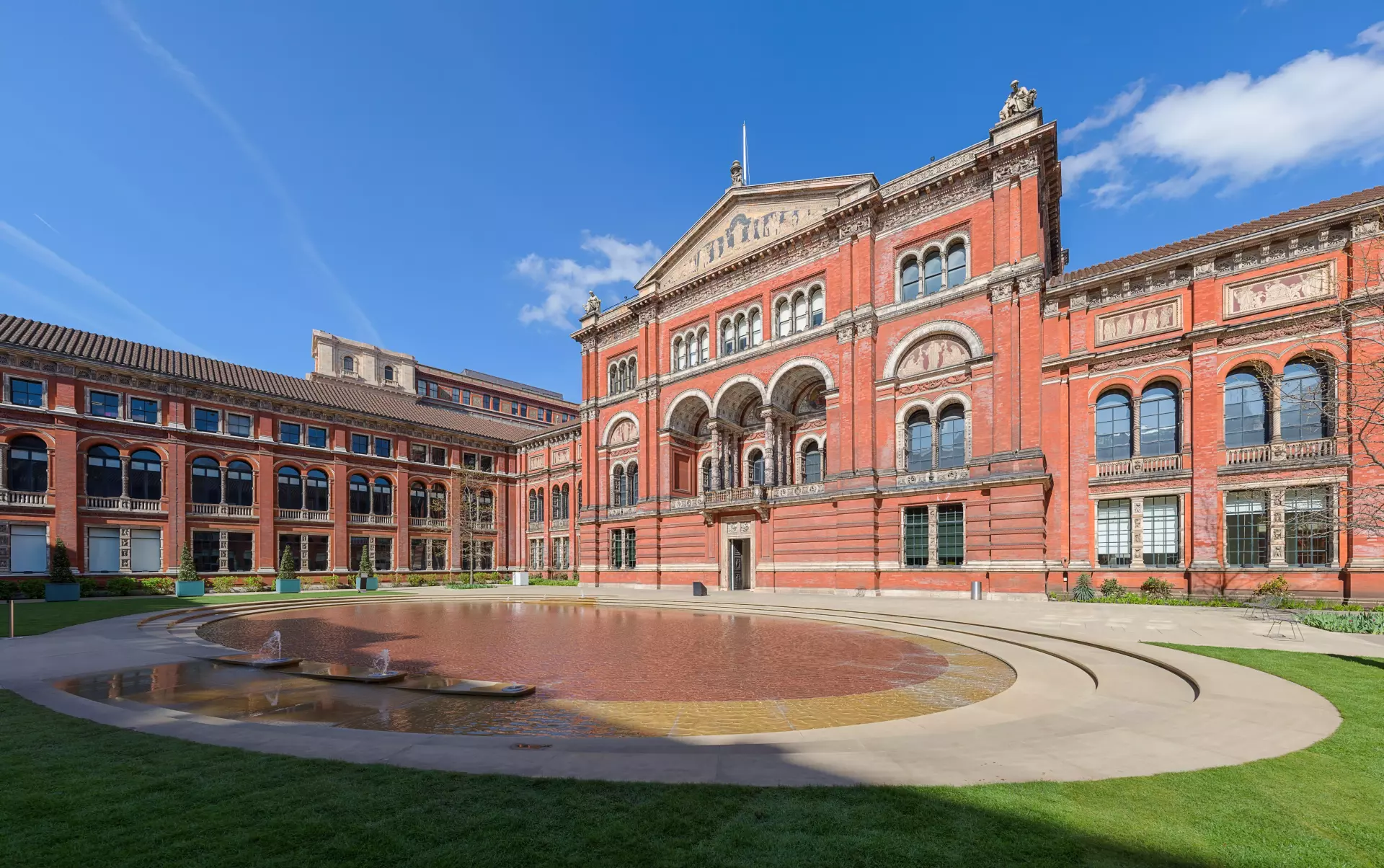
The John Madejski Garden at the Victoria & Albert Museum in London, England.
K2 Telephone Kiosk outside the Victoria and Albert Museum. This is a photo of listed building number 1265488.
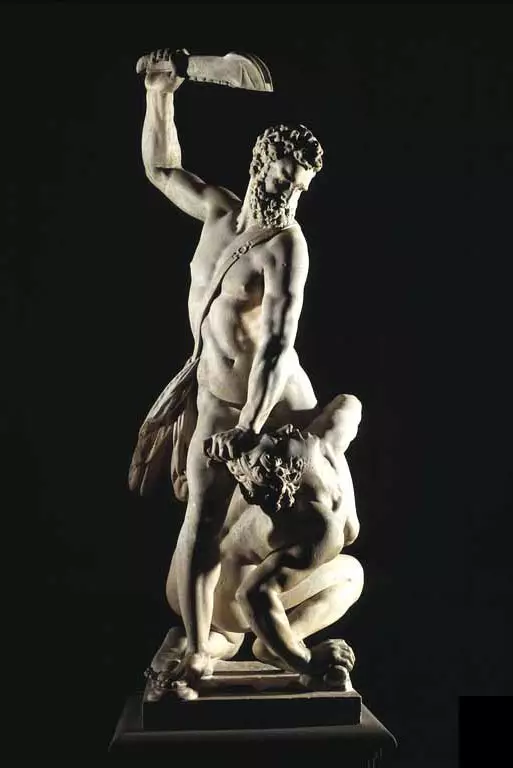
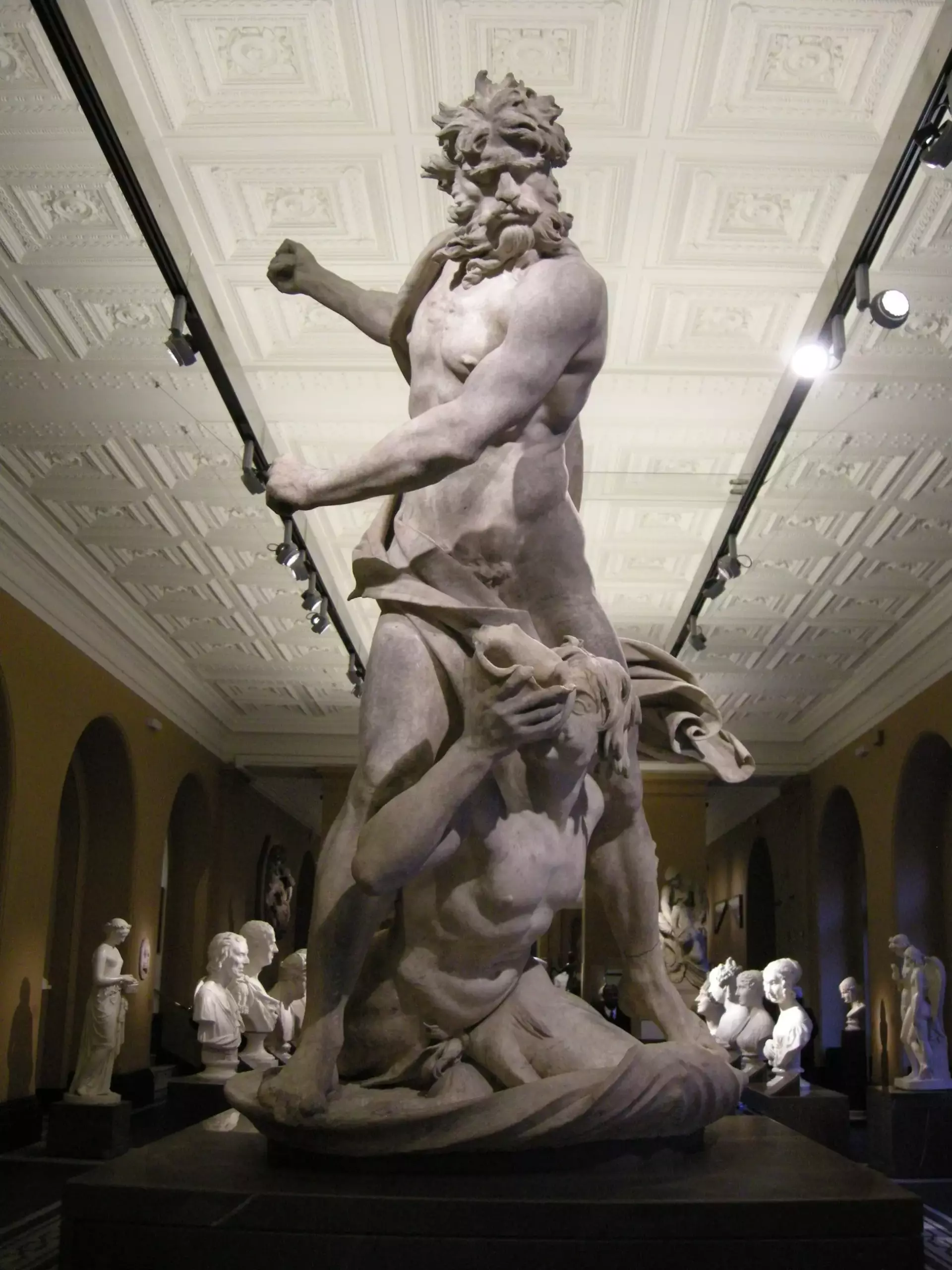
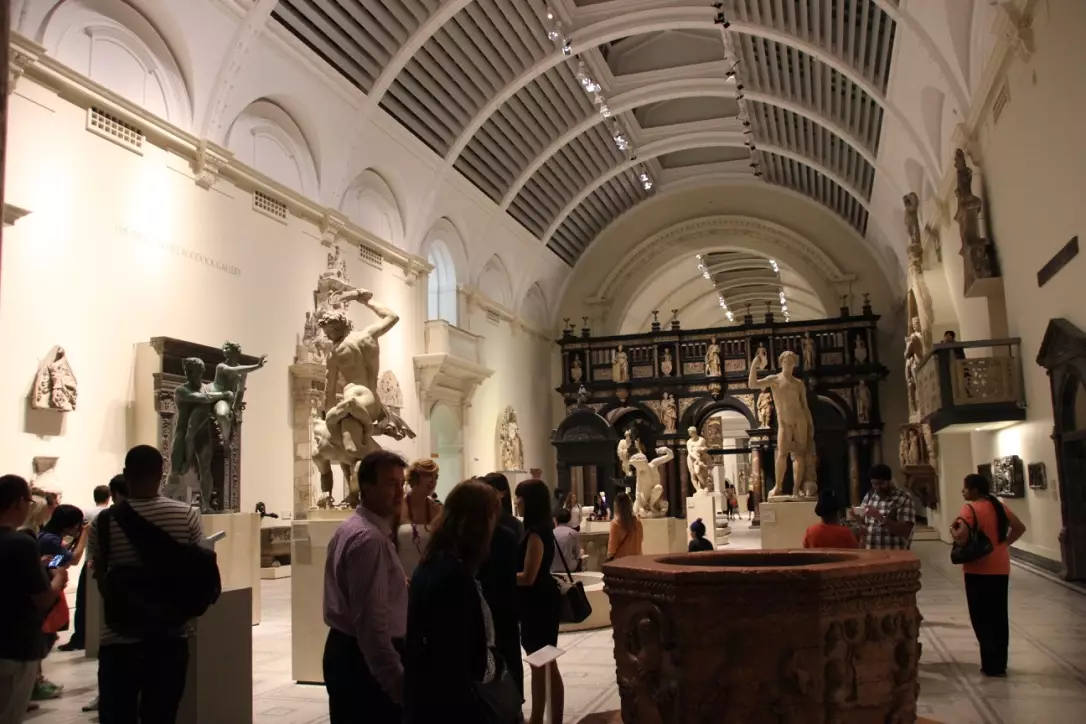
Samson Slaying a Philistine, about 1562, by Giambologna (1529-1608), is housed in the V&A Museum (no. A.7-1954). This work, carved in marble, originates from Florence, Italy, and stands at a height of 209 cm.
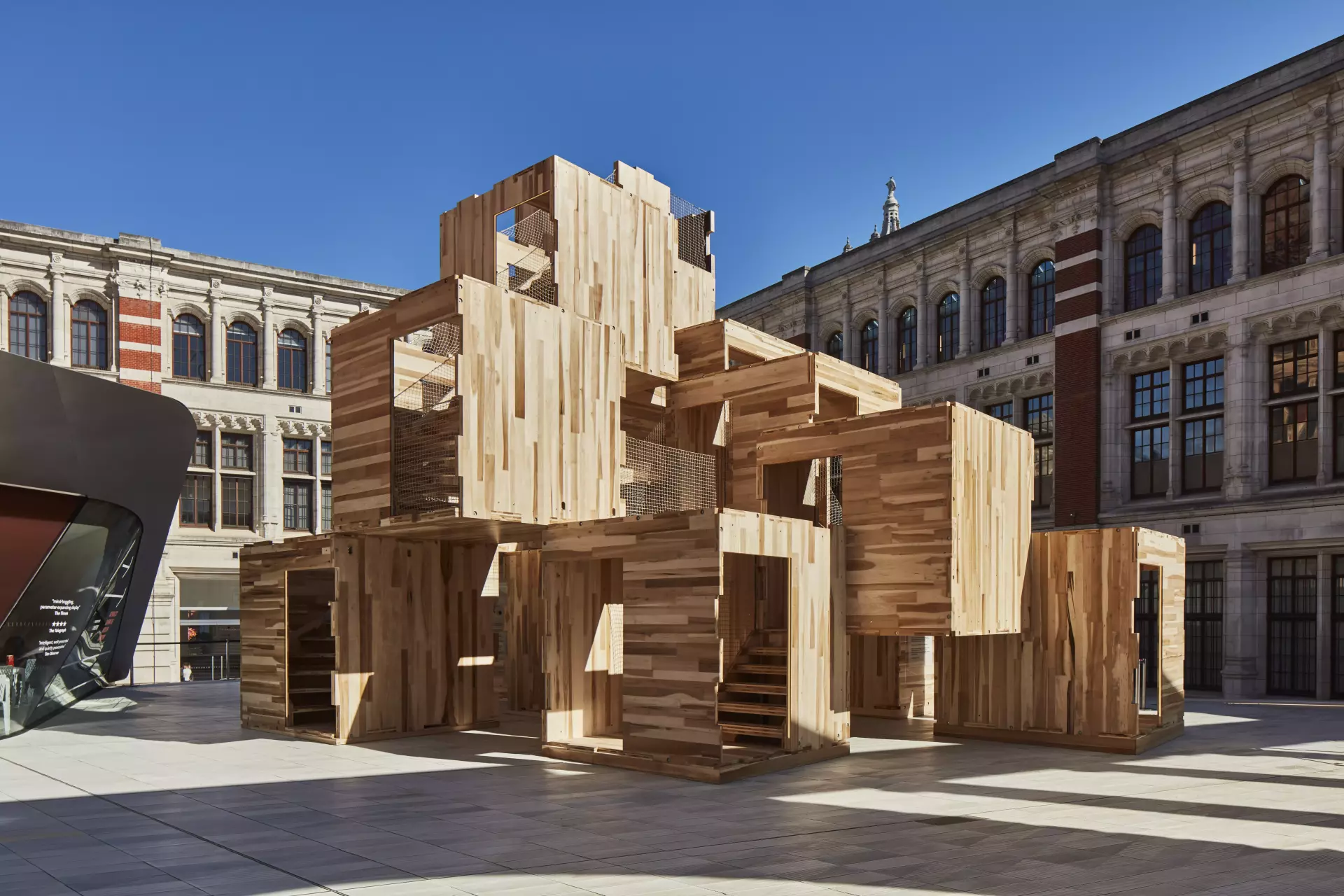
MultiPly installation by Waugh Thistleton Architects at the Victoria and Albert Museum during the 2018 London Design Festival.
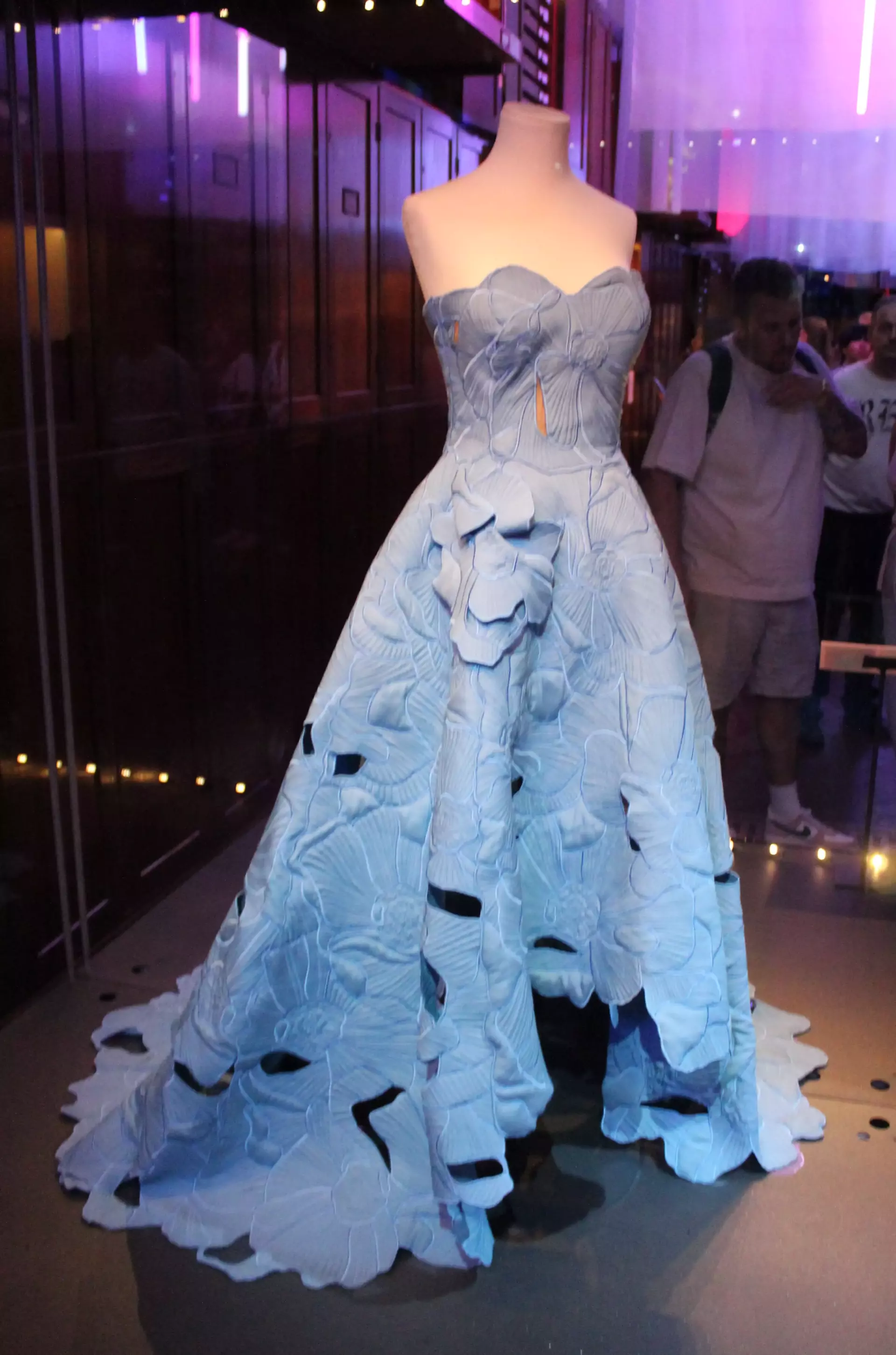
Taylor Swift Songbook Trail, Prince Consort Gallery, Victoria and Albert Museum, London. The gown worn by Swift at The Eras Tour film premiere is a polyester gown designed by Oscar de la Renta in 2023.
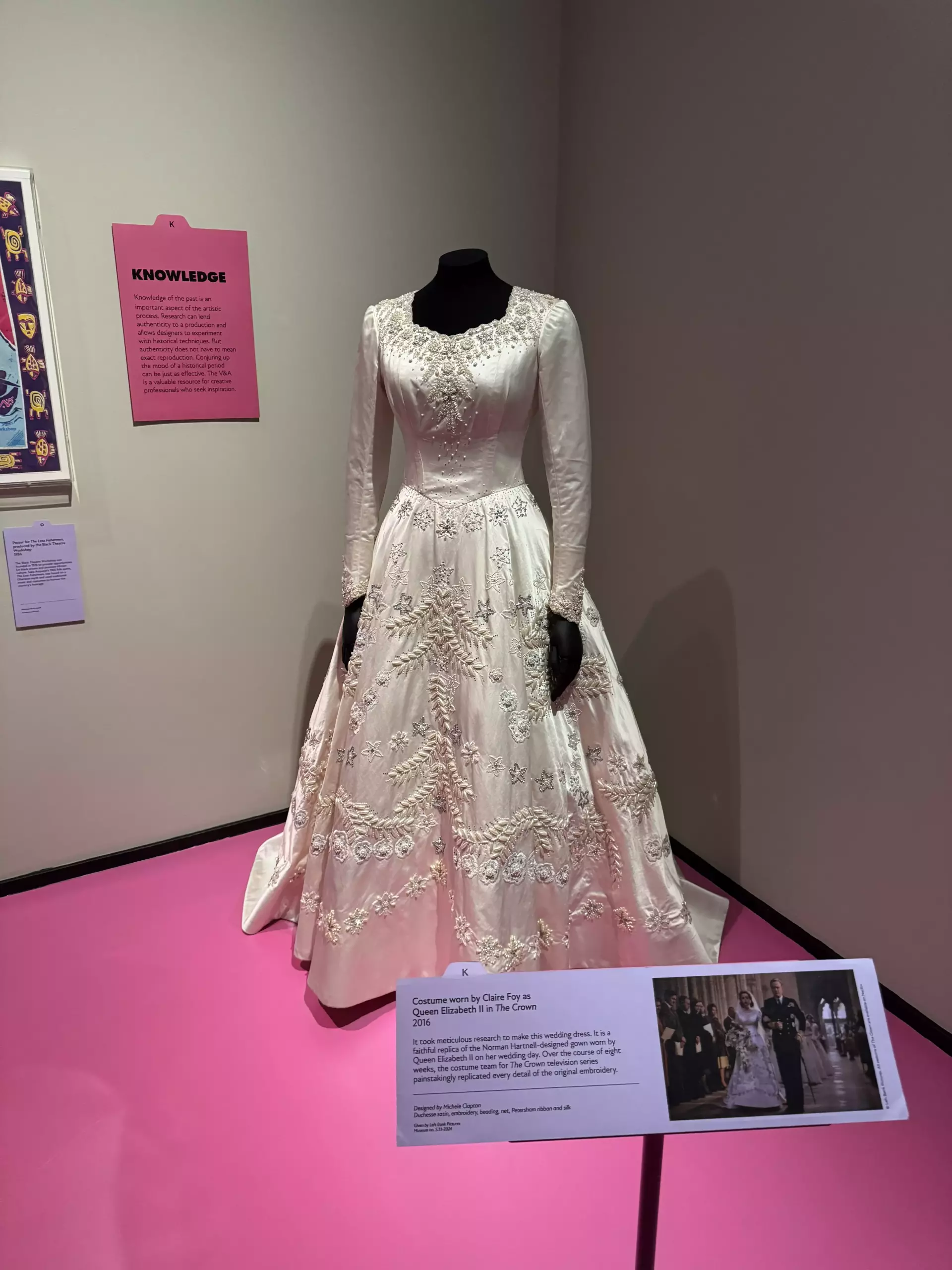
Queen Elizabeth II's wedding gown replica, worn by actress Claire Foy for "The Crown," is on exhibition at the V&A Museum in June 2025.
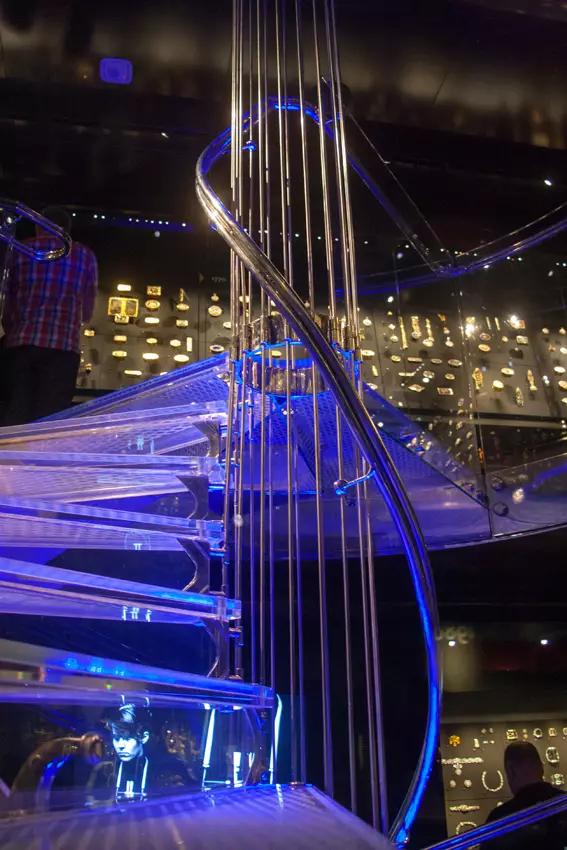
Victoria & Albert Museum jewellery gallery staircase.
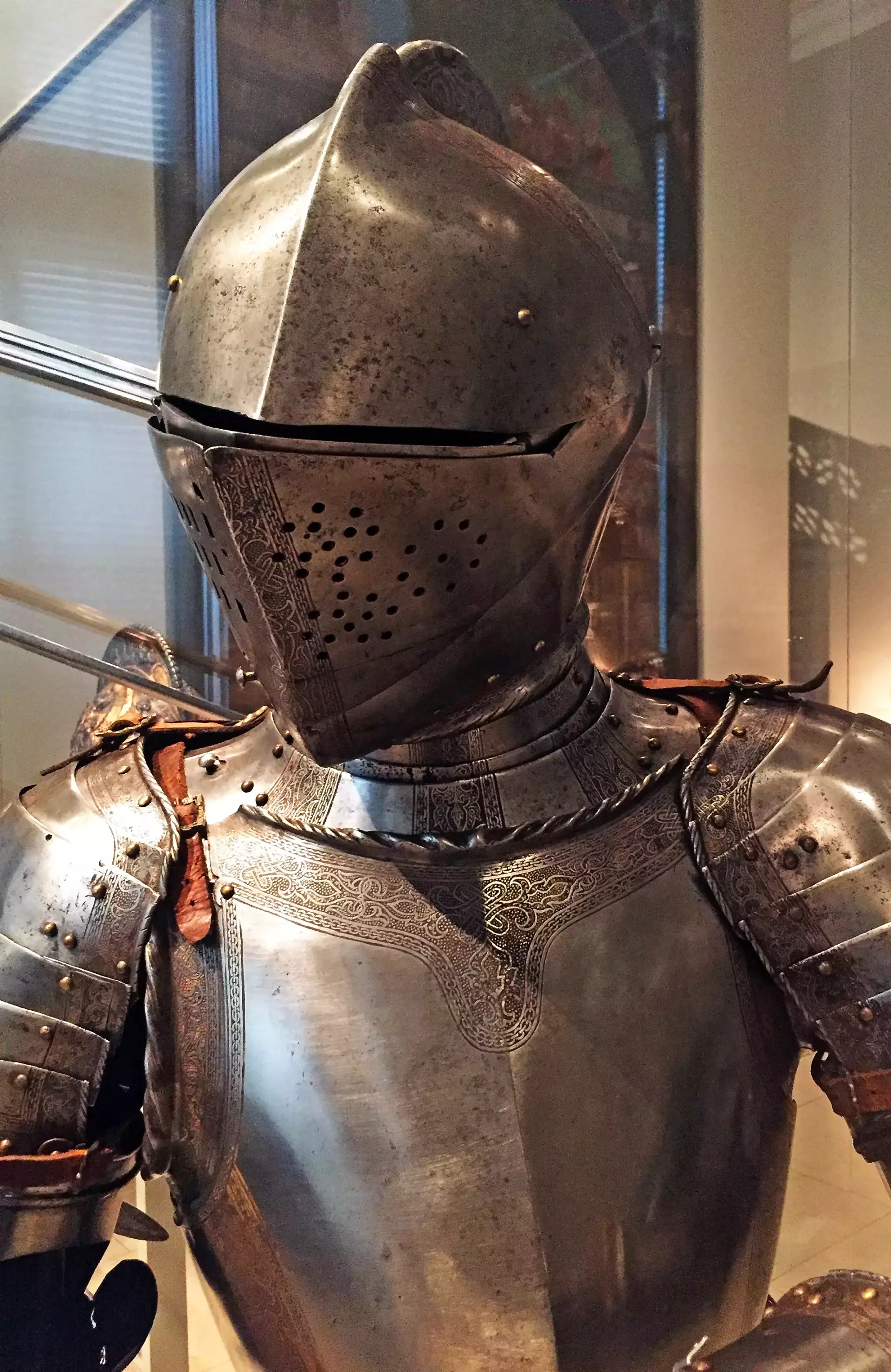
A finely decorated and fashionable suit of lightweight battle armor from Bavaria, dated 1570. This piece is an example of the decorative metalwork on display at the Victoria & Albert Museum, London.
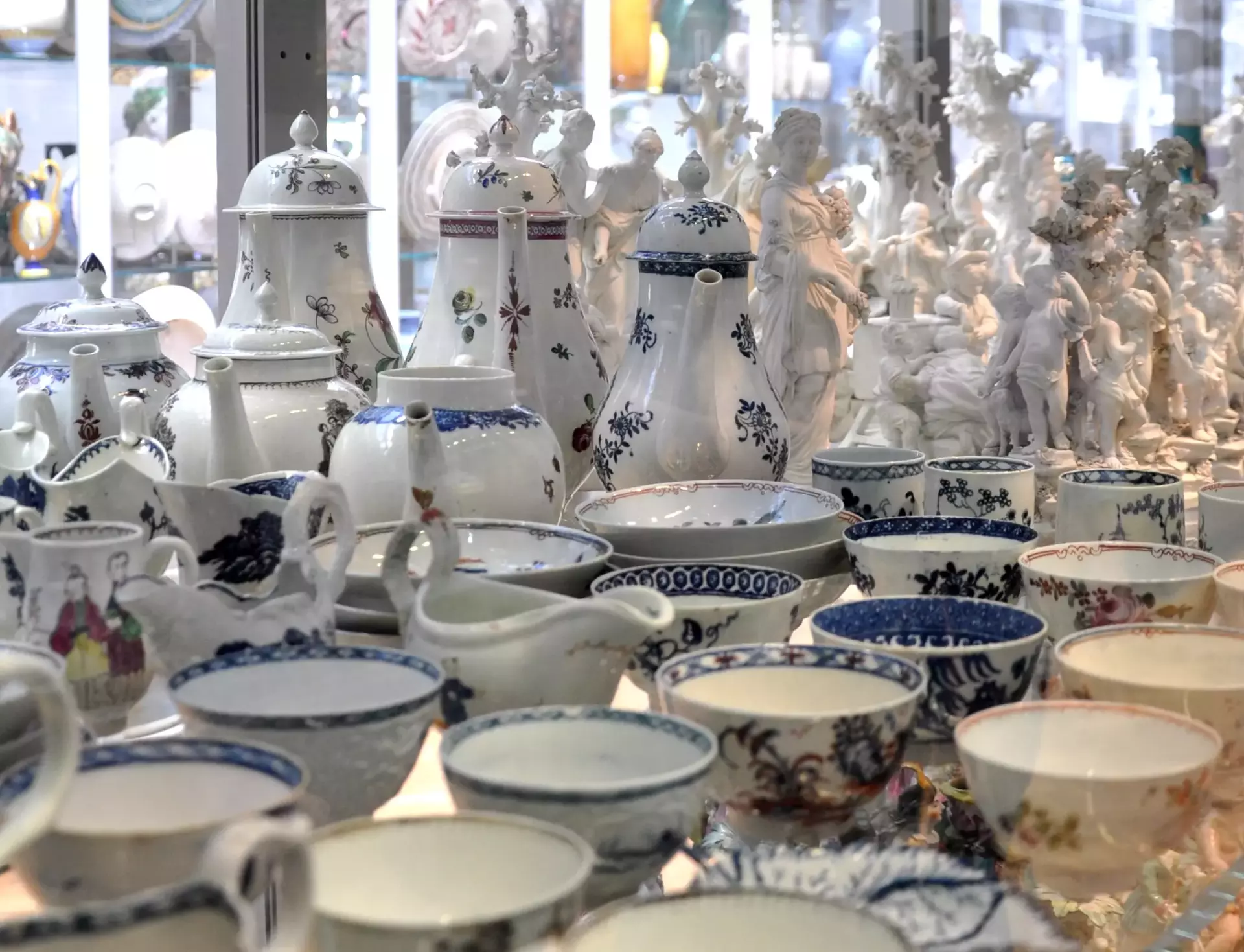
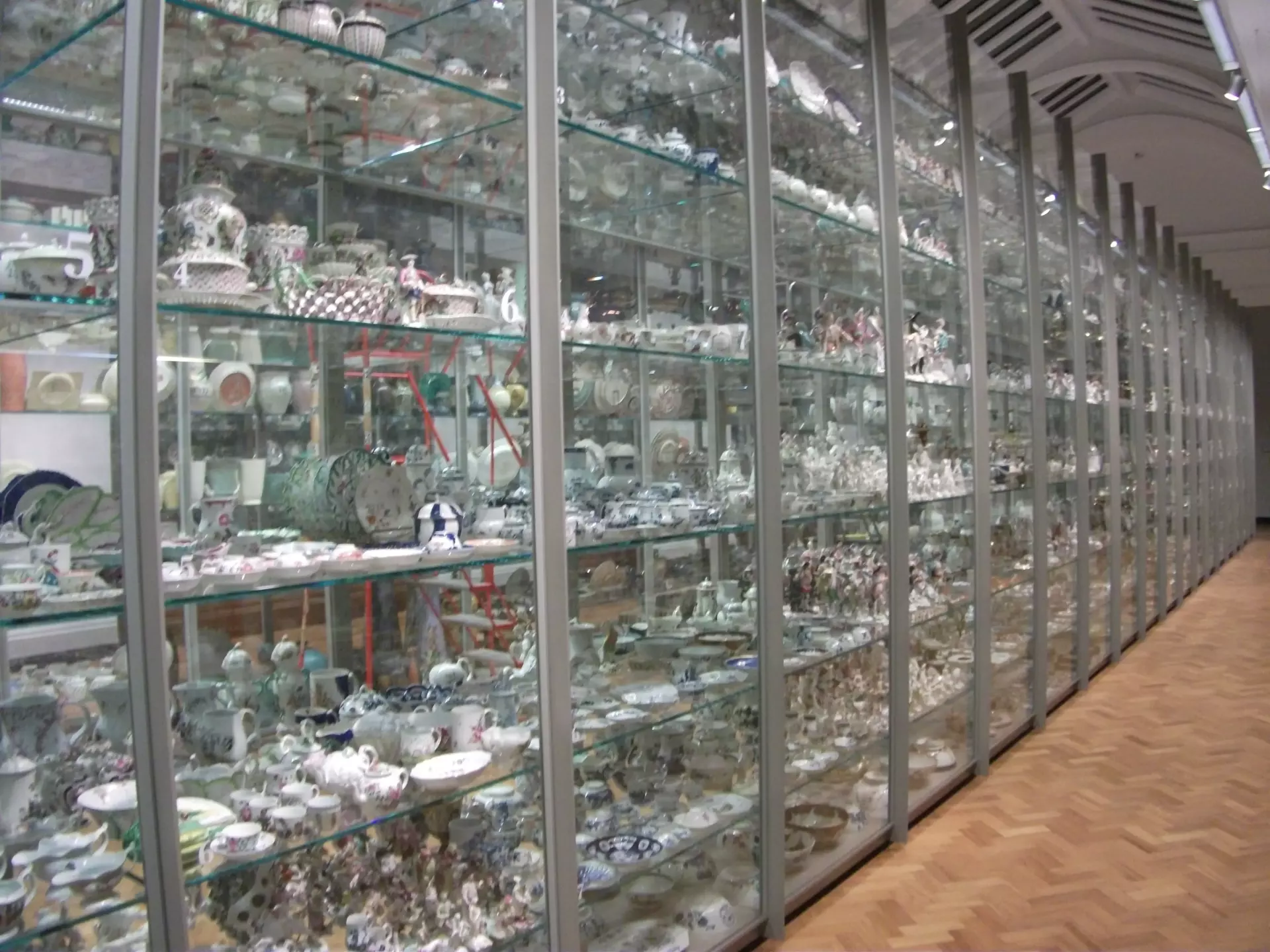
Visible storage in the Ceramics department at the Victoria and Albert Museum, London.
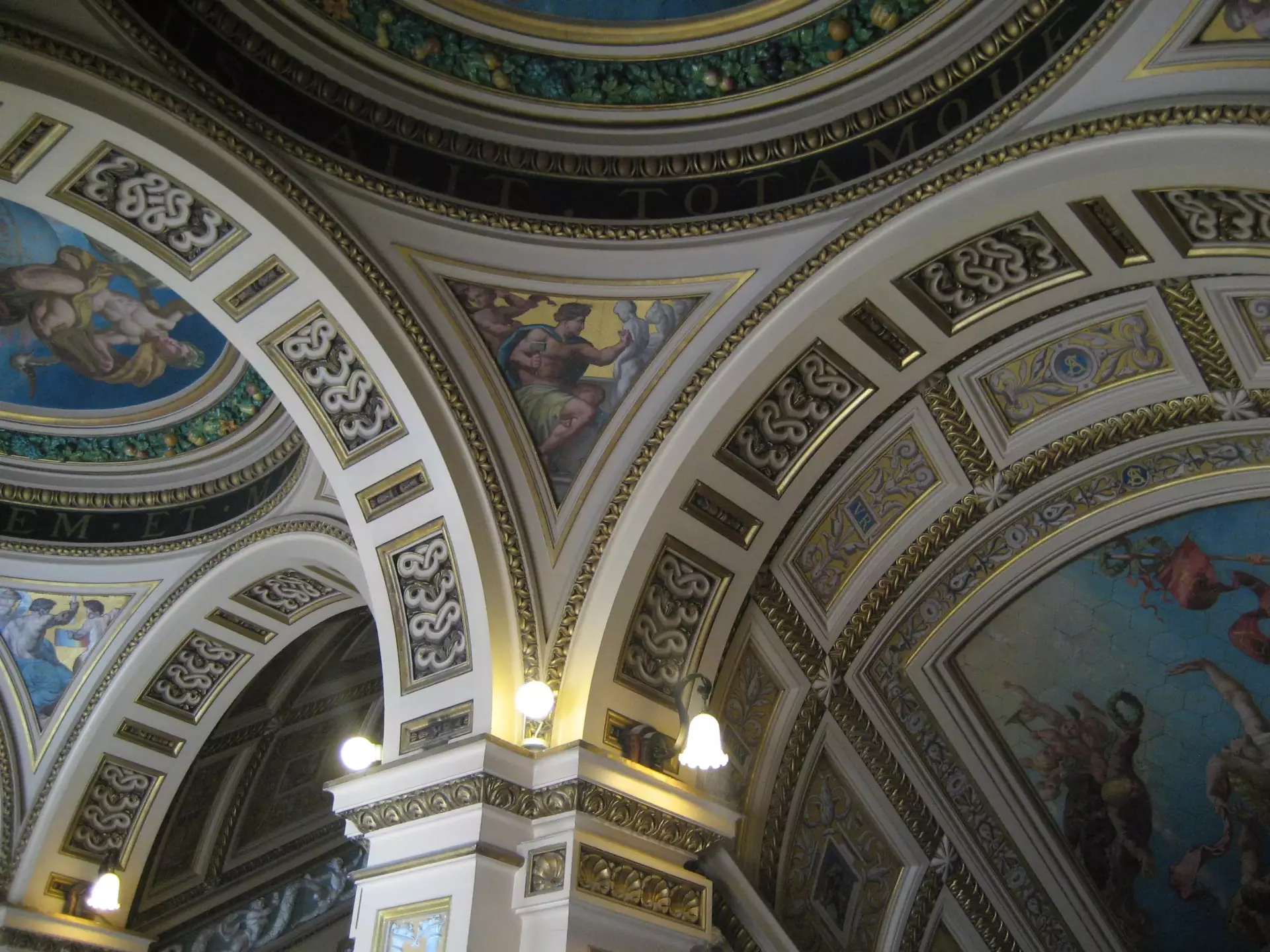
V&A Mosaics
Ceramics in the Victoria and Albert Museum
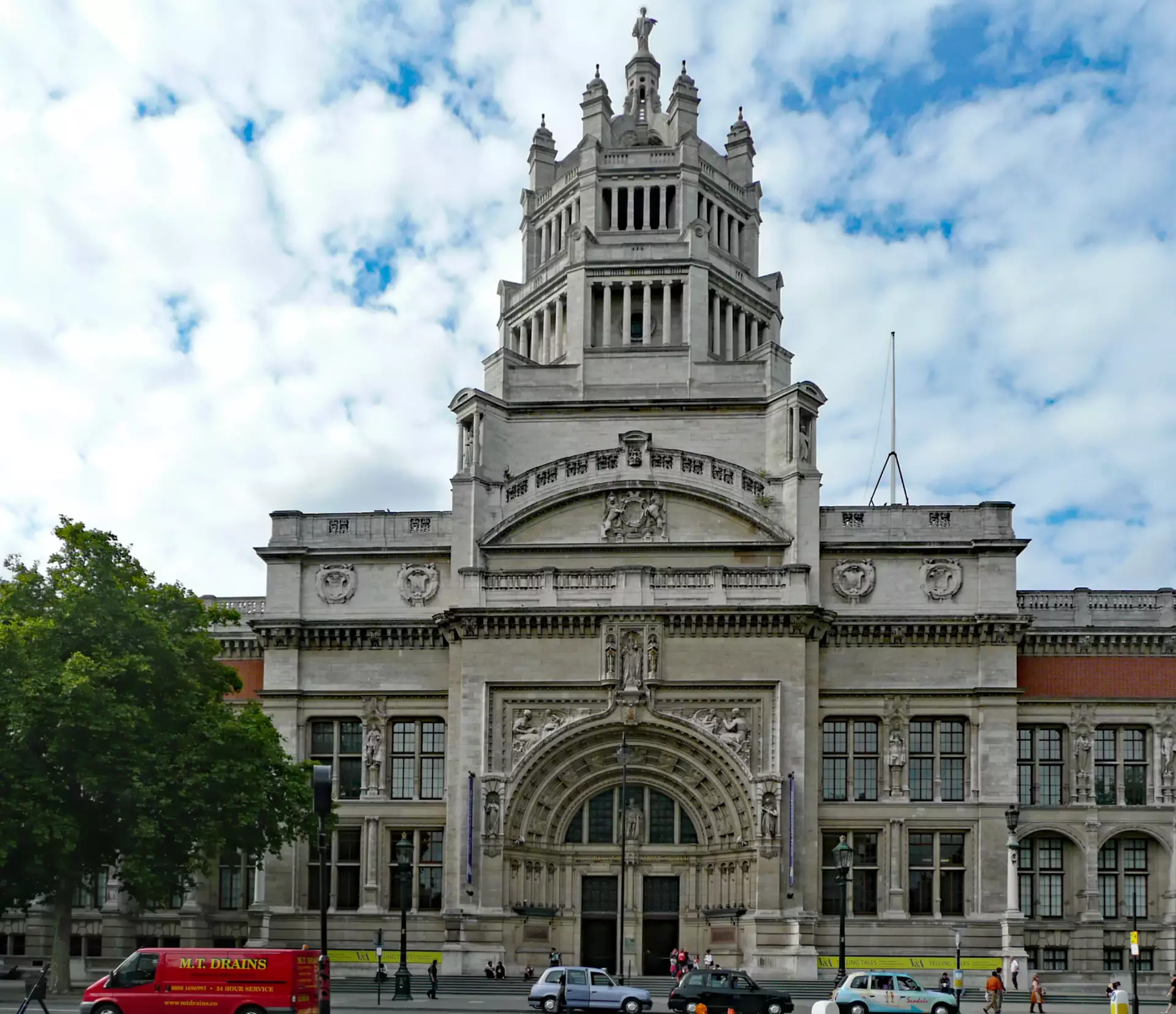
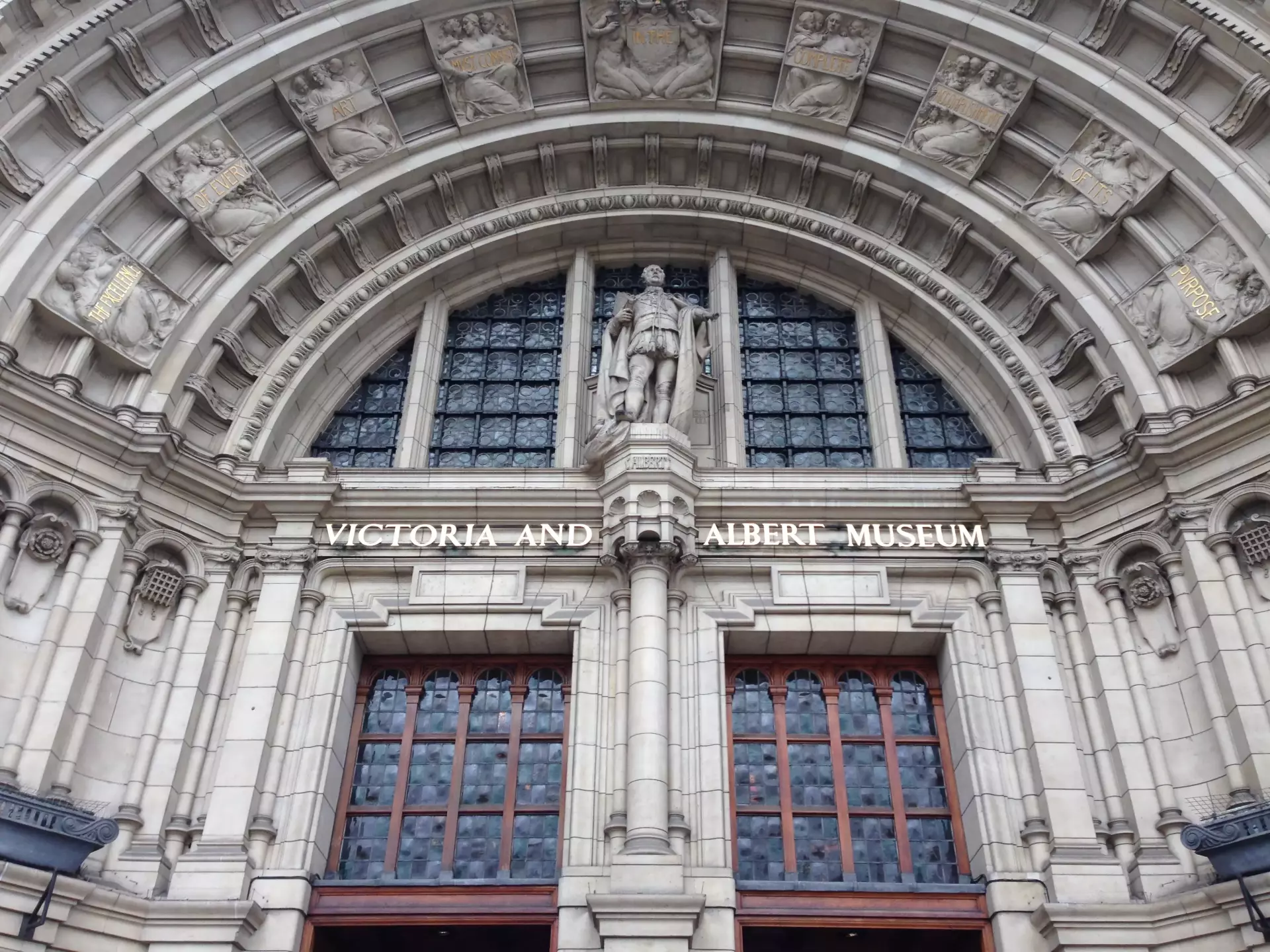
Details of the main entrance of the Victoria and Albert Museum.
London
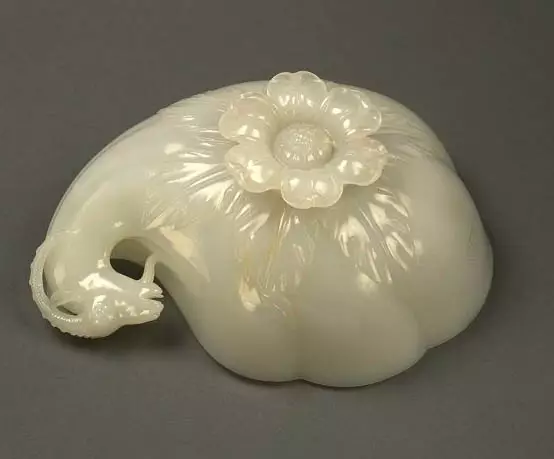
Wine Cup, made in 1657, V&A Museum no. IS.12-1962. This unique wine cup of white nephrite jade was made for the Mughal emperor Shah Jahan (r. 1628-1658) and is inscribed with his title, Second Lord of the Conjunction, following the conventions of royal titulature in the Persian-speaking world, specifically alluding to Timur, the Central Asian ruler from whom the Mughals descended. It is also dated 1067 of the Islamic calendar and regnal year 31, which convert to 1657. The cup was originally in the collection of Colonel Charles Seton Guthrie, who had a renowned collection of Mughal hardstones and died in 1875, but it was acquired by the museum in 1962.
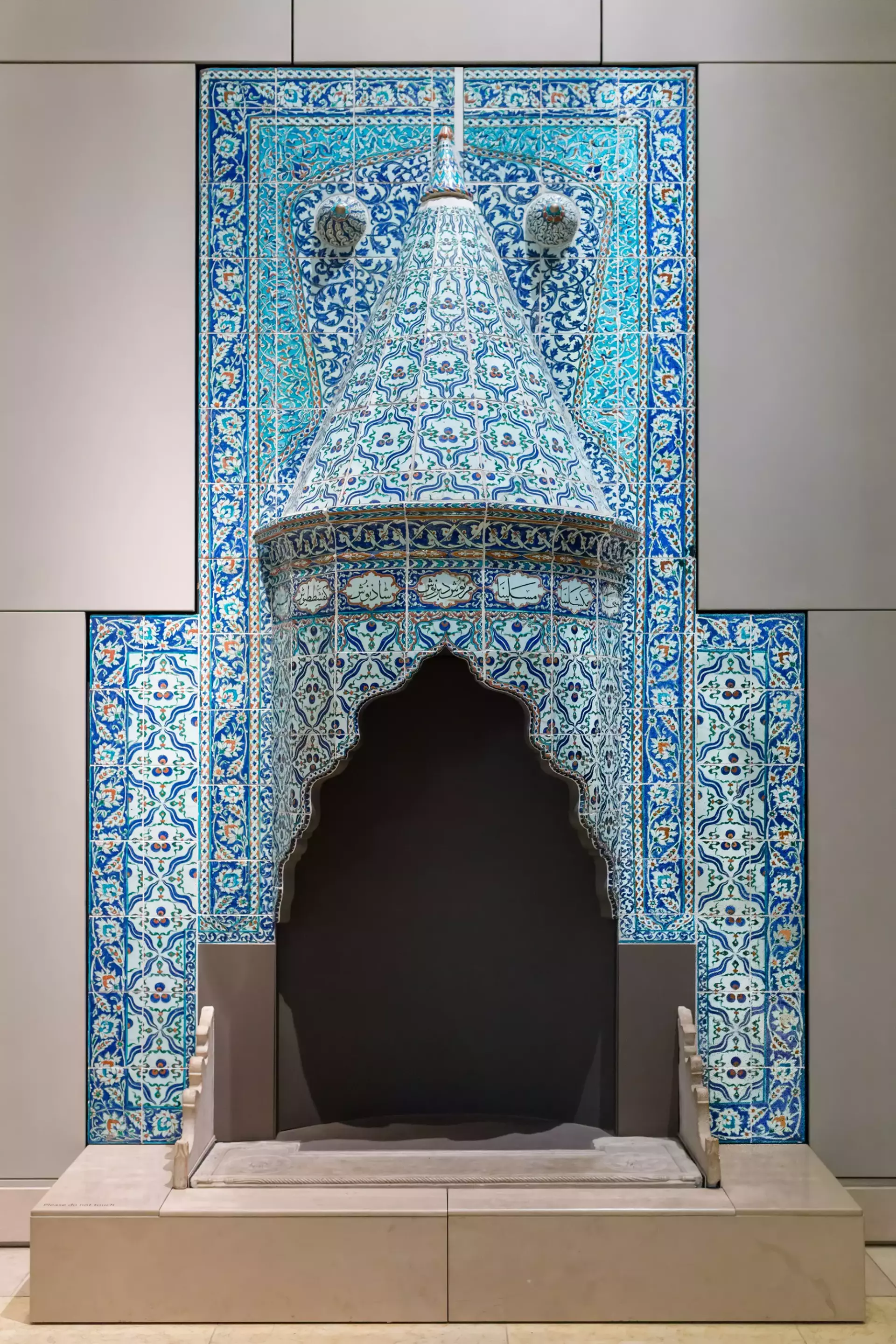
Tilework chimneypiece at the V&A Museum in London. From Turkey, probably Istanbul, dated 1731. The names around the hood are those of the seven sleepers. Persecuted under the Roman Emperor Decius, these Christian men took refuge in a cave. They fell asleep, waking centuries later under Christian rule. The seven sleepers are mentioned in the Quran as an example of God's protection of the righteous, and their names were therefore used to invoke that protection. Made of fritware with under-glaze decoration. Collection ID: 703-1891.
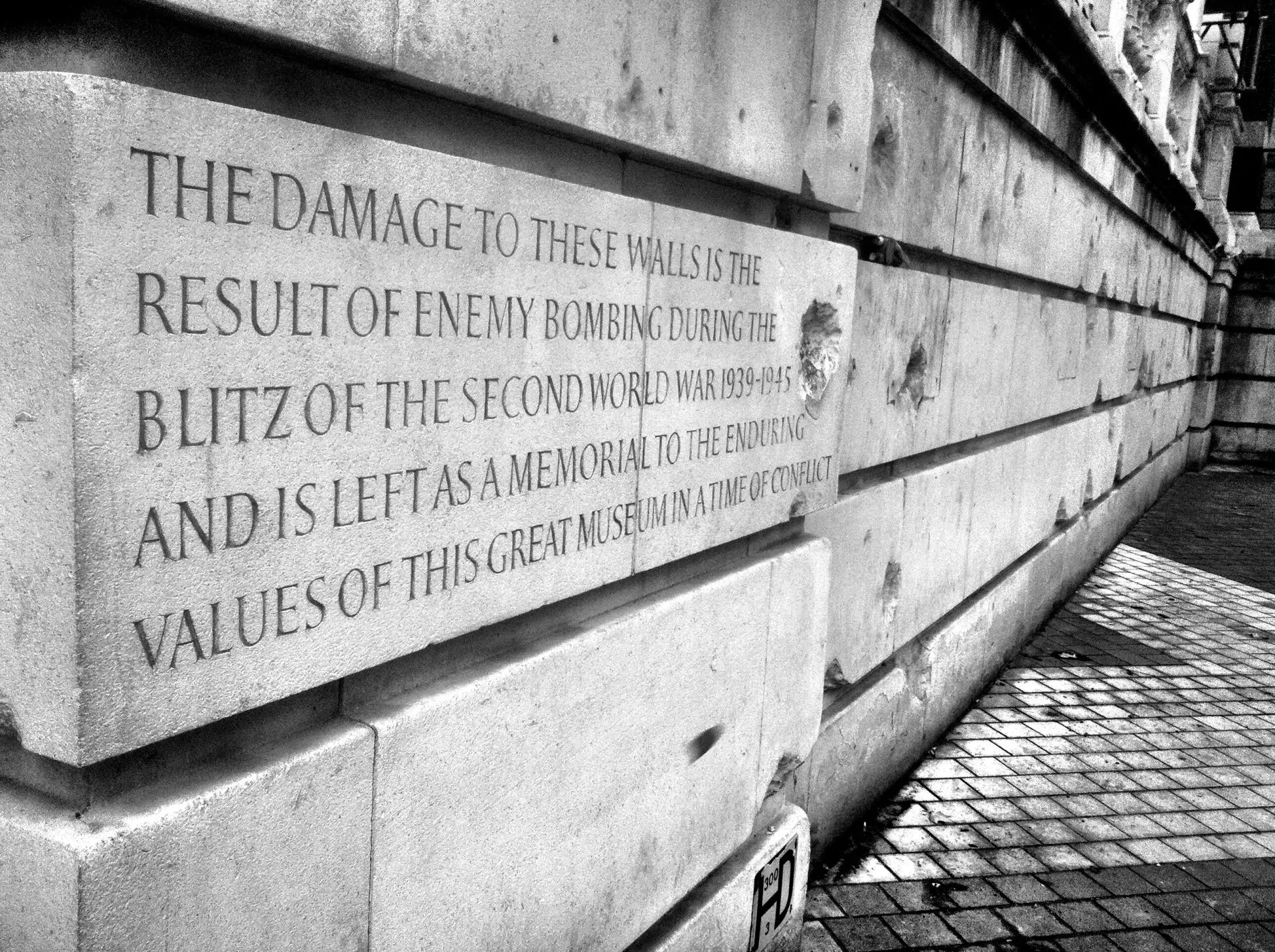
Bomb damage outside the Victoria and Albert Museum, London. The inscription reads: The damage to these walls is the result of enemy bombing during the Blitz of the Second World War 1939-1945 and is left as a memorial to the enduring values of this great museum in a time of conflict.
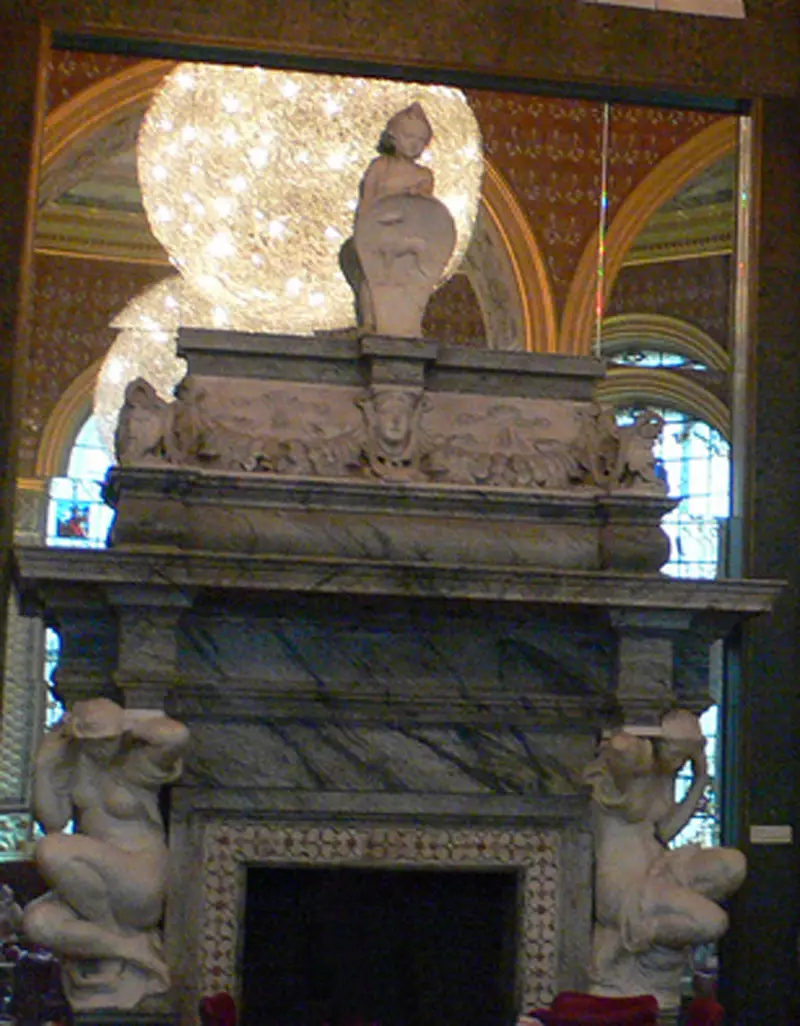
Dorchester House chimneypiece now at the Victoria and Albert Museum.
Altar Room
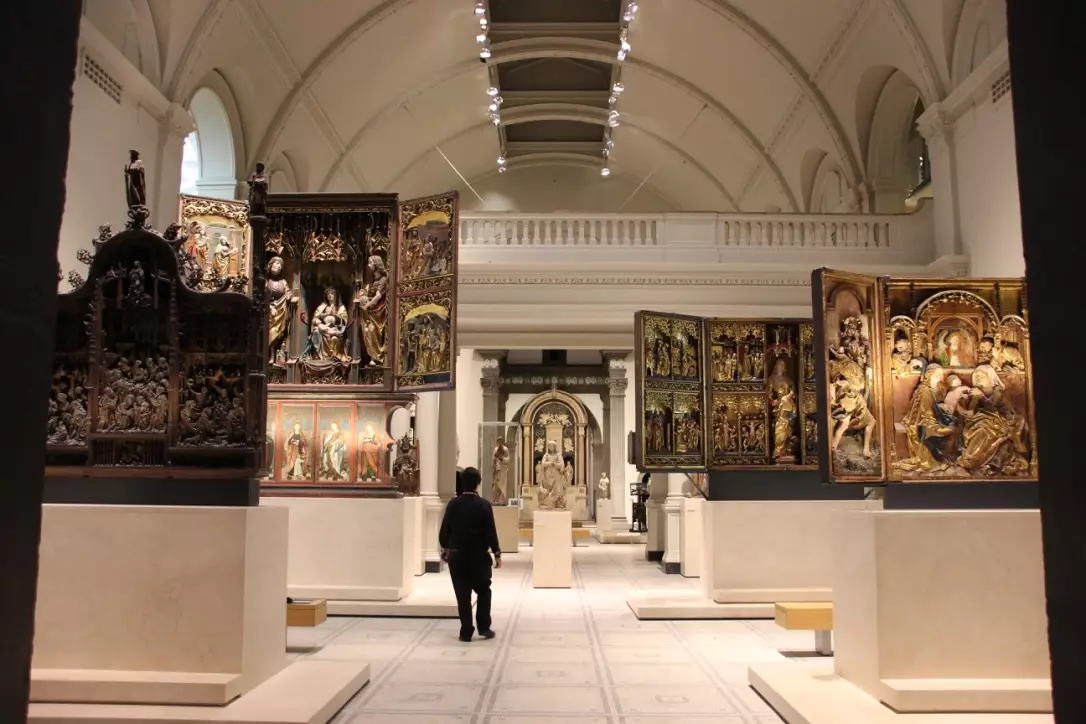
Renaissance room
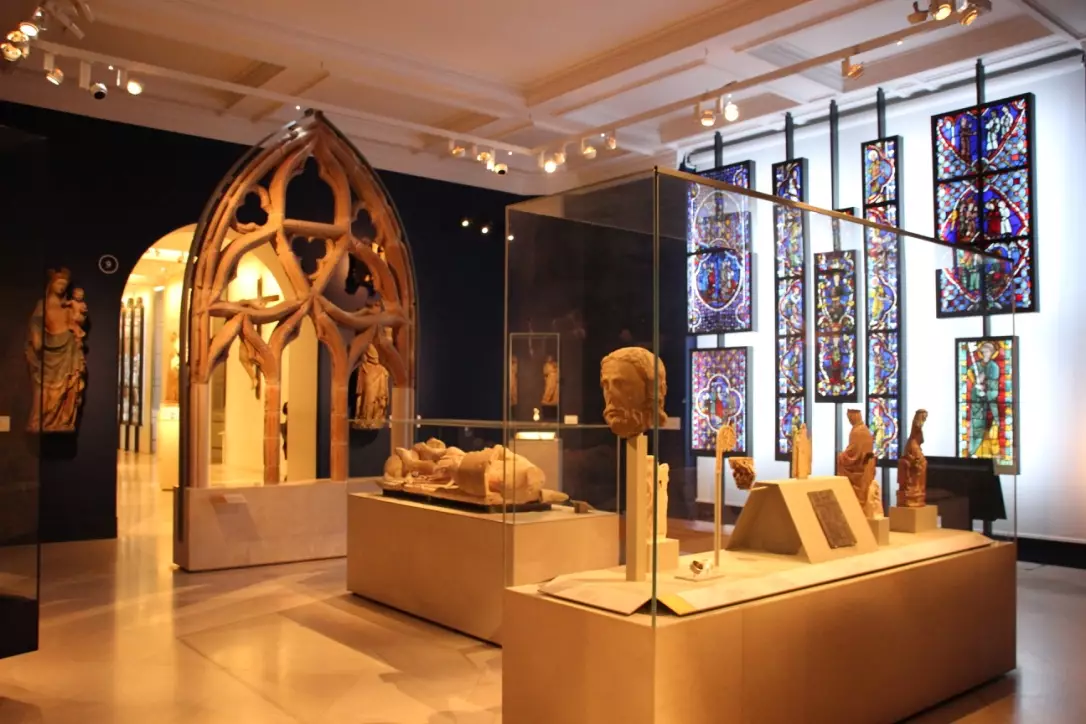
Gothic room
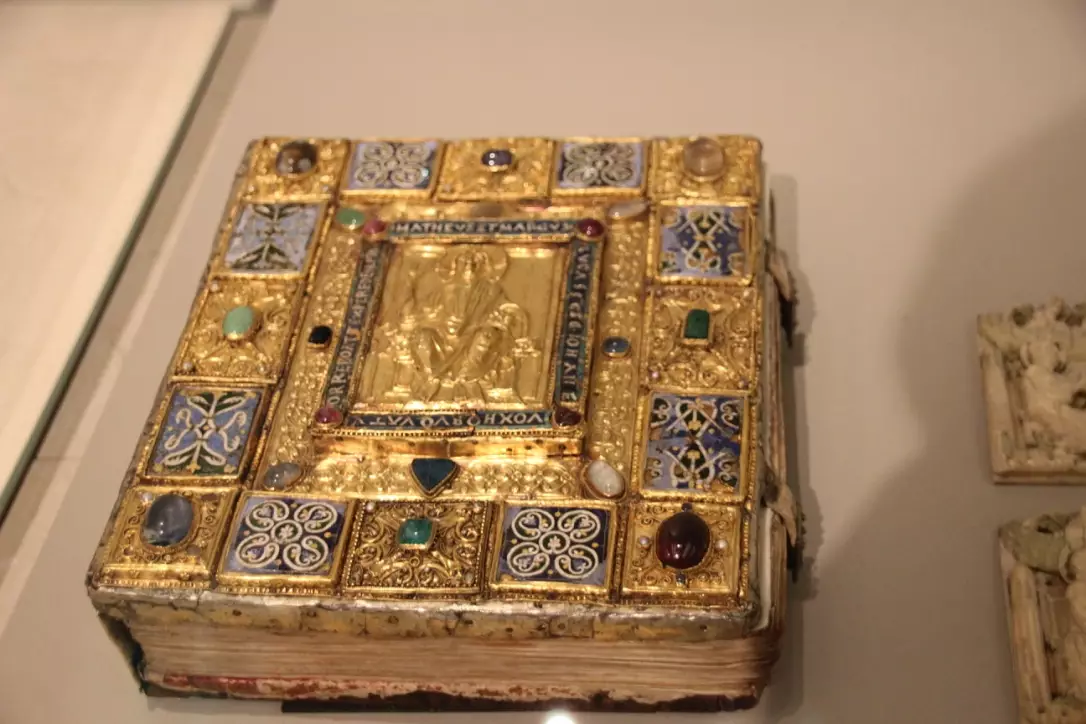
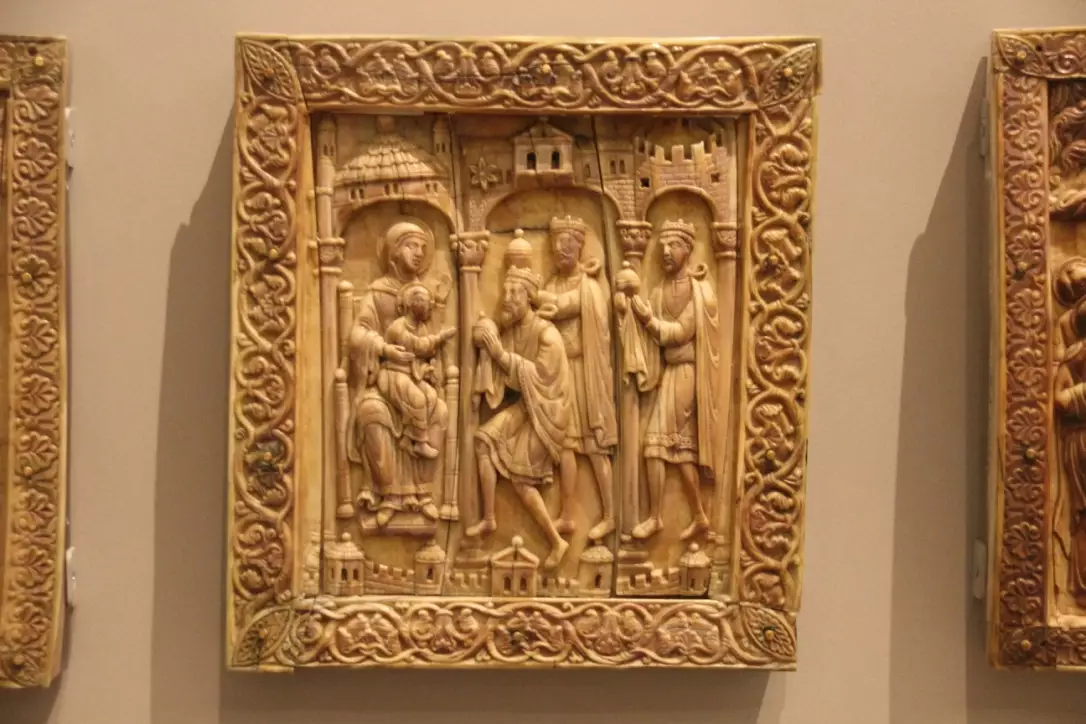
Gothic Bible
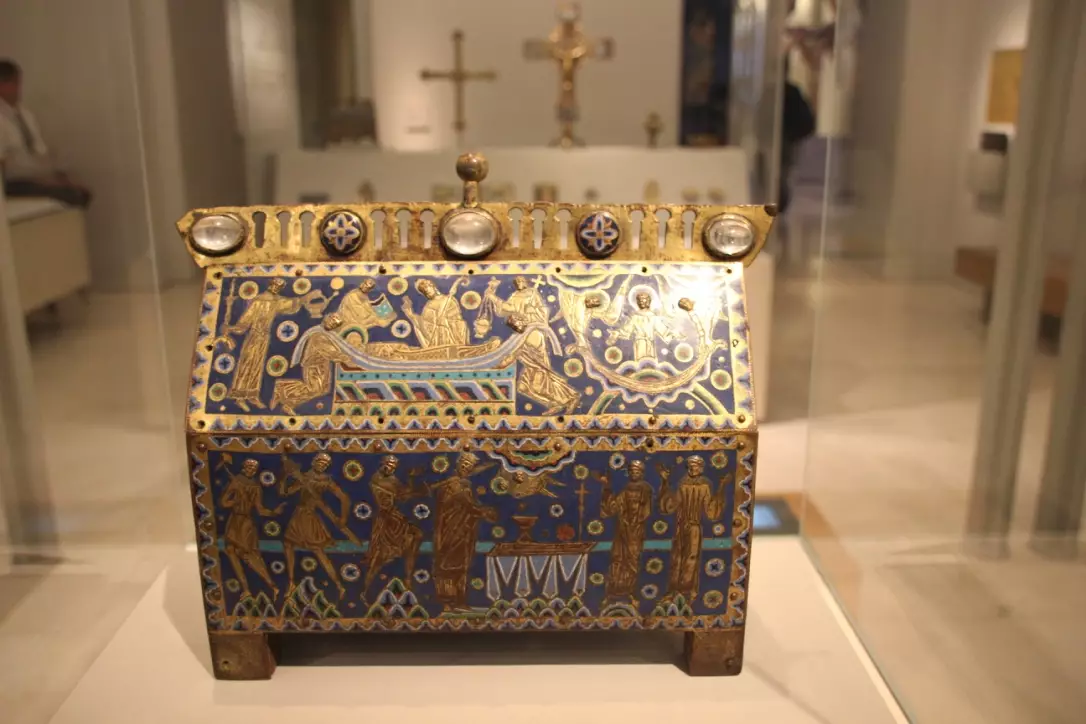
Gothic chest.
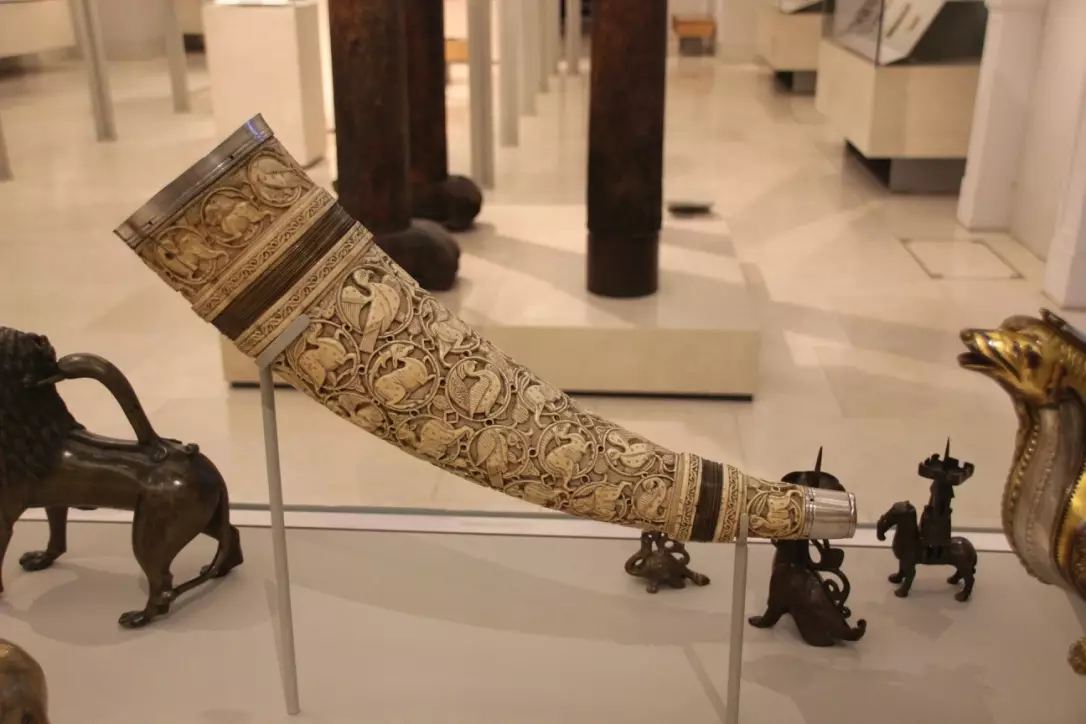
Ivory horn
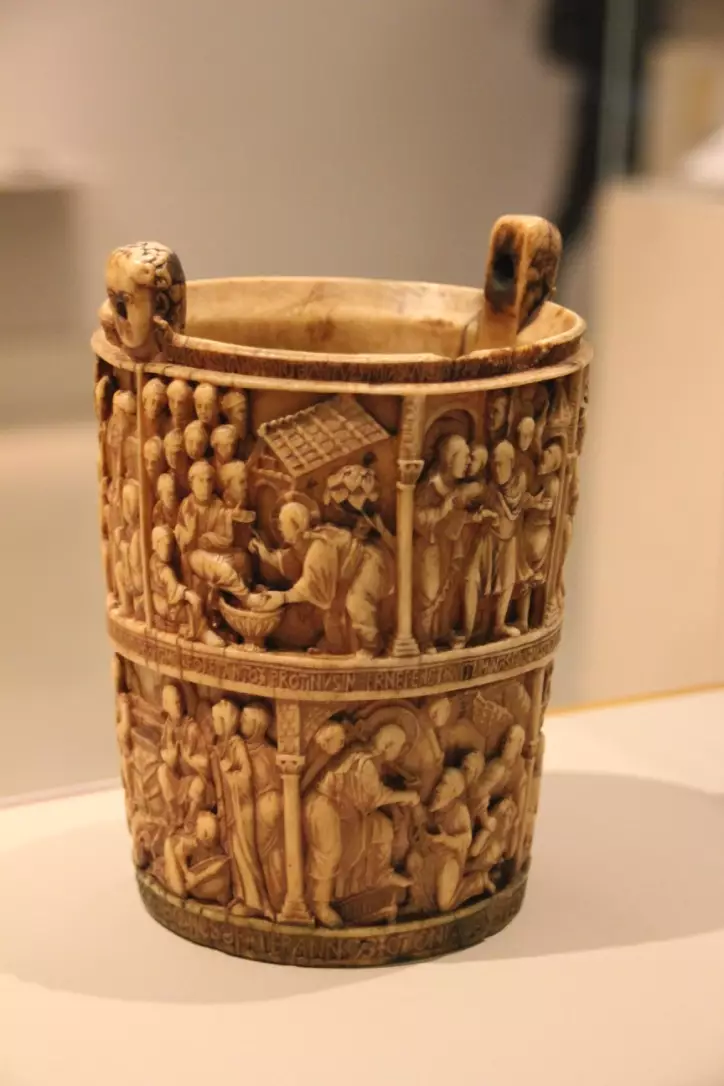
Ivory vessel.
Ivory statue.
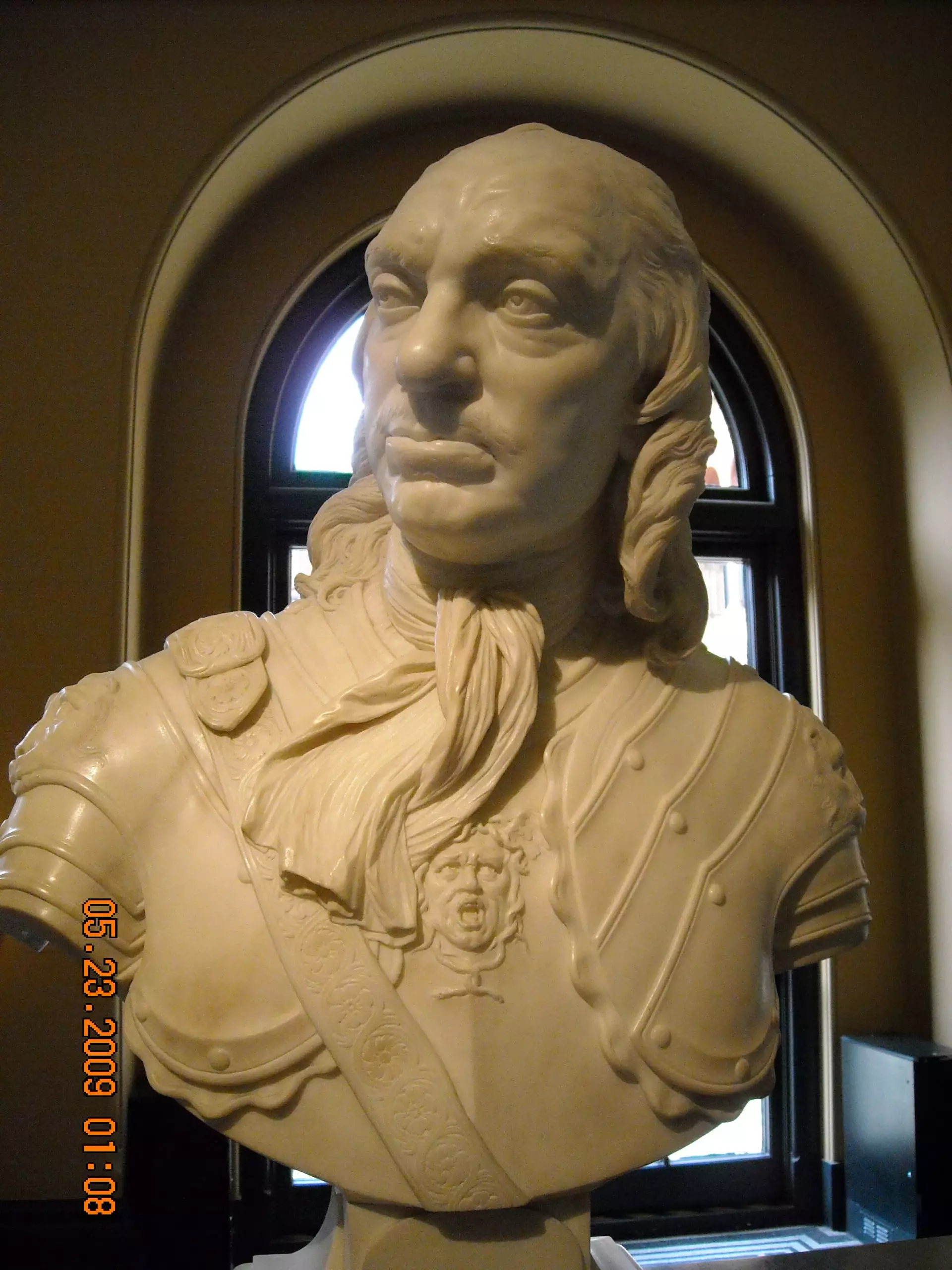
A marble bust of Oliver Cromwell (1599-1658) by Joseph Wilton. The bust was probably based on the plaster cast of Cromwell's face, made from his funeral effigy.
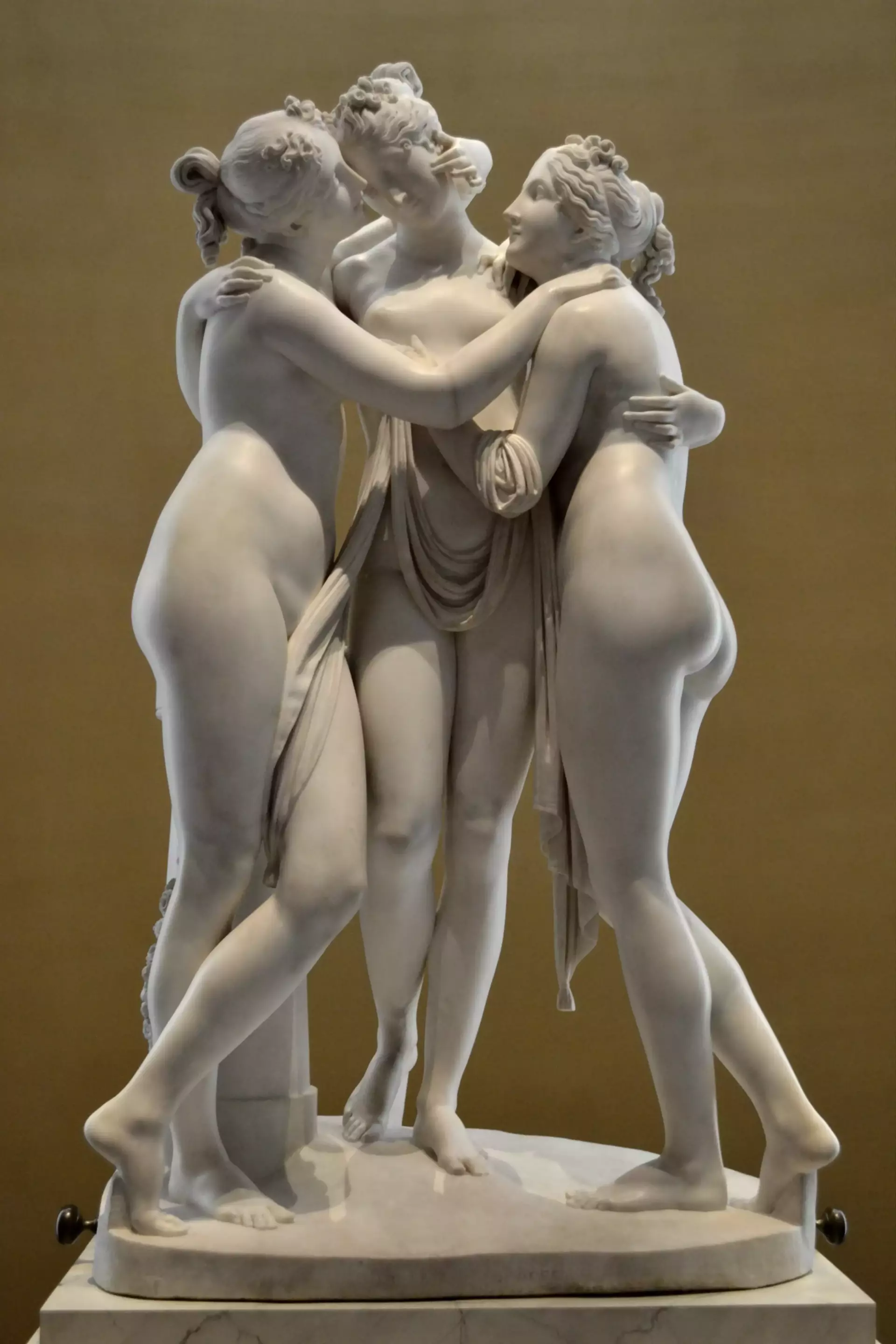
Yes, it's these three charming ladies once more; a photo I seem to have omitted from my previous postings.
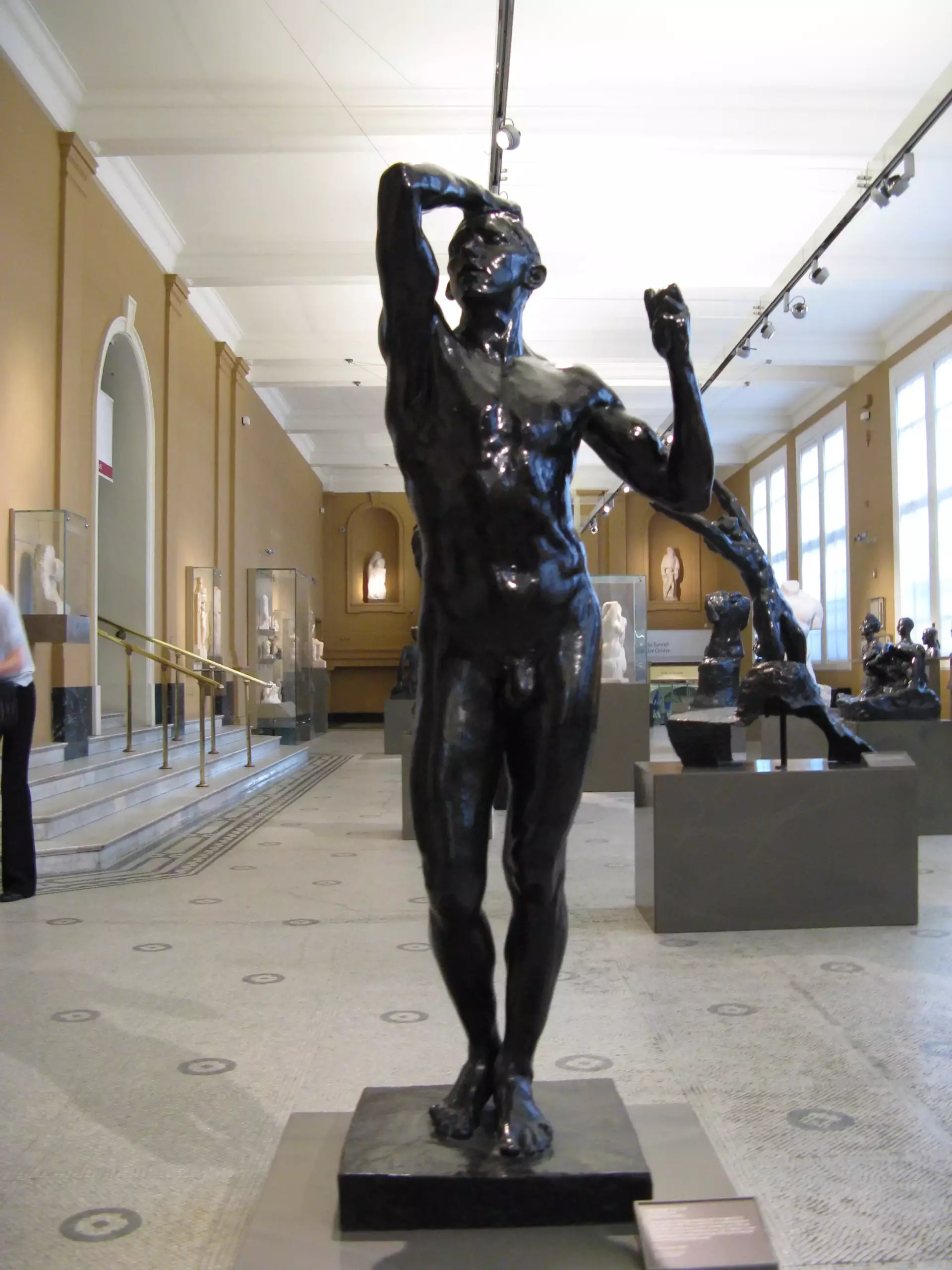
The Age of Bronze by Auguste Rodin at the Victoria and Albert Museum.
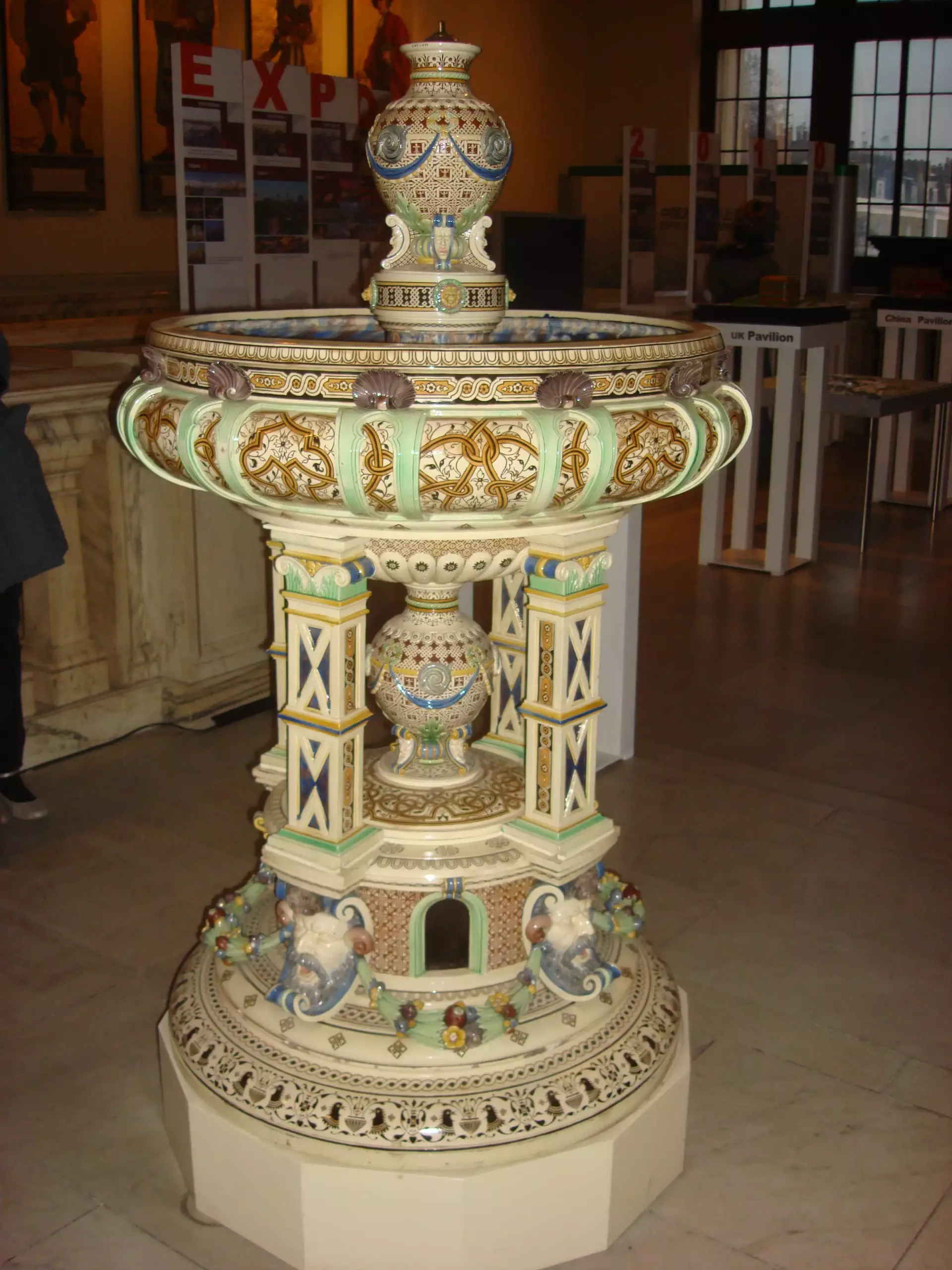
A fountain made in 1877 at the Victoria and Albert Museum, South Kensington, London, UK. This fountain was shown at the Paris International Exhibition in 1878.
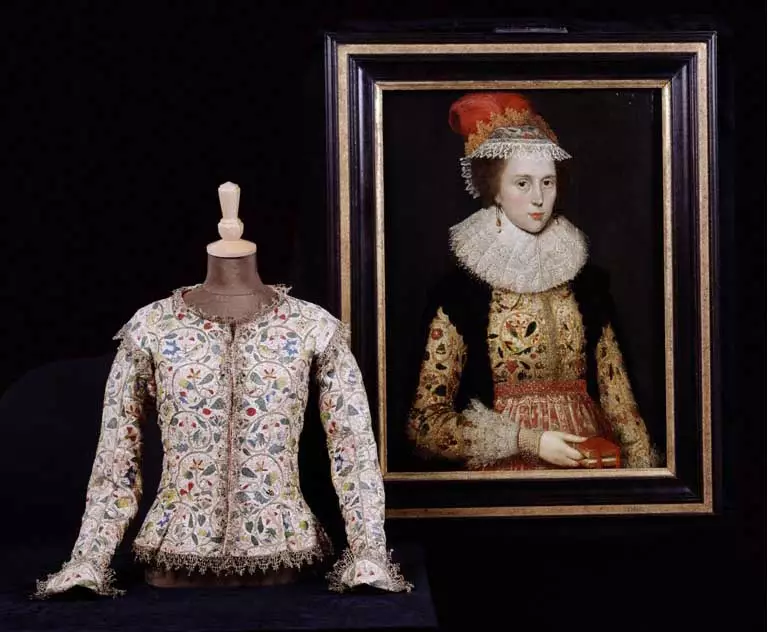
Jacket and portrait of Margaret Laton, about 1610, V&A Museum no. T.228-1994. Techniques: Linen, embroidered with colored silks, silver, and silver-gilt thread. Place: England.
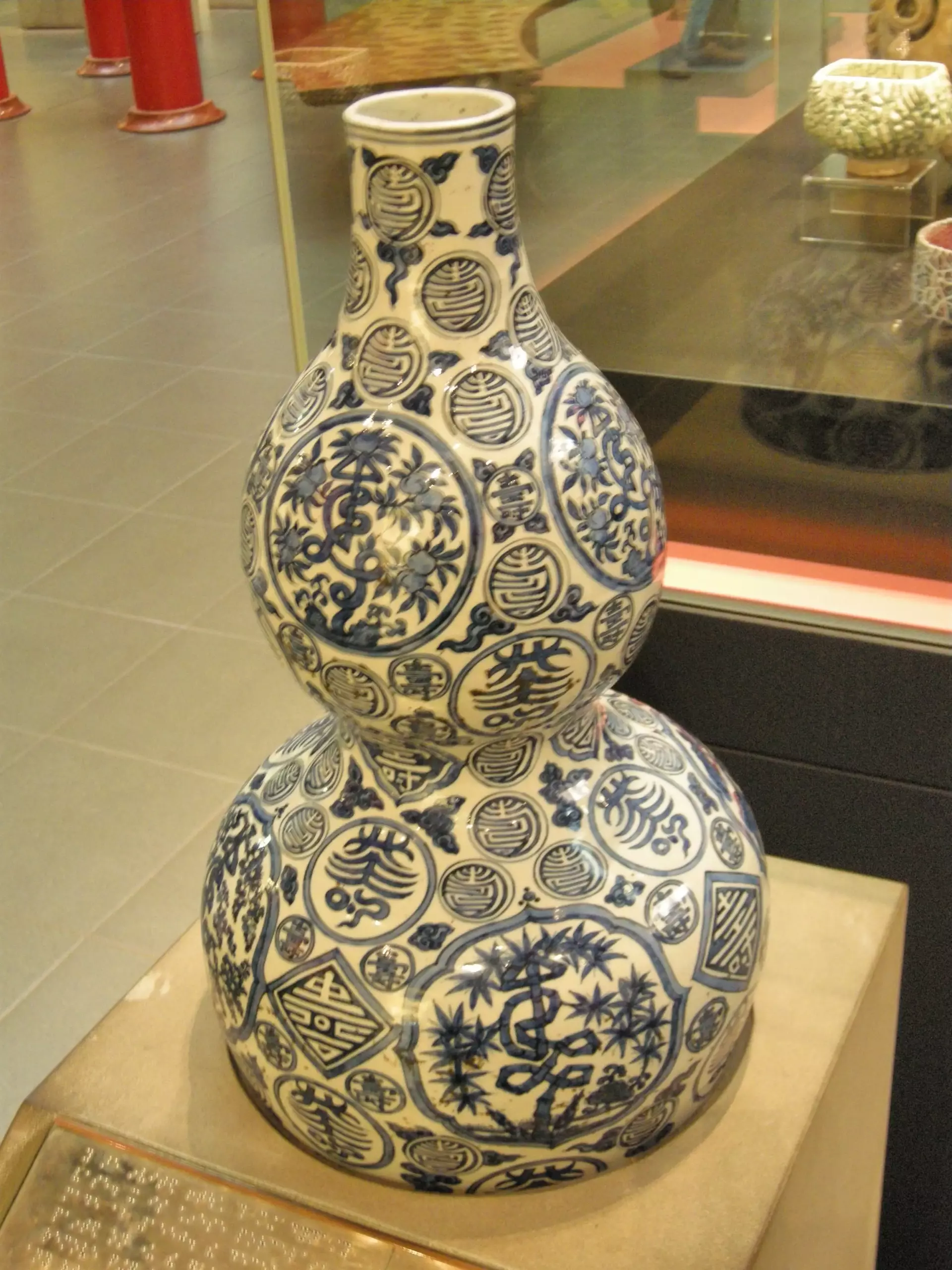
This Ming vase, dating to around 1550, is made of porcelain and is part of the Victoria and Albert Museum's 'touch' objects collection, allowing visitors to physically interact with it. It is designated with Museum number C.134-1928. The photo was contributed by VeronikaB as part of the Wikipedia Loves Art project in February 2009.
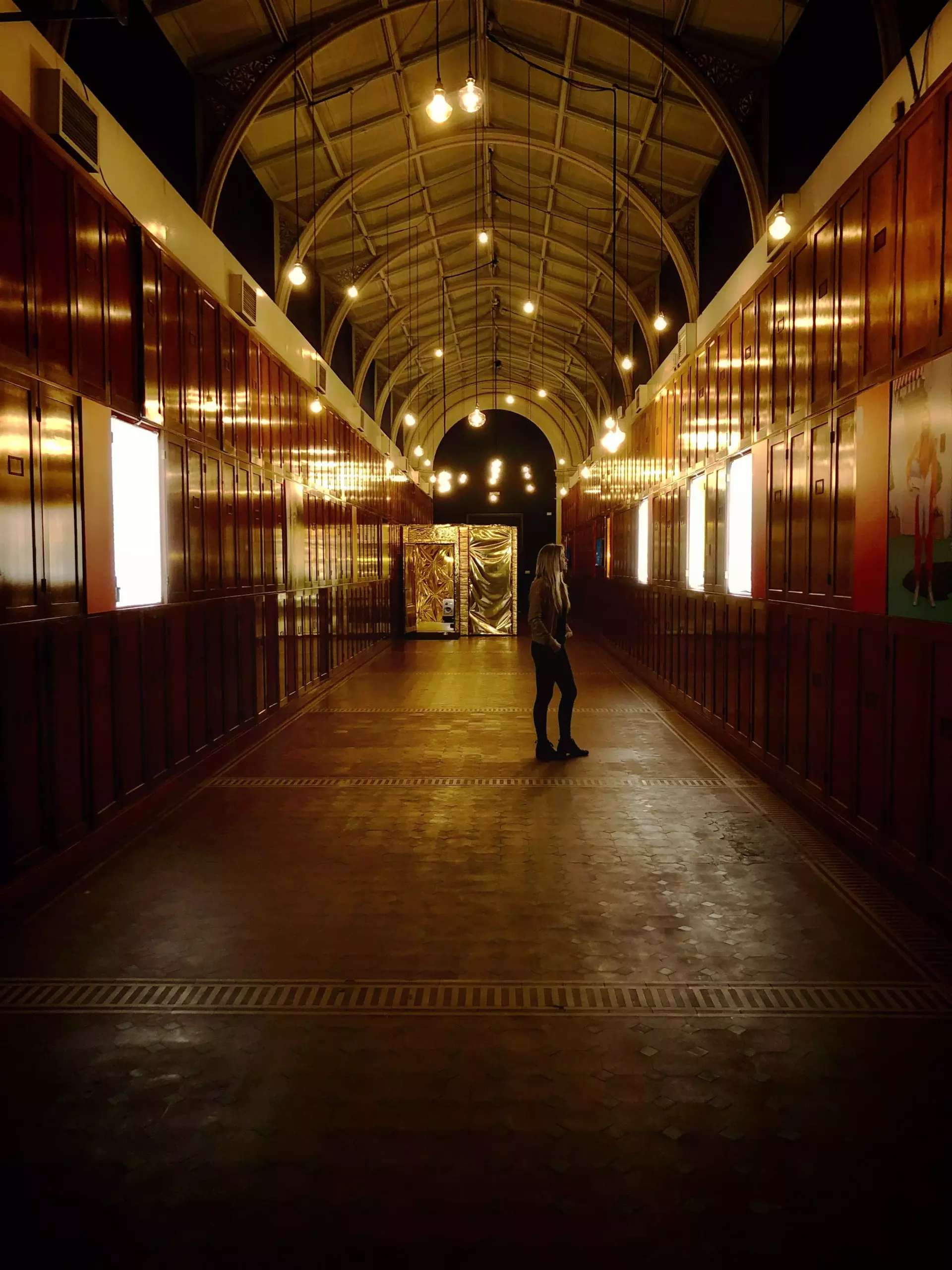
Beatie Wolfe standing in her album exhibition at the Victoria and Albert Museum.
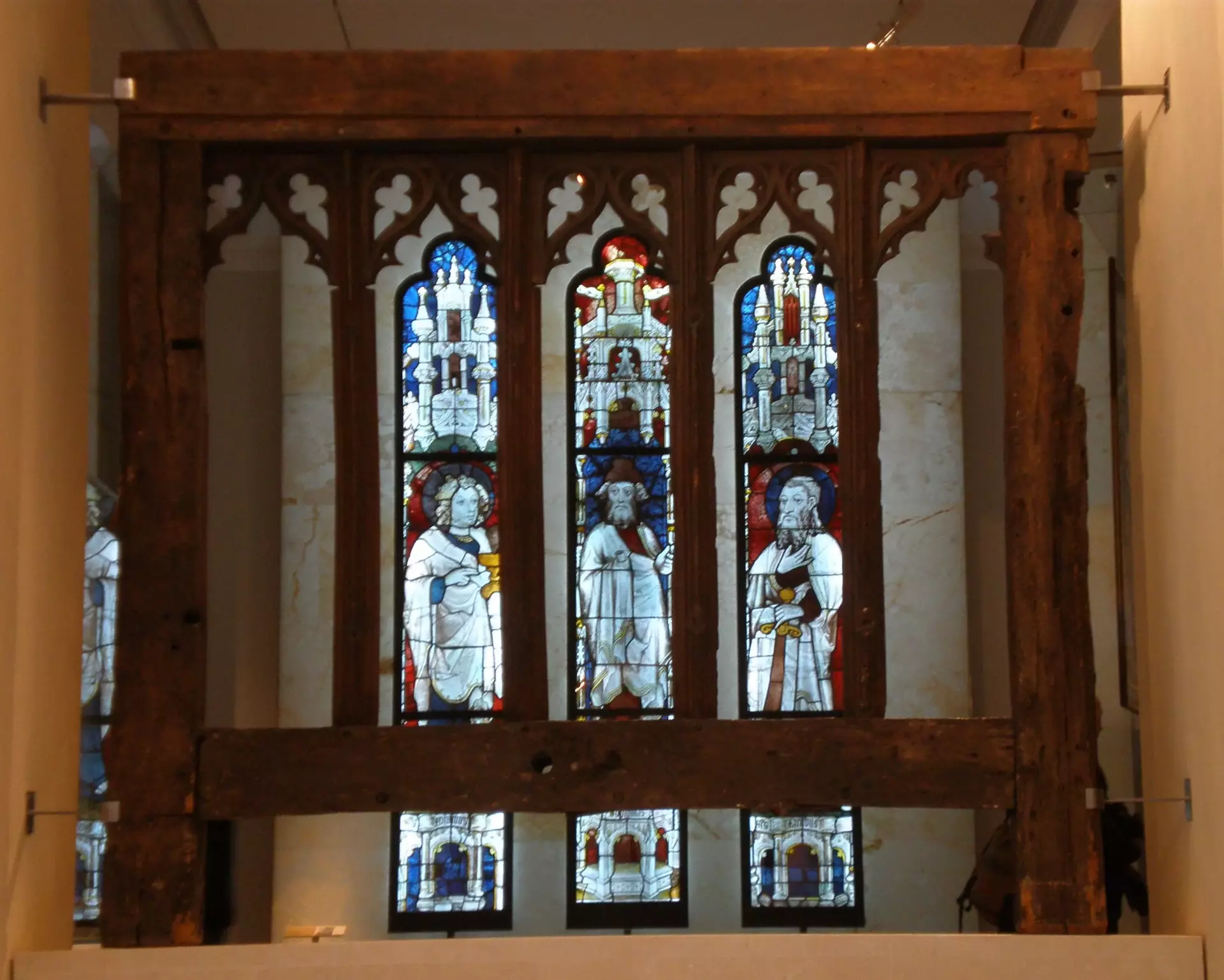
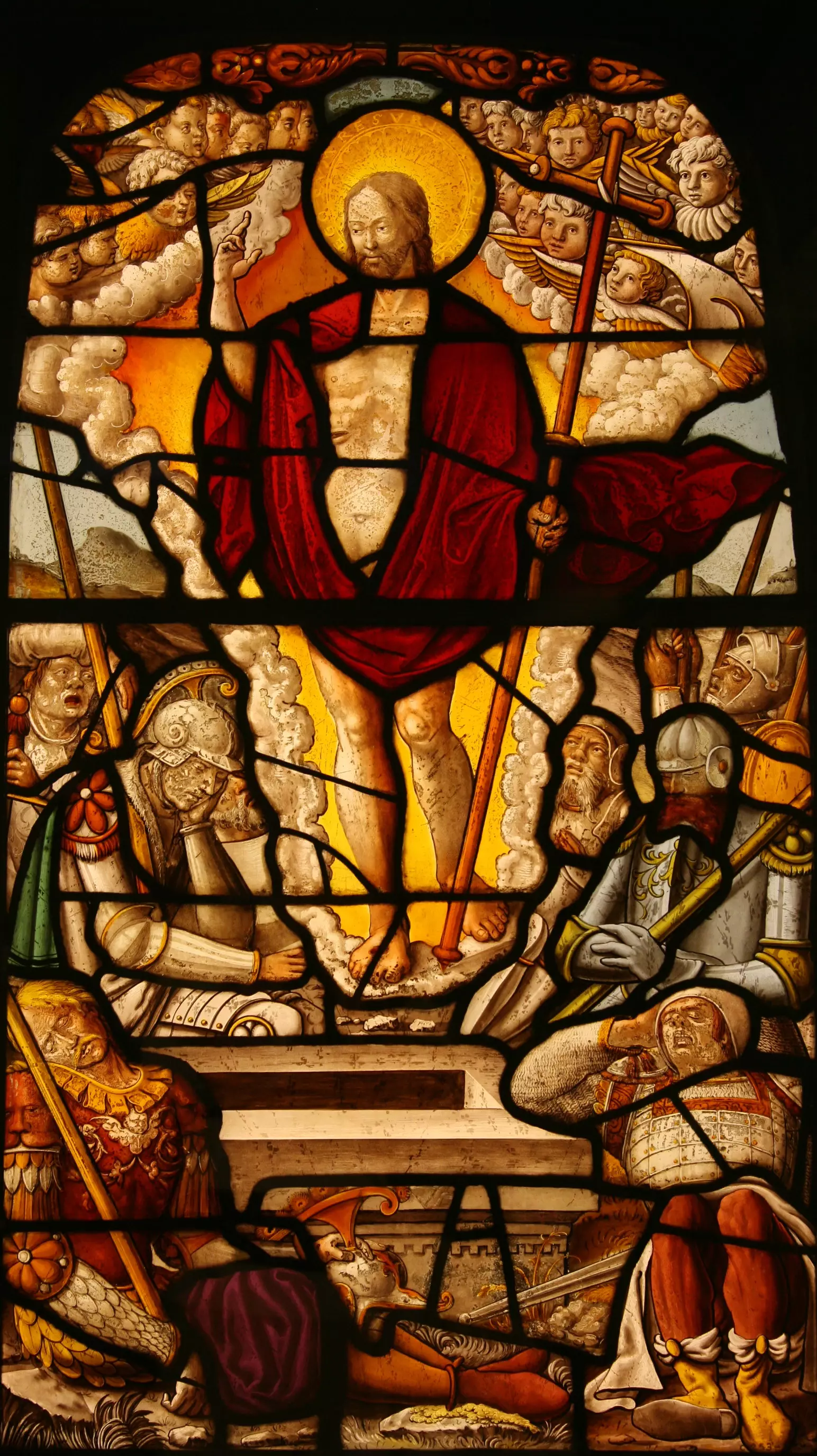
The image captures a window frame and stained glass at the Victoria and Albert Museum. The window frame, dating from 1475-1500 in England, is made of oak and features intricate Gothic tracery. It was never intended to be glazed, as the weather was kept out using shutters. This frame indicates that rooms with ceilings at the time were very low, with the total height being less than 2.1 meters. The stained glass, originating from Winchester College Chapel around 1393, was crafted by Thomas the Glazier in Oxford. These panels, originally located in the side windows near the chapel's altar, depict figures such as the Apostles St. John the Evangelist, St. James the Less, and the Old Testament prophet Ezekiel. During restoration in the early 19th century, the glass was replaced with copies, but the original panels were acquired by the museum in 1855. The image was taken by David Jackson in February 2010 as part of the Britain Loves Wikipedia project.
Ionides Bequest
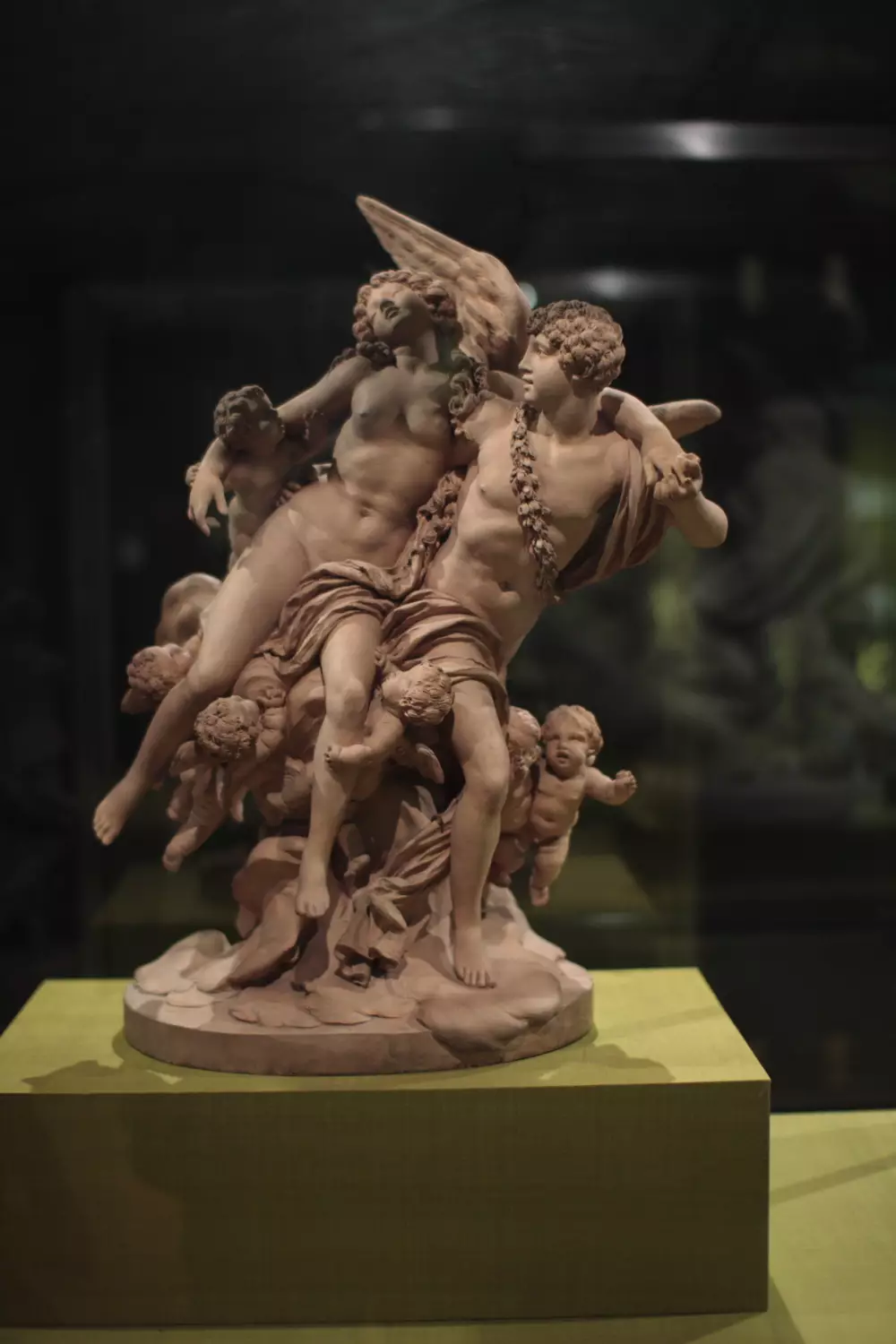
Sculpture Cupid and Psyche, Terracotta, signed by Claude Michel (Clodion) (1738-1814), French, late 18th or early 19th century, Museum no. A.23-1958, at the Victoria and Albert Museum. This photo was contributed as part of the Wikipedia Loves Art project in February 2009. The original photograph on Flickr was taken by the wee pixie.
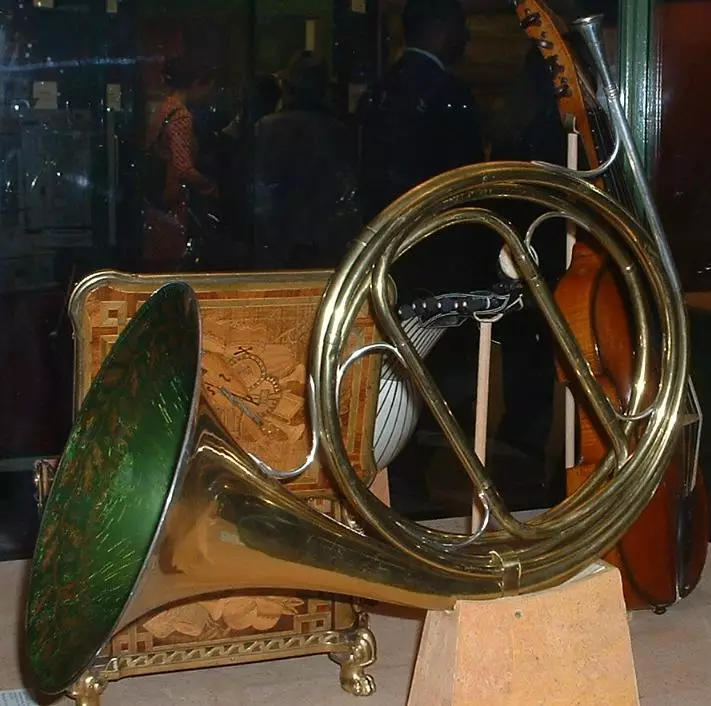
Natural horn, French, by Marcel-Auguste Raoux, Paris, about 1826, inscribed Raoux, brevet, seul Fournisseur du Roi, Rue Serpente Paris. Made of brass with silver mounts, the inside of the bell is painted in green and gilt lacquer. The instrument is fitted with a series of changeable medial crooks within the outer coil, allowing it to be played in a number of different keys. Photographed at the V&A museum, London, 02-Jan-06.
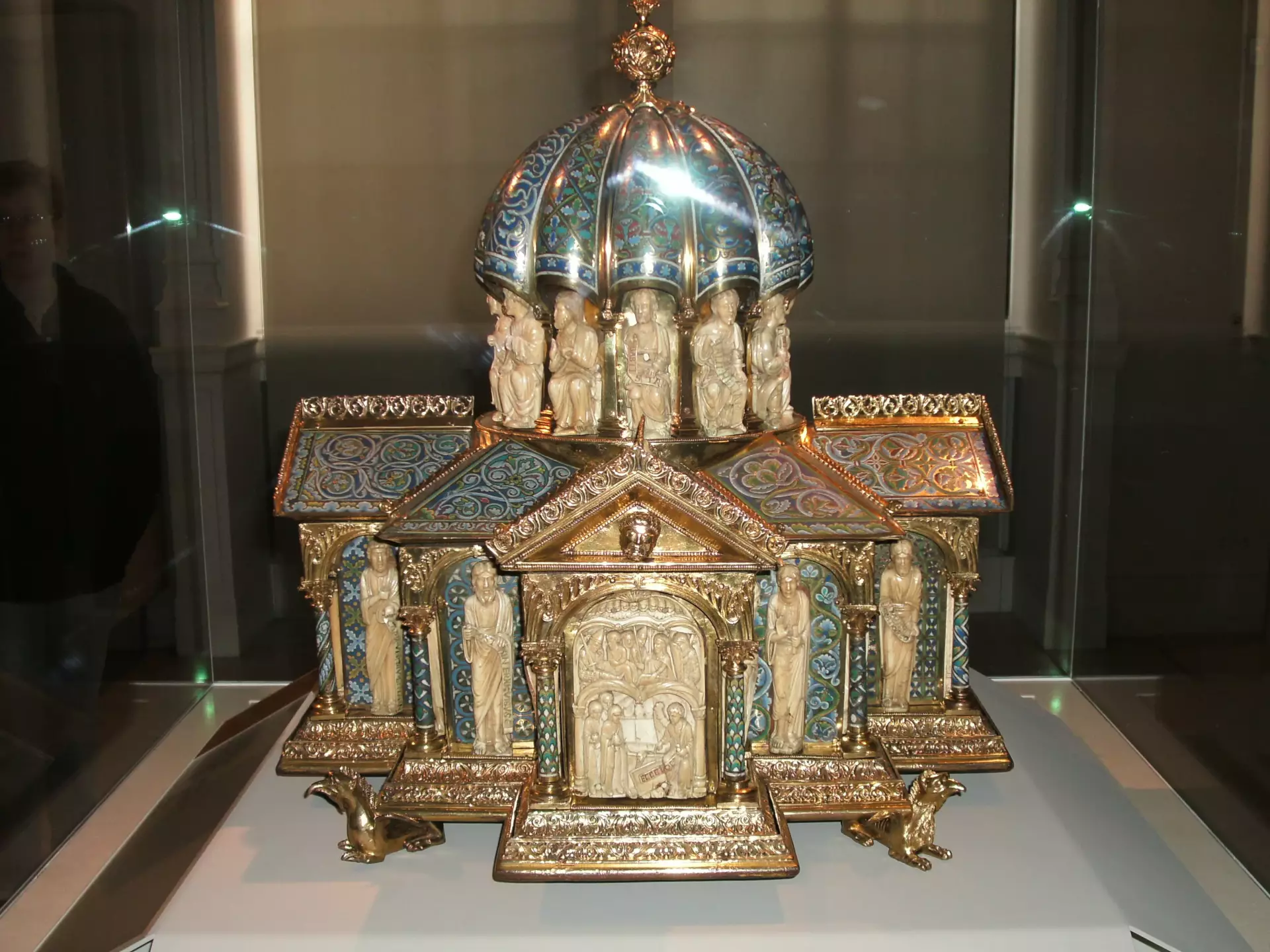
Tabernacle (circa 1180), Cologne, Lower Rhine (Germany). Made of gilded bronze and copper on a wooden core, with champlevé enamel and walrus ivory. Probably from the church of St Pantaleon, this tour de force of Romanesque goldsmiths' work and carving combines varied foliage patterns with classically inspired figures. Its function has been much debated, but the iconography, centered on Christ's redemption of mankind and fulfilling Old Testament prophecy, indicates that the tabernacle probably housed the consecrated bread for the Mass. Collection ID: 7650-1861. This photo was taken as part of Britain Loves Wikipedia in February 2010 by Adam Morgan.
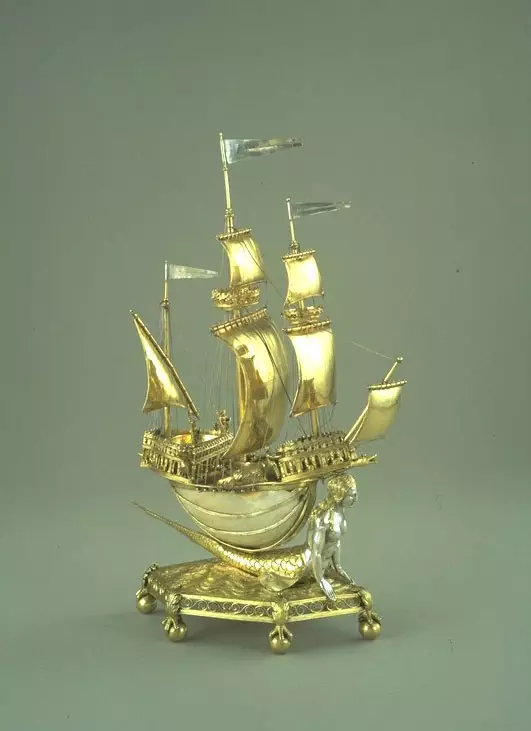
The Burghley Nef, created in 1527-1528 in France, is part of the V&A Museum's collection (no. M.60-1959). It features a nautilus shell with parcel-gilt silver mounts that have been raised, chased, engraved, and cast, adorned with pearls. The piece measures 34.8 cm in height, 20.8 cm in width, and 12.2 cm in depth, with a weight of 0.78 kg.
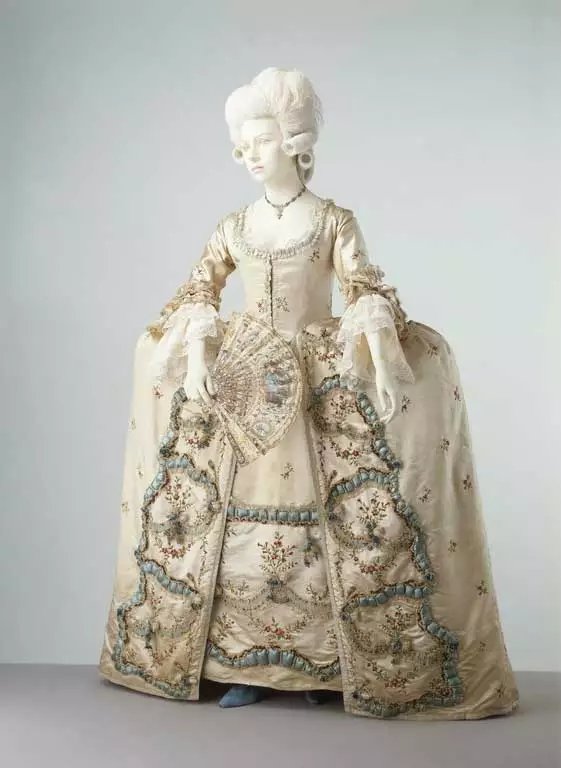
The Sack-back gown (Robe à la française) and petticoat from 1775-1780 is a blend of old-fashioned and contemporary dress design. The very square hoops and sleeve ruffles at the elbow harken back to the 1750s, while the center front closure of the bodice reflects a feature of contemporary fashion. The gown and petticoat are adorned with badded bands of blue satin, chenille blonde lace, flowers of gathered ribbon, feathers, and raffia tassels. This rich mixture is characteristically French, with floral imagery and curvilinear arrangements that typify exuberant Rococo-style dress embellishment. However, the subtle colors of the gown and the delicacy of the design reflect the growing influence of the Neo-classical style in textile decoration. This piece is from France.
Exhibited in room 27 (Northern Renaissance 1500-1700, case EXP) at the Victoria and Albert Museum, London, England. It was originally in the cloisters of Steinfeld Abbey, near Cologne. German (Cologne), about 1540-1542.
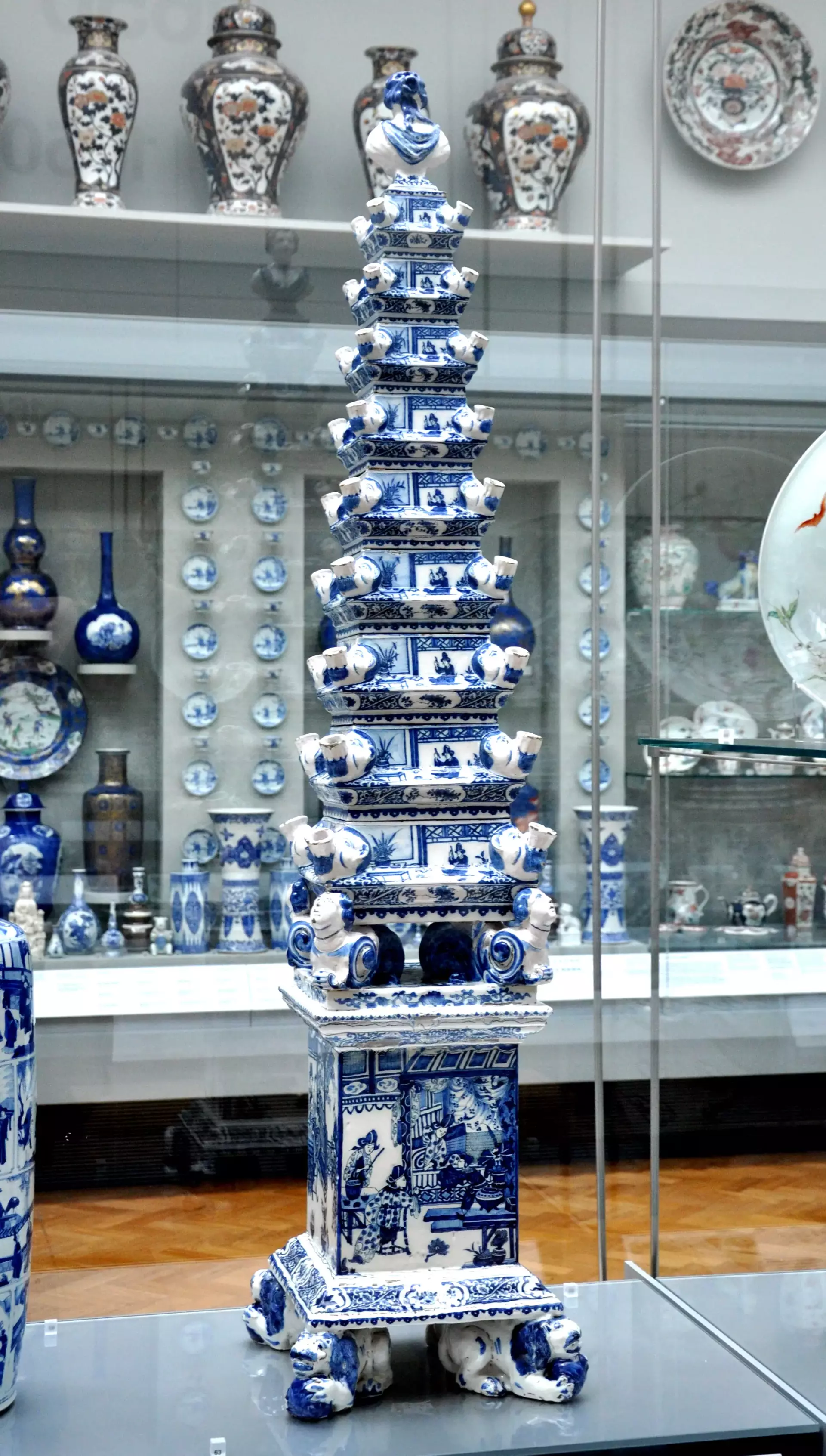
Flower pyramid, c. 1695, Greek A factory, Delft; tin-glazed earthenware, painted; Height: 160 cm. Victoria and Albert Museum, London, museum no. C.19 to J-1982.
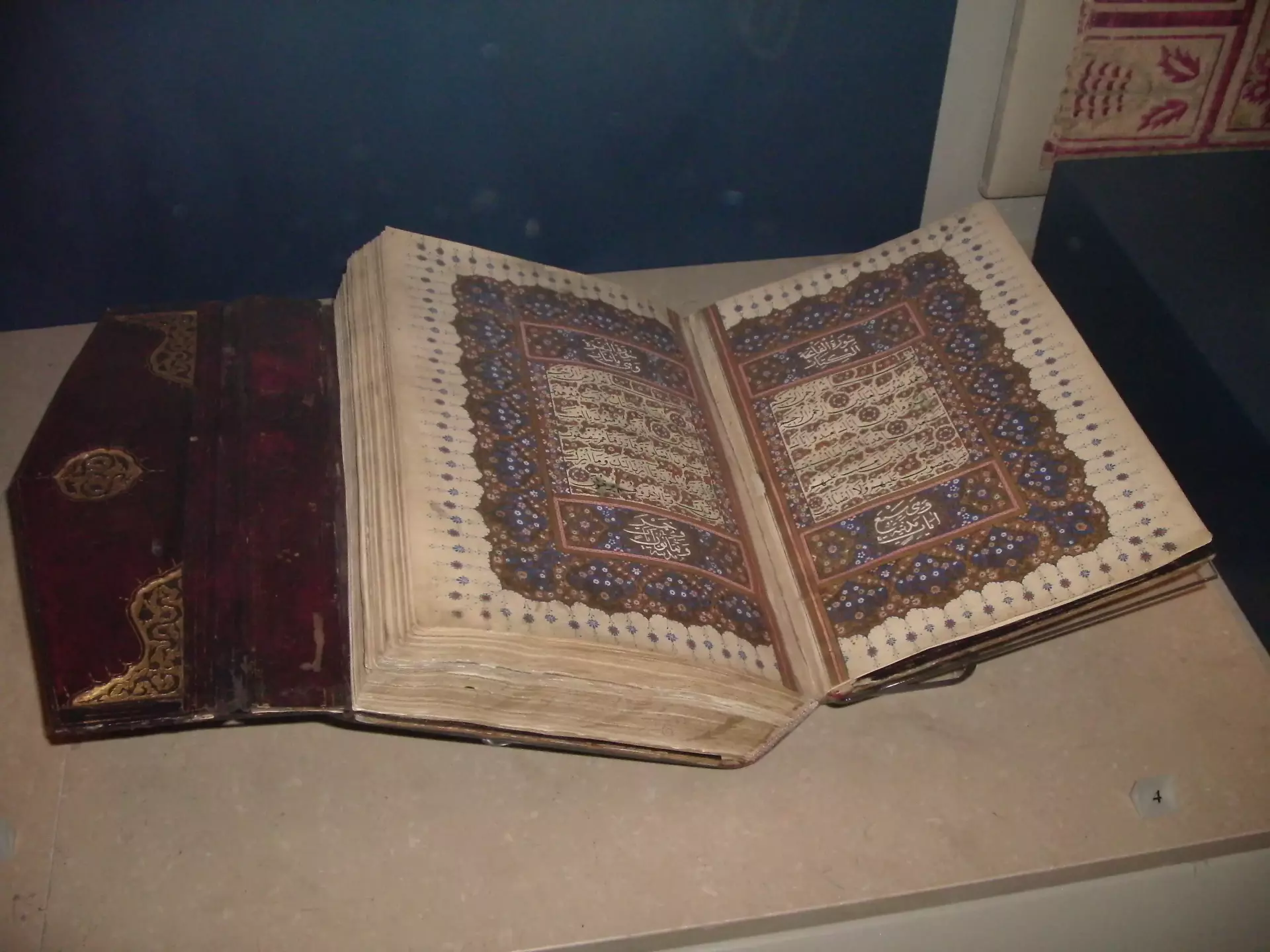
Qur'an, 1650-1700, Turkey, probably Istanbul. Ink, colors, and gold on paper; binding of leather over pasteboard, stamped, tooled, and gilded. Signed by Mustafa son of Mehmet. In Istanbul, interest in the scripts used for copying the Qur'an increased from the 1650s. Even the sons of Sultan Mehmet IV (reigned 1648-87) were taught to write them. This manuscript may be by the son who later reigned as Sultan Mustafa II from 1695 to 1703. The illumination of the opening pages is certainly of imperial quality. This photo was taken as part of Britain Loves Wikipedia in February 2010 by Adam Morgan.
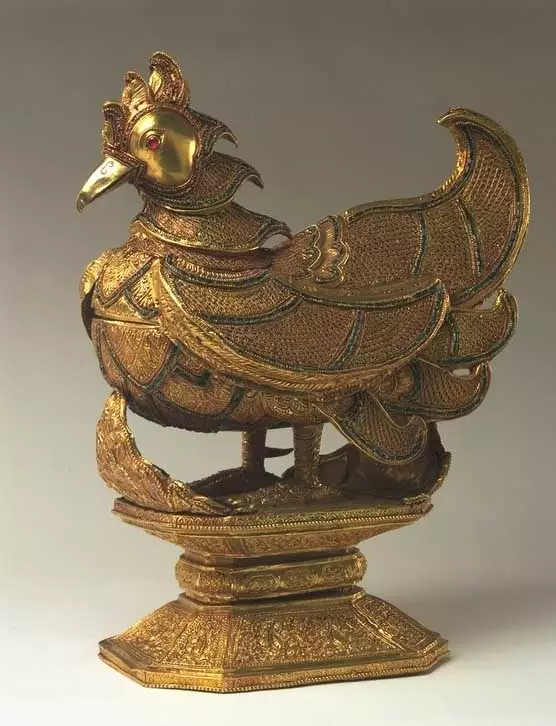
Betel container, 19th century, V&A Museum no. IS.246&A-1964. The container features filigree work in gold on a gold ground, outlined with bands of rubies and imitation emeralds, with some embossing. One ruby eye is missing. Place of origin: Mandalay, Burma. Dimensions: Height 41.5 cm, Length 35.5 cm, Width 18 cm.
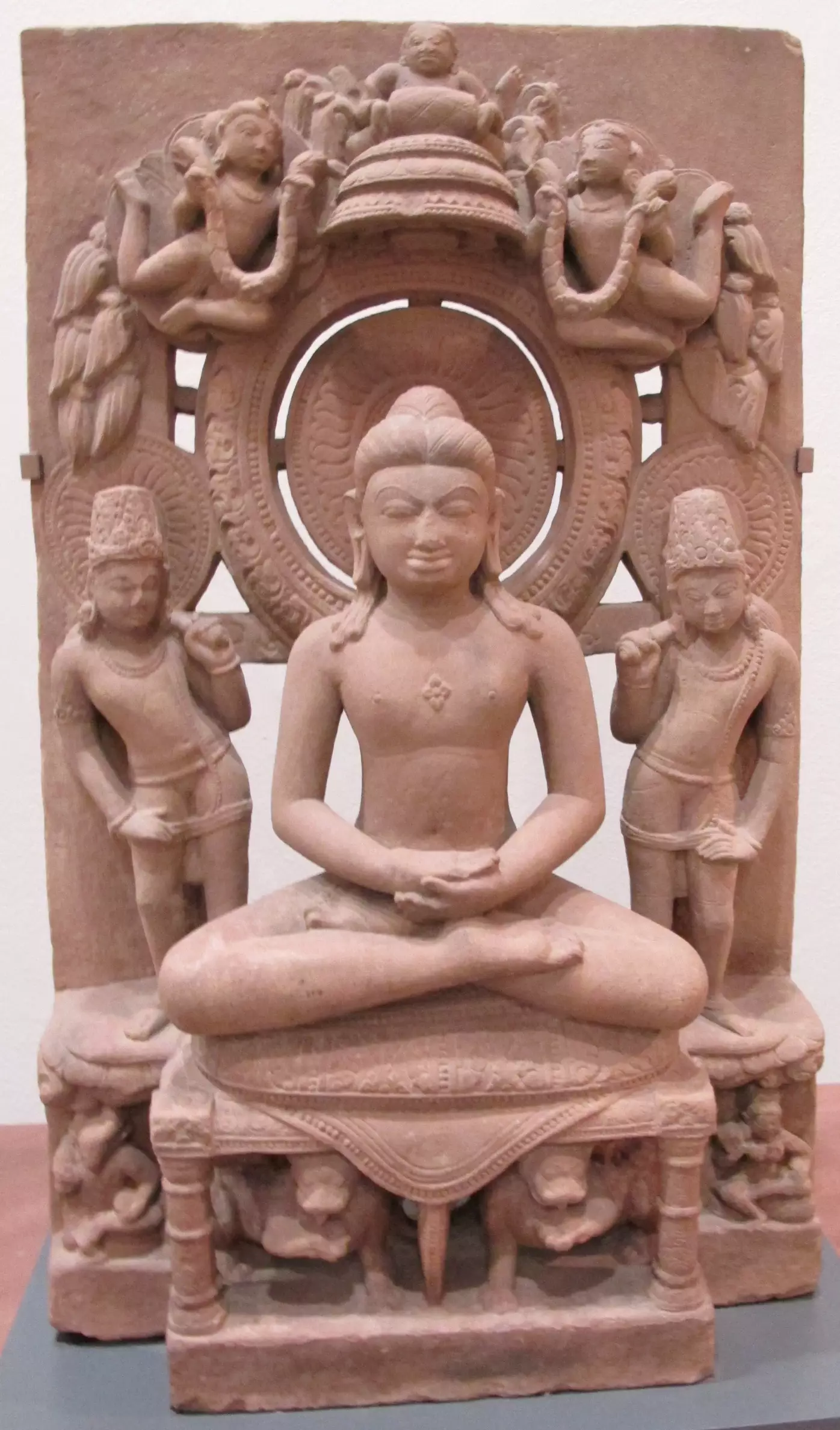
Jina Rishabhanatha, 800-900, Uttar Pradesh, India.
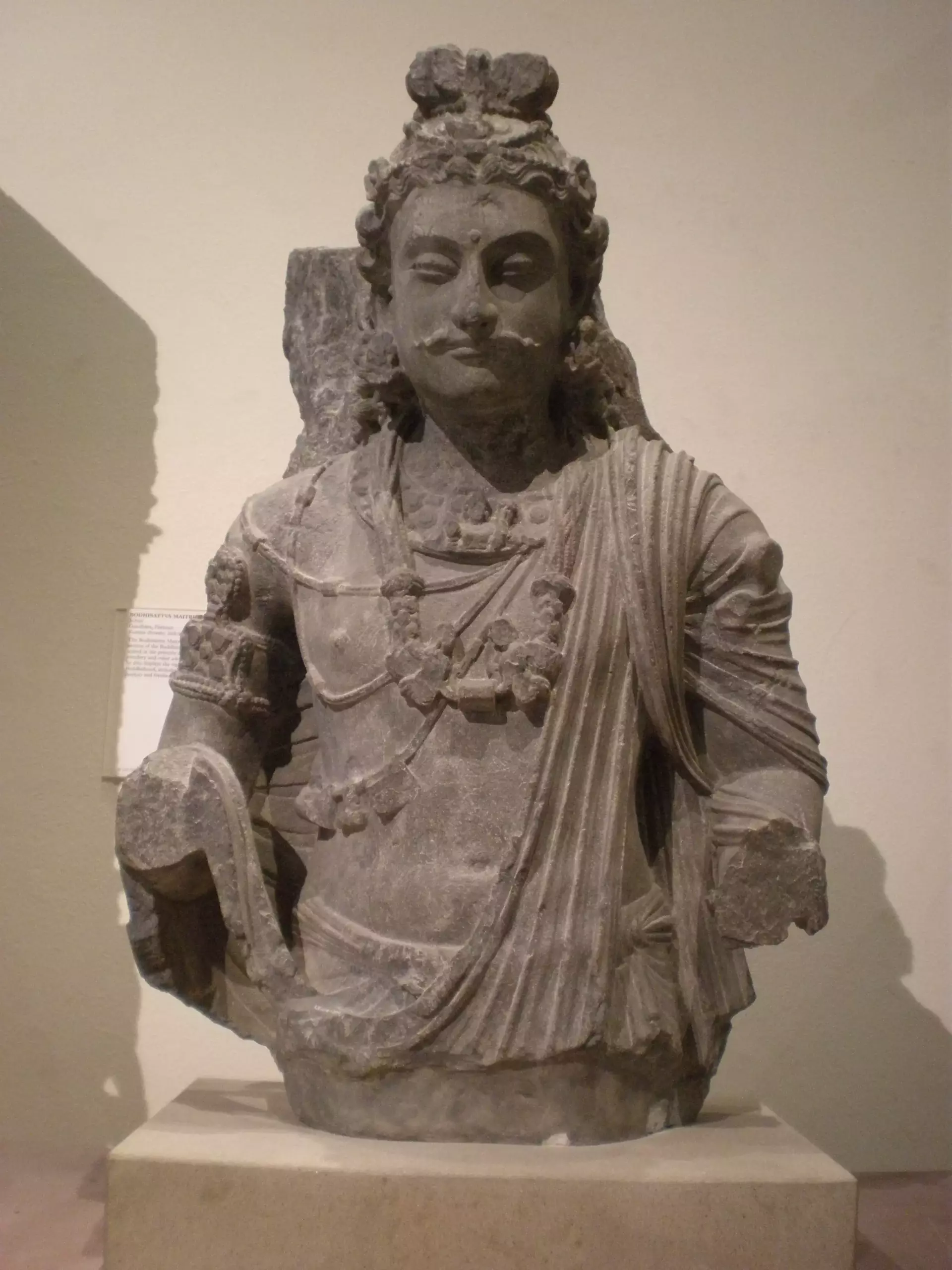
The Bodhisattva Maitreya, a benevolent savior of the Buddhist pantheon, is depicted in schist from the Gandhara region in Pakistan, dating back to the Kusana Dynasty, 2nd-4th century AD. He is dressed in the princely attire of the period, adorned with jewelry and other decorations, while also displaying signs of potential Buddhahood, such as the raised hair-knot and forehead mark.

Victoria and Albert Museum

London, Great Britain

The Victoria and Albert Museum, named in honor of Queen Victoria and her consort Prince Albert, has been a cornerstone of art and design for over 150 years. This museum offers a vast collection of decorative arts from various cultures and historical periods, making it a treasure trove for art enthusiasts.

Exploring the Collection

With such an extensive array of exhibits, attempting to see everything in one day might be overwhelming. Fortunately, the museum provides detailed maps to help visitors plan their journey through the galleries. Whether you're interested in ancient artifacts or contemporary pieces, there is something for everyone to explore and appreciate.

Special Exhibitions and Events

The museum regularly hosts exhibitions focused on specific themes, ranging from Chinese art to renowned fashion designers. These special exhibitions provide deeper insights into particular subjects and often showcase rare and unique items.

Activities for All Ages

The Victoria and Albert Museum is not just a place for adults; it frequently offers engaging activities for children, ensuring that visitors of all ages can enjoy their time at the museum. Additionally, the museum organizes late-night events with DJ performances, providing a vibrant atmosphere for those looking to experience the museum in a different light.

Source - https://en.wikipedia.org/wiki/Victoria_and_Albert_Museum

Developed by Reflex.com.ua
Contacts
  • info@reflex.com.ua
Social media