

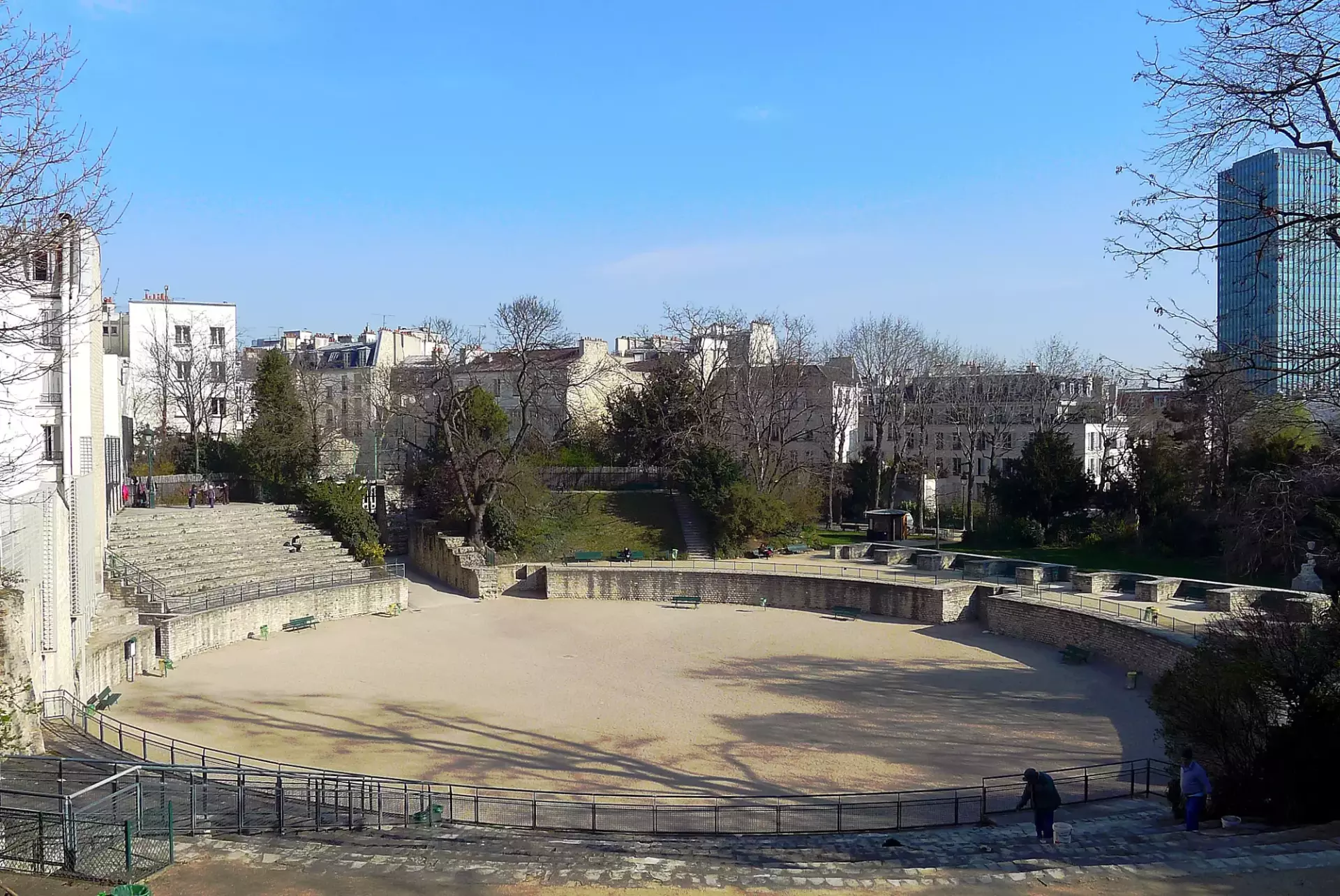


Arènes de Lutèce
In the Latin Quarter of Paris stands the Arènes de Lutèce, an ancient Roman theater and one of the rare remnants of the city’s Gallo-Roman past. Known in ancient times as Lutetia (French: Lutèce), Paris has few traces of its early Roman heritage, making these ruins particularly significant. Aside from the nearby Thermes de Cluny, the Arènes de Lutèce are the only surviving above-ground structures from that era.
The Structure and Its Features
This impressive theater was constructed in the 2nd century CE. It could once accommodate around 15,000 people, with a footprint measuring approximately 132 meters by 100 meters. The design includes areas where the actors’ dressing rooms were located, the original platform of the stage, and several stone remnants that bear witness to its grand past. Visitors can easily spot these features while walking around the site.
Rediscovery and Preservation
The Arènes de Lutèce remained hidden for centuries. It was not until 1869, during the construction of new city streets, that the ruins were rediscovered. This accidental find led to a formal archaeological excavation in 1883. Since then, the site has been carefully preserved as a quiet archaeological park. Today, the arena provides a peaceful retreat, standing apart from the lively streets of modern Paris.
Source - https://en.wikipedia.org/wiki/Ar%C3%A8nes_de_Lut%C3%A8ce