
Search ×
Home Paris
Notre-Dame de Paris
Notre Dame de Paris, France
Emblem of the Papacy: Triple Tiara and Keys
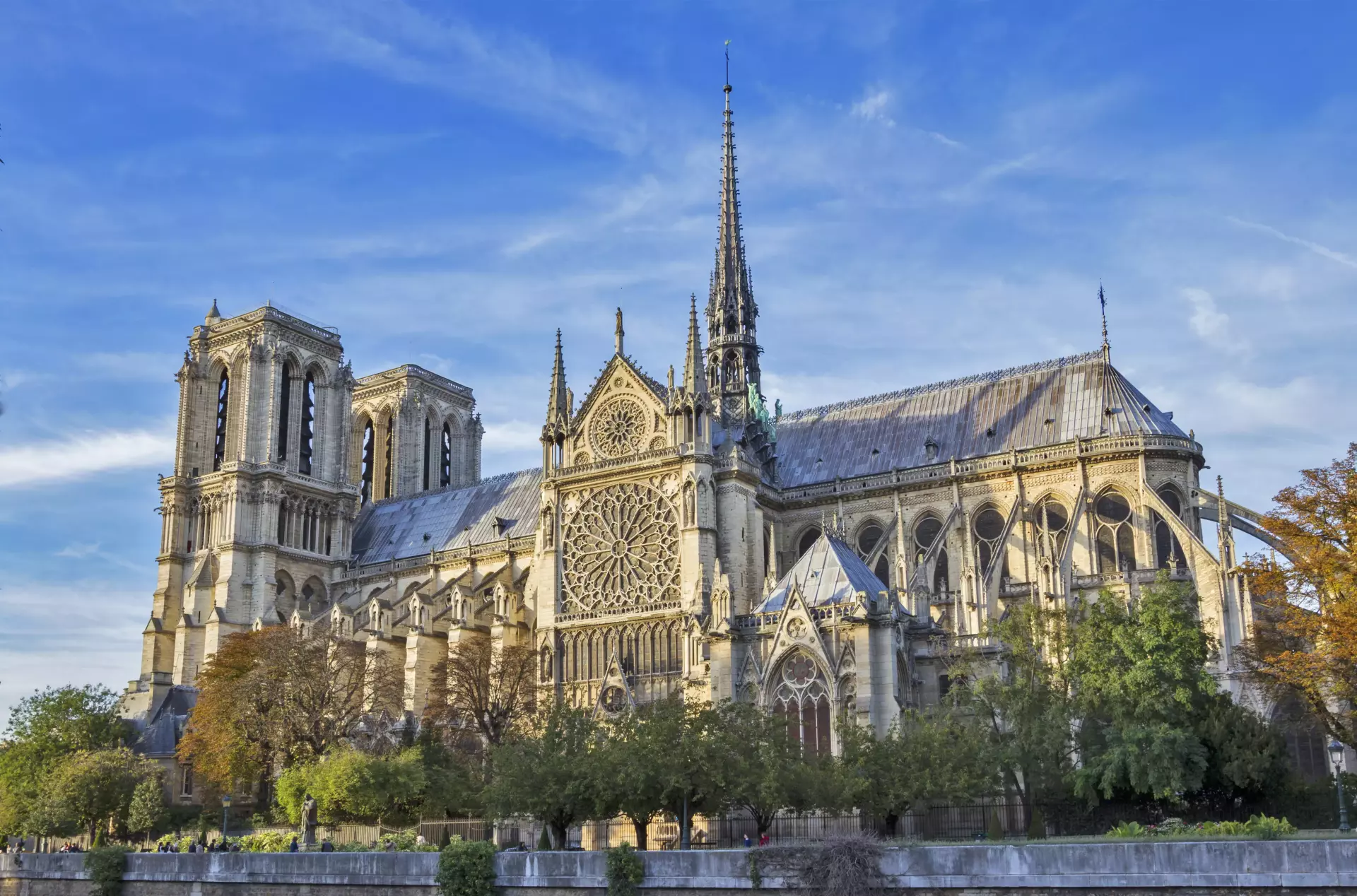
Notre Dame Cathedral in Paris, France.
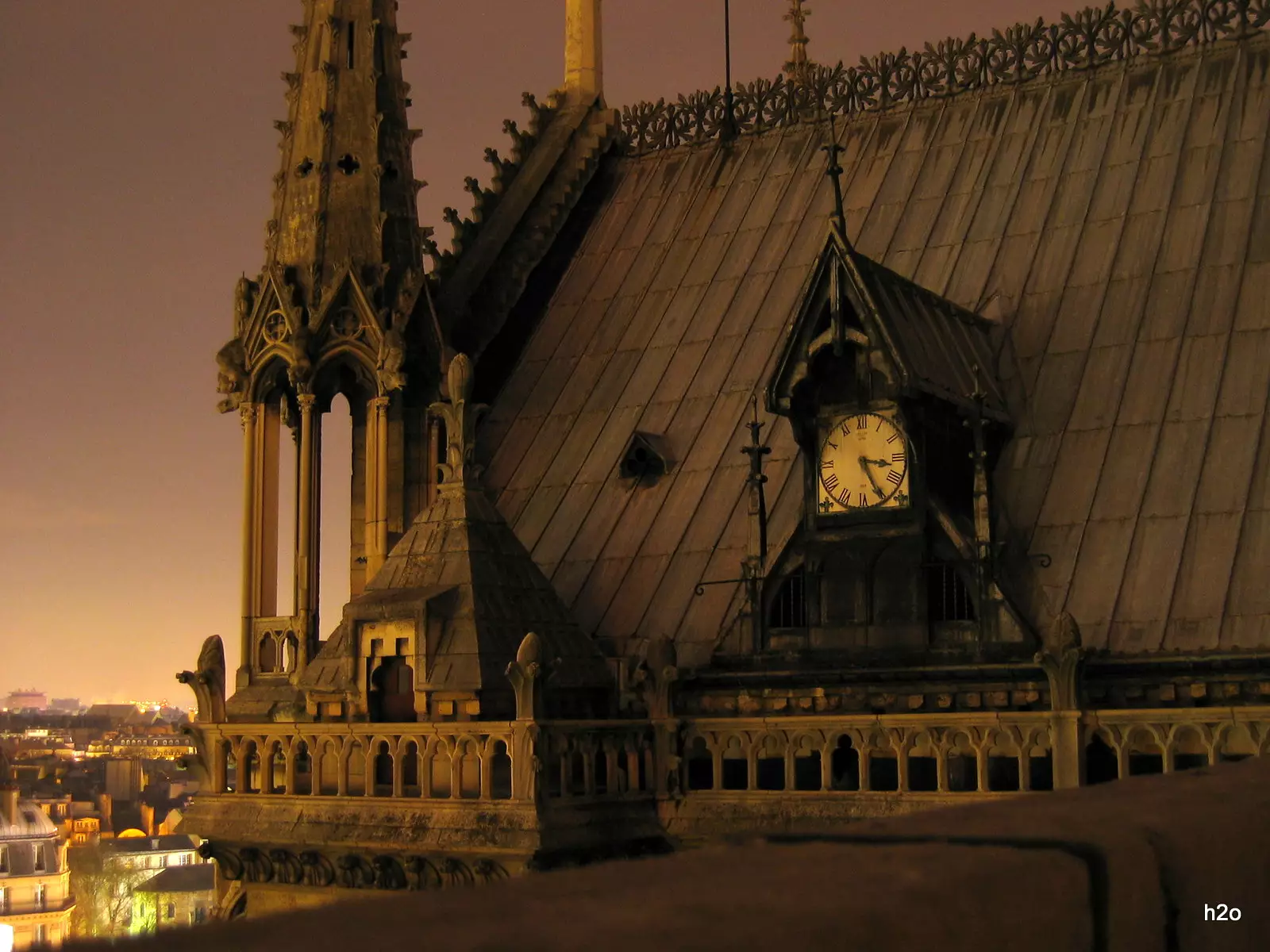
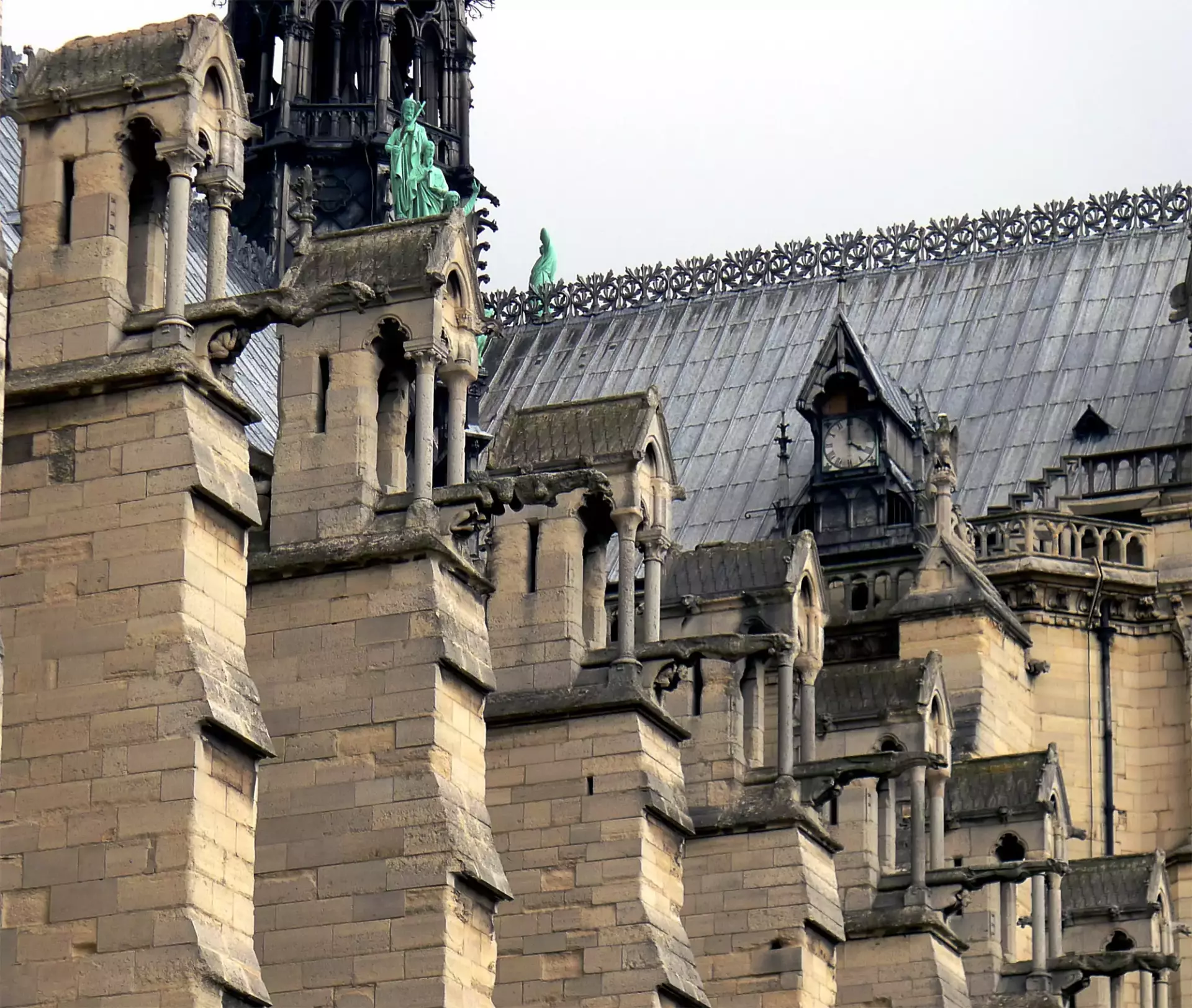
Several clocks were placed under the roof of the cathedral. It is 3:20.
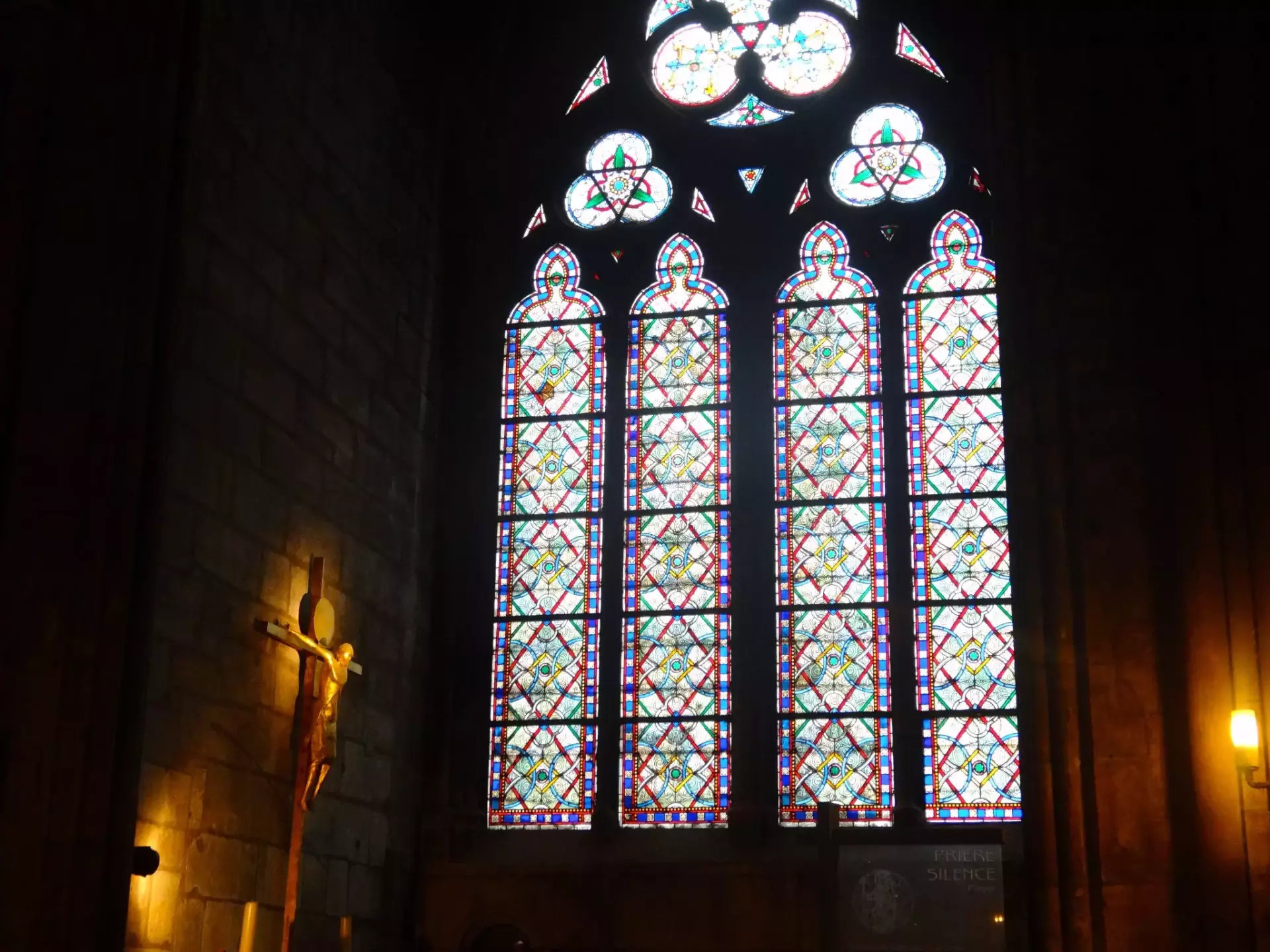
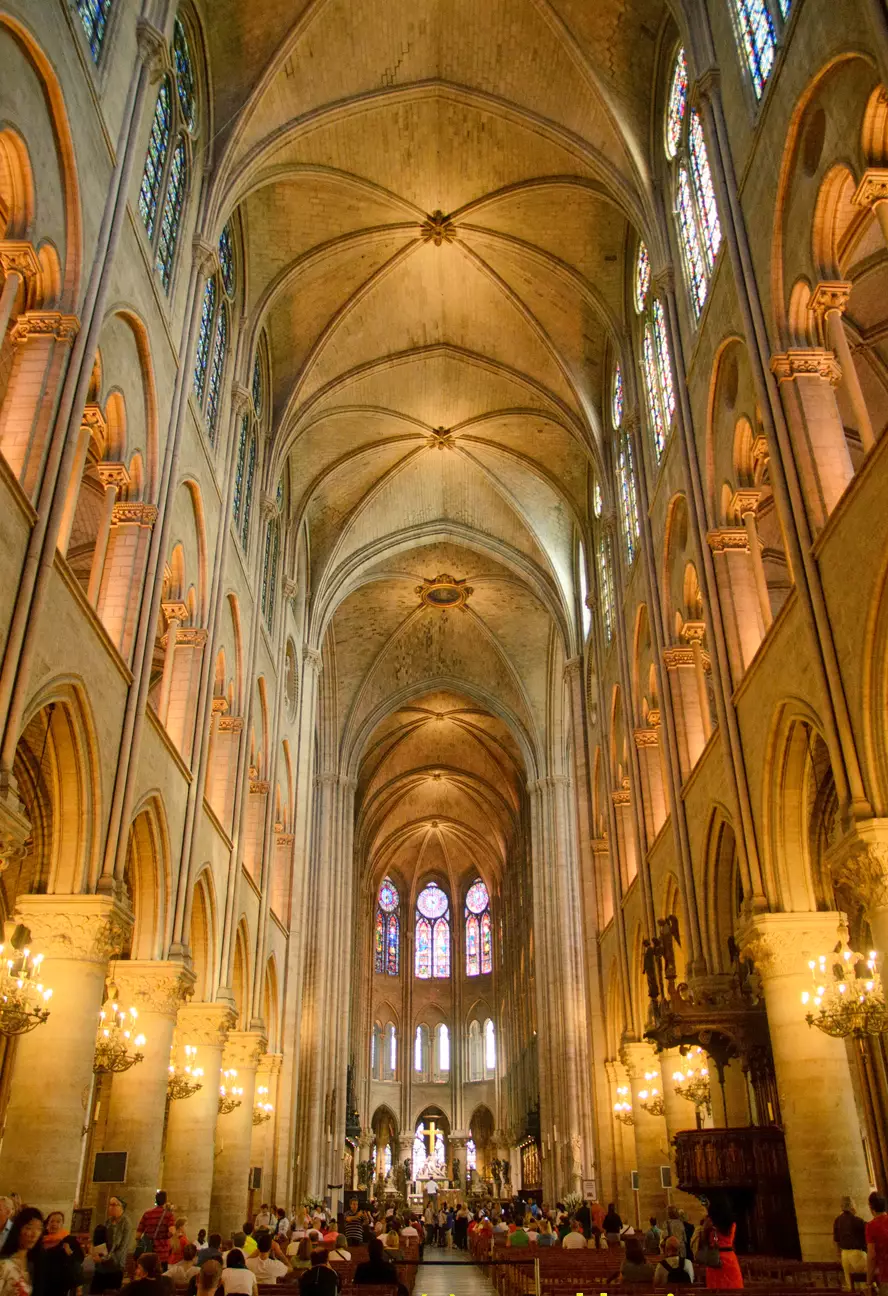
The interior, Notre Dame de Paris, 2012.
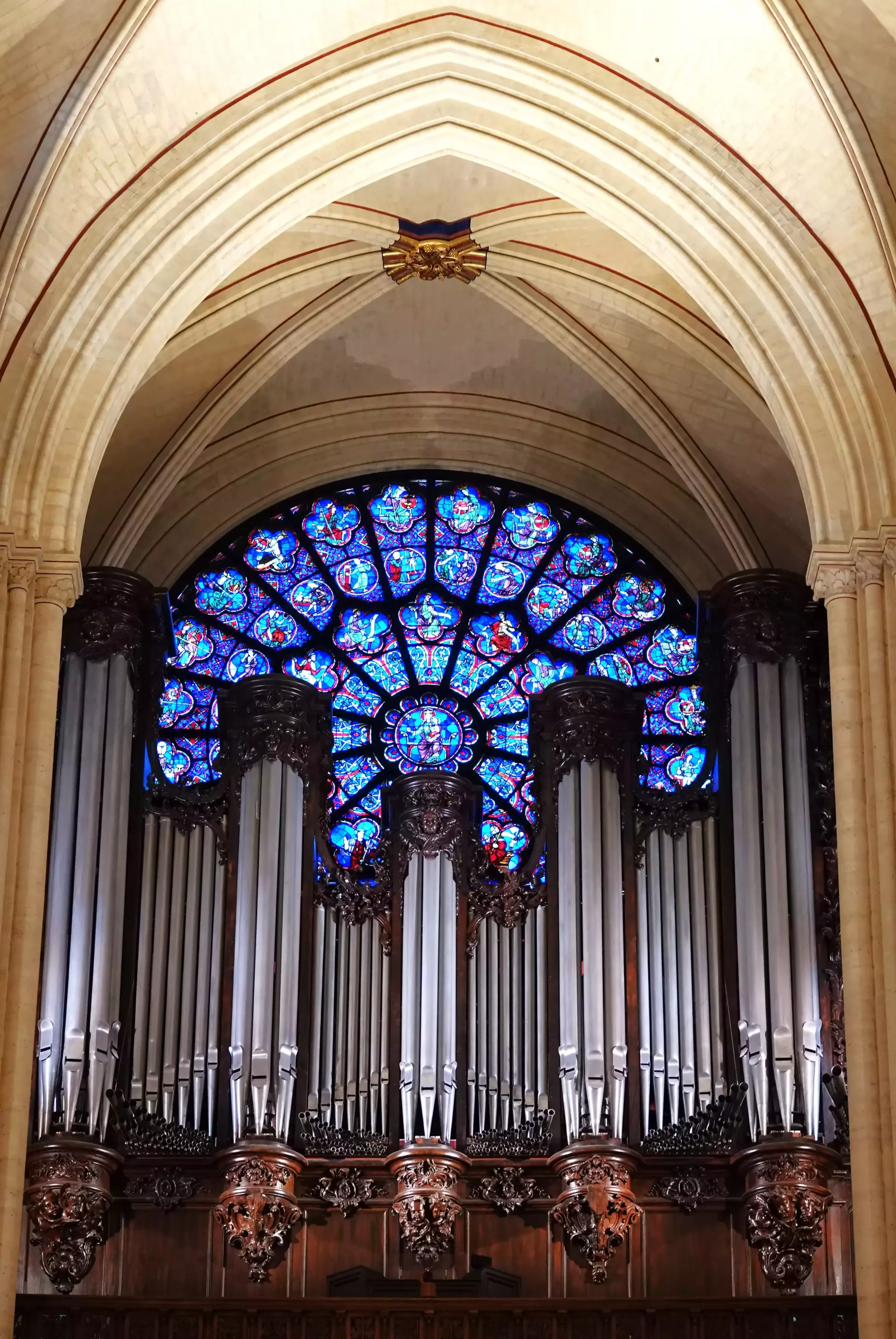
Great organ of Notre-Dame de Paris, December 2024.
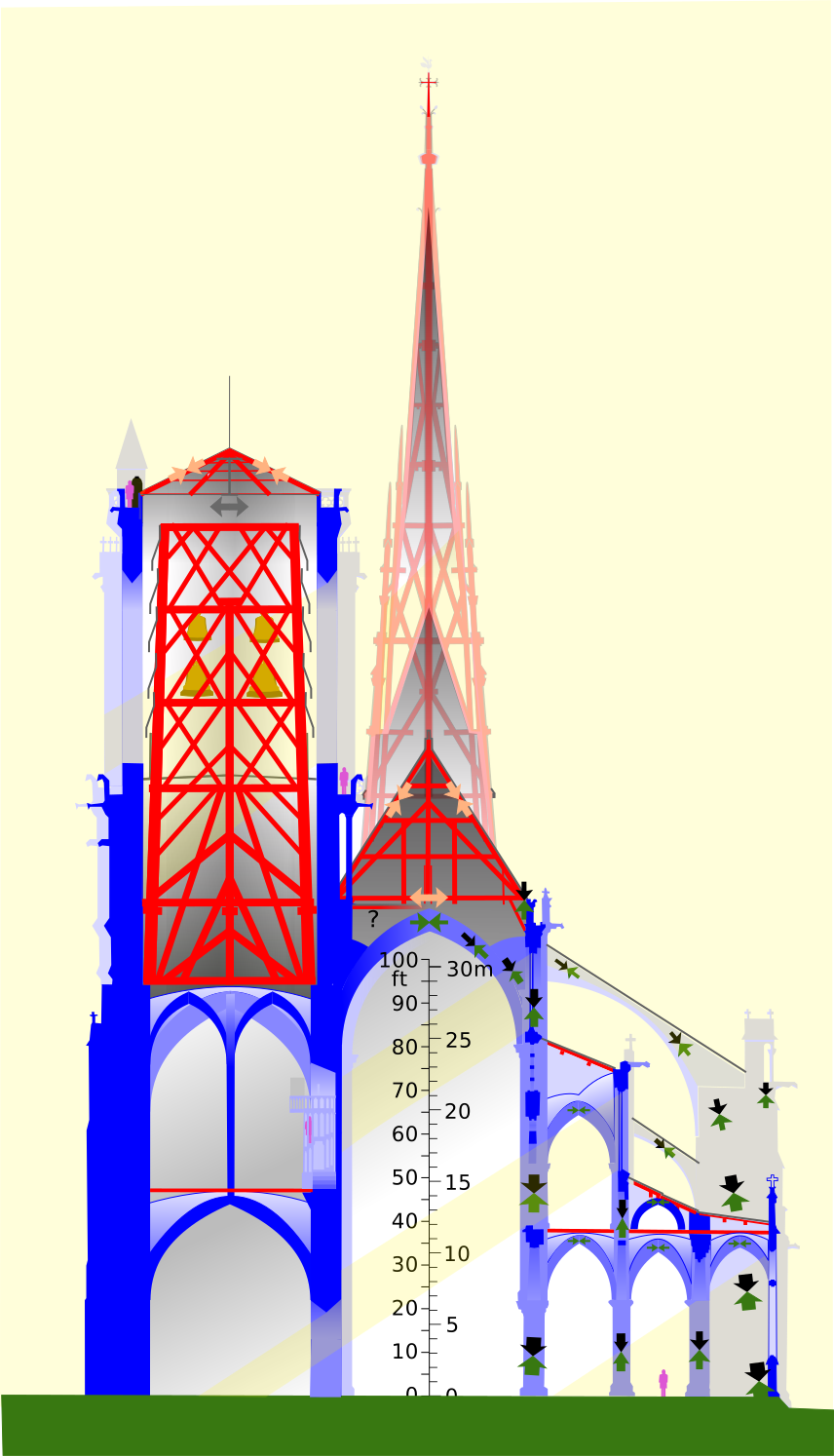
Composite transverse section of Notre-Dame de Paris before the 2019 fire. Timber framework is shown in red, masonry in blues, and metal in grey. On the left is a tower, displaying the internal framework of the belfry (bells not shown). In the center is the nave, covered by a masonry vault and a 55-degree triangular roof, with the spire visible above and behind. On the right are side aisles, the triforium aisle above, and flying buttresses. The vaults thrust outwards on the walls, while the flying buttresses thrust inwards; unless these forces balance, the wall may be pushed over. Black arrows indicate the force of the structure's weight being transmitted to the ground, green arrows indicate the upwards force of the ground supporting the structure, and orange and grey arrows show the forces in the wood and metal of the roof trusses. Roof trusses cancel out their outwards forces using internal tension, as masonry cannot support tension. Light is added for clarity.
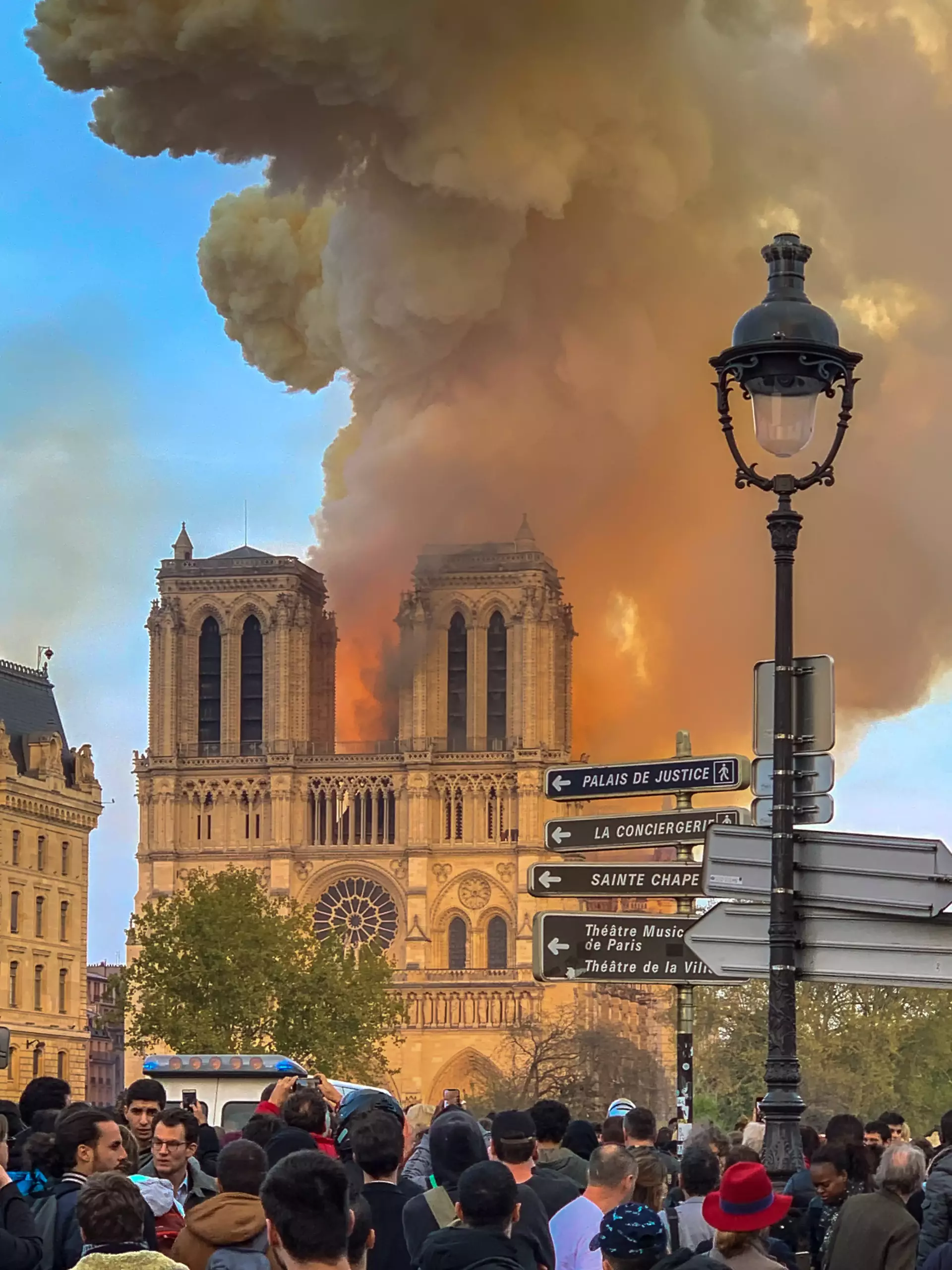
Notre Dame de Paris, burning. 15 April 2019.
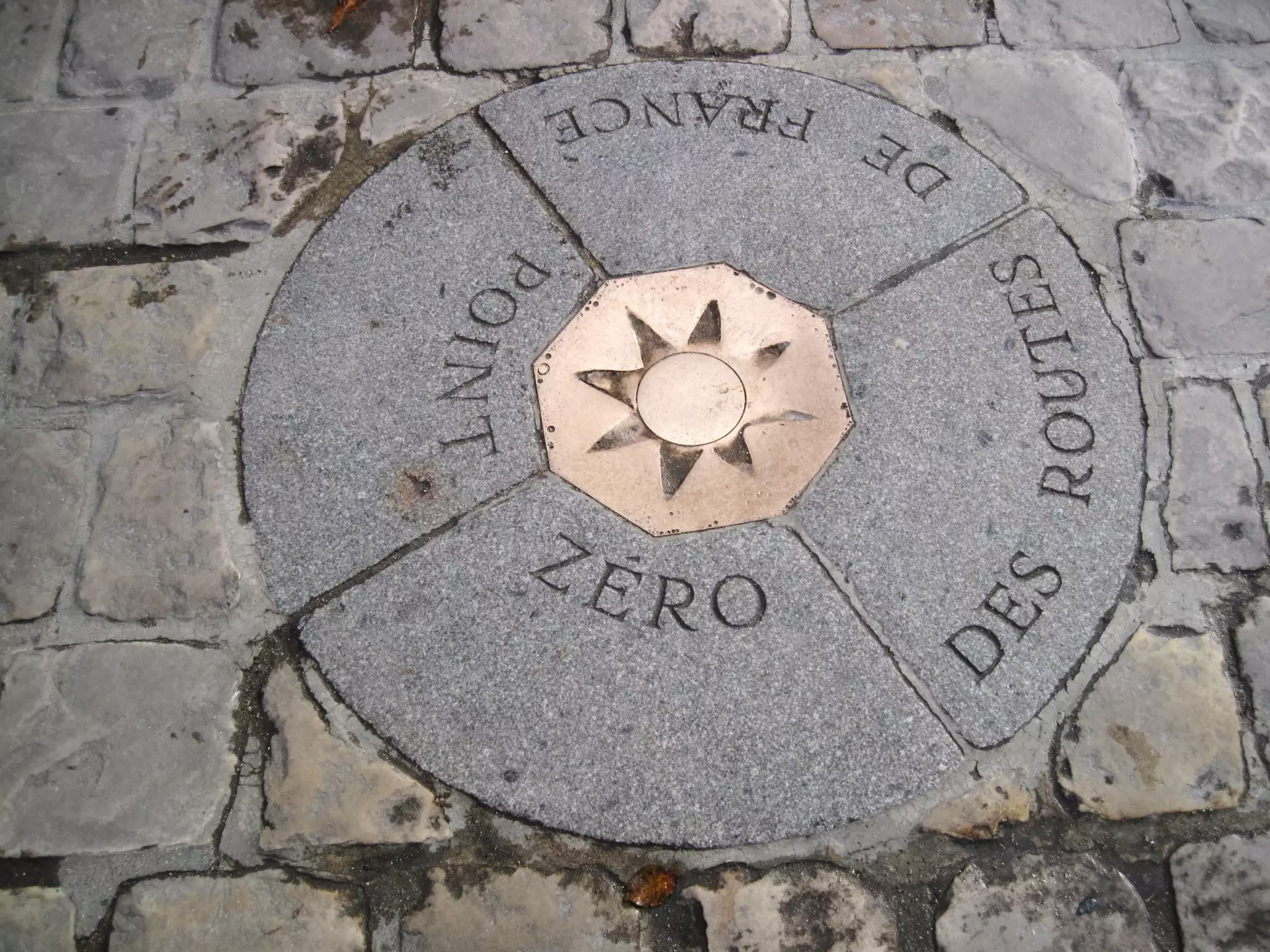
The Point Zero (more precisely Kilometer Zero) of the Roads of France is marked by a slab divided into four sections, at the center of which is placed an octagonal medallion representing a compass rose. It is from this point that road distances, in kilometers, between Paris and other cities of France are calculated. This Point Zero is located on the forecourt of Notre-Dame de Paris in Paris, France.
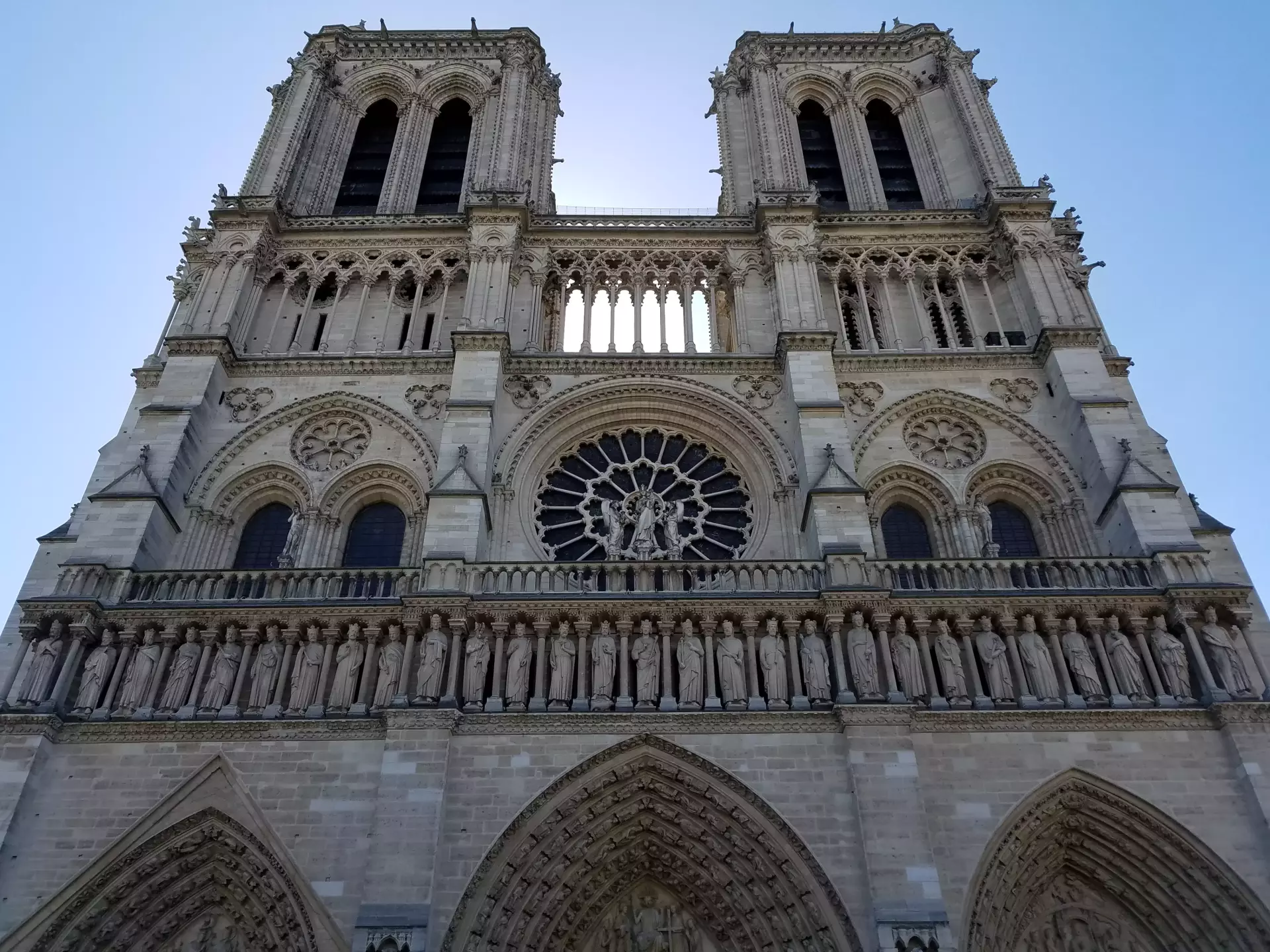
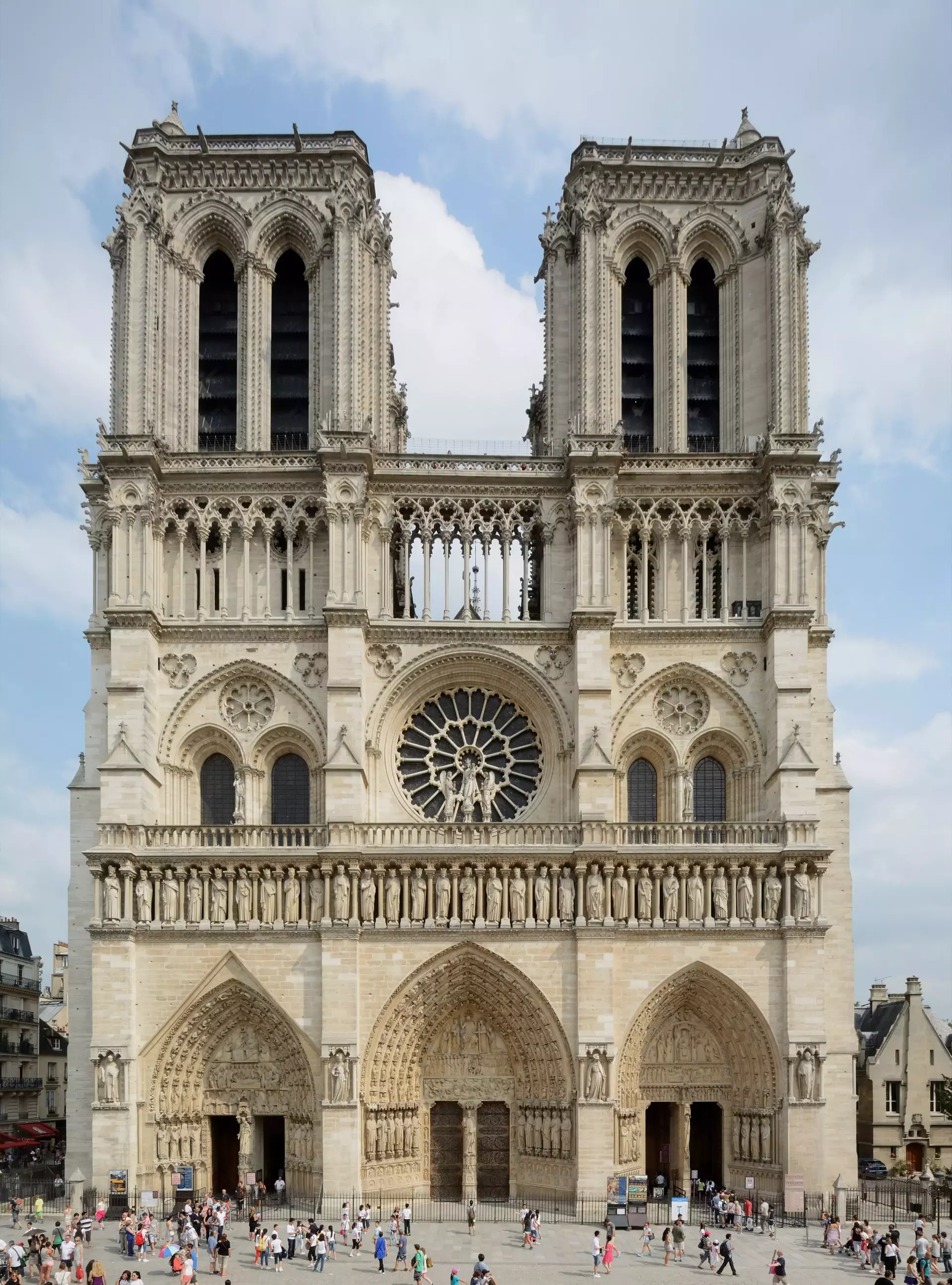
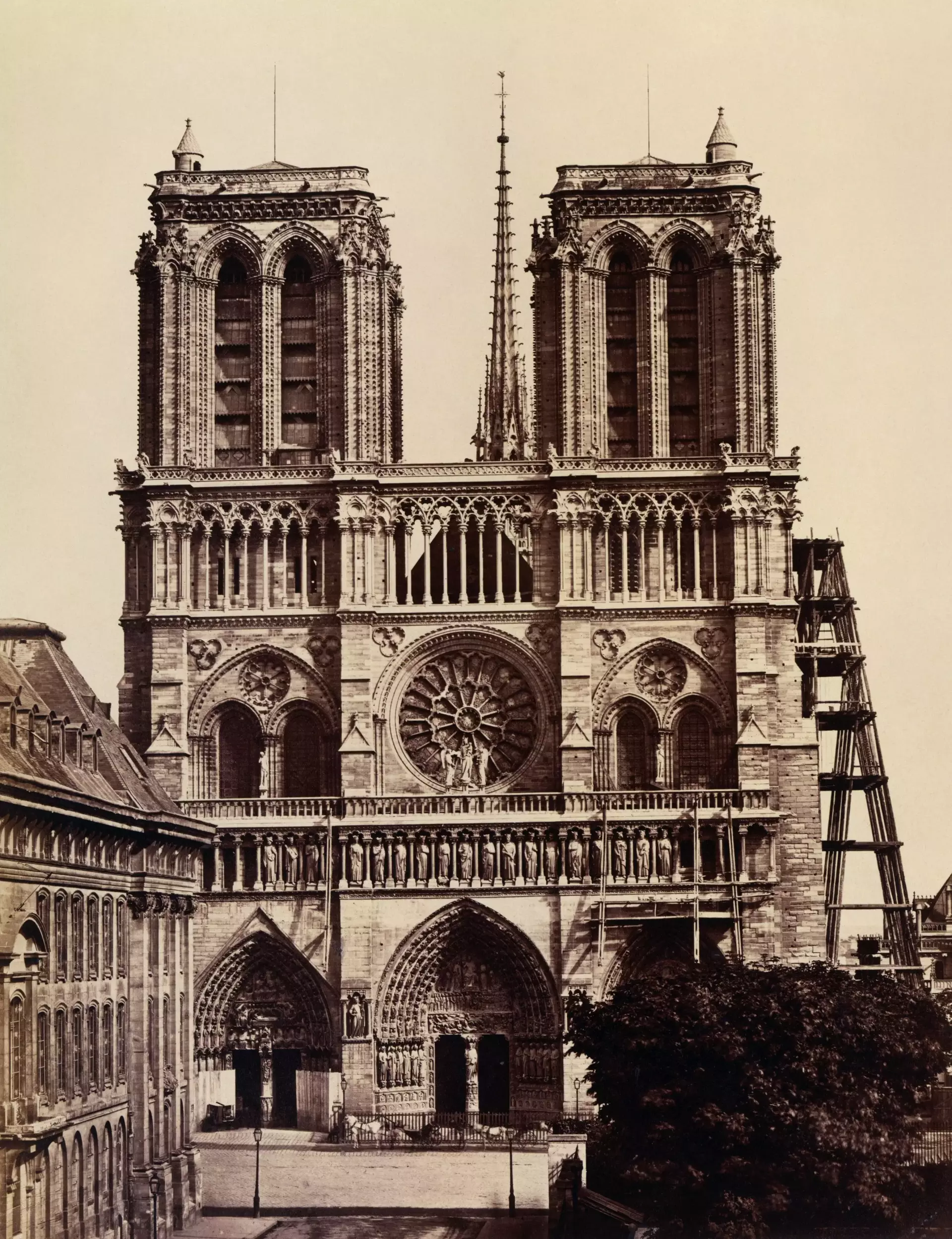
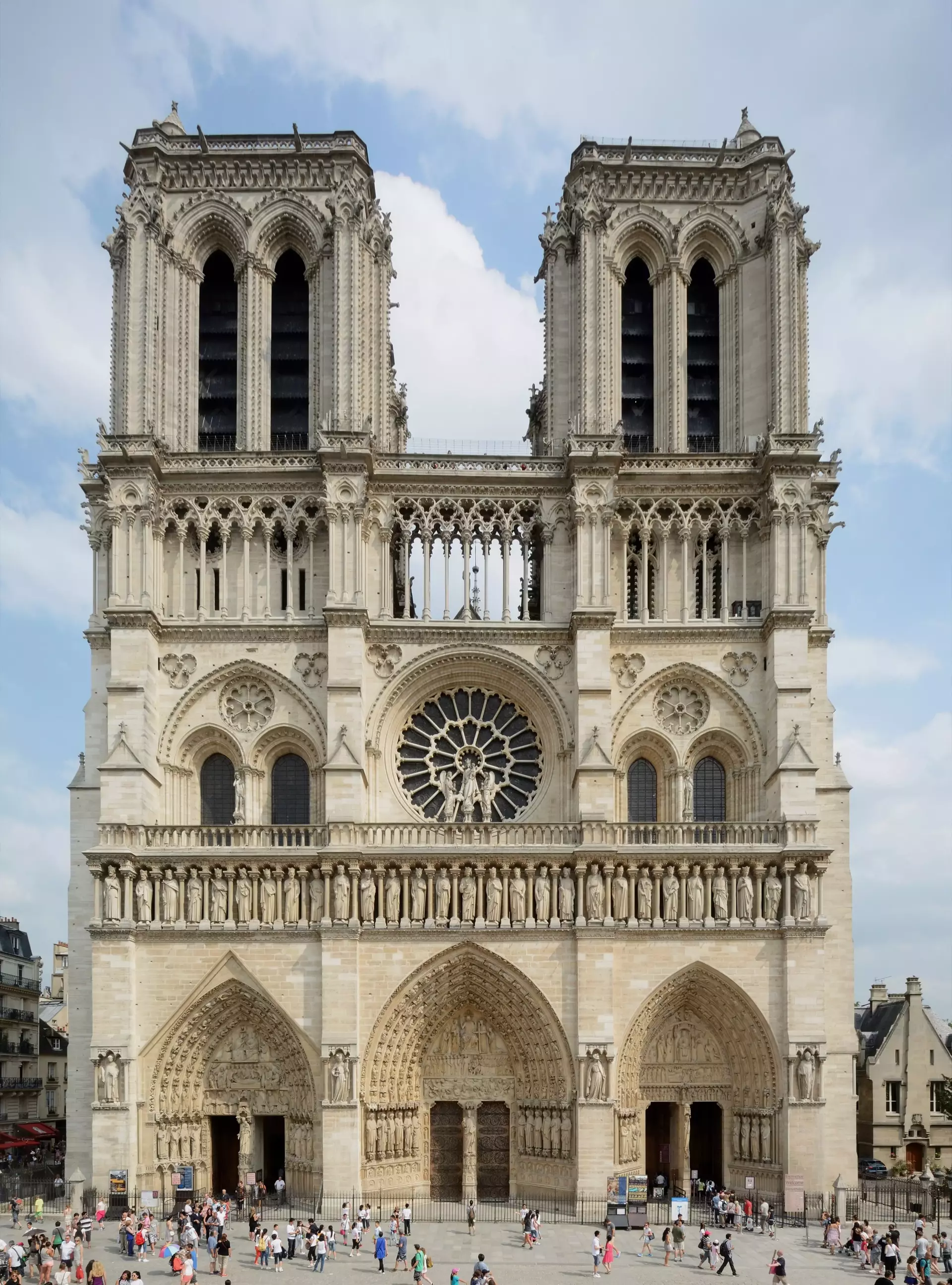
Facade of Notre-Dame de Paris.
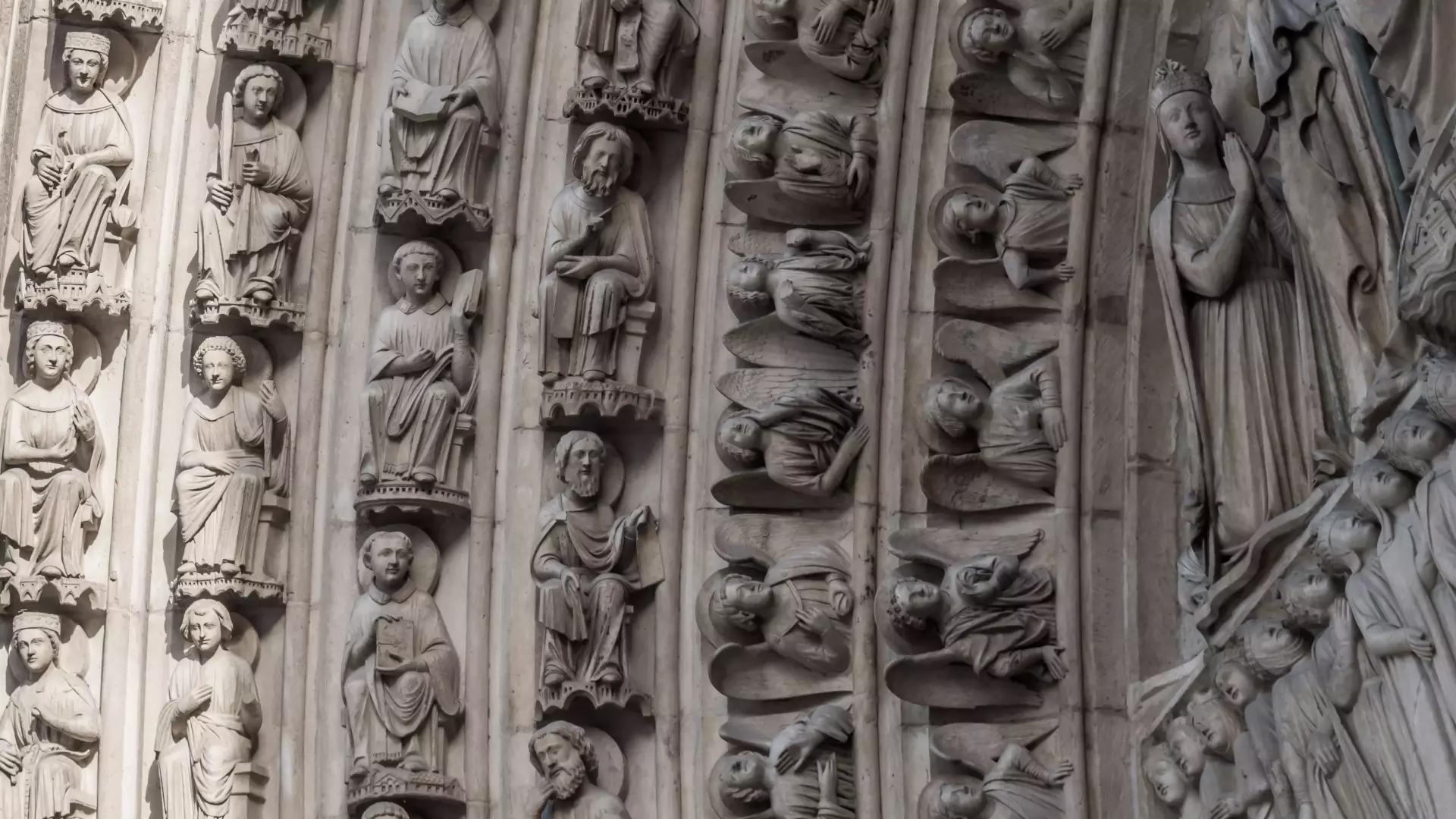
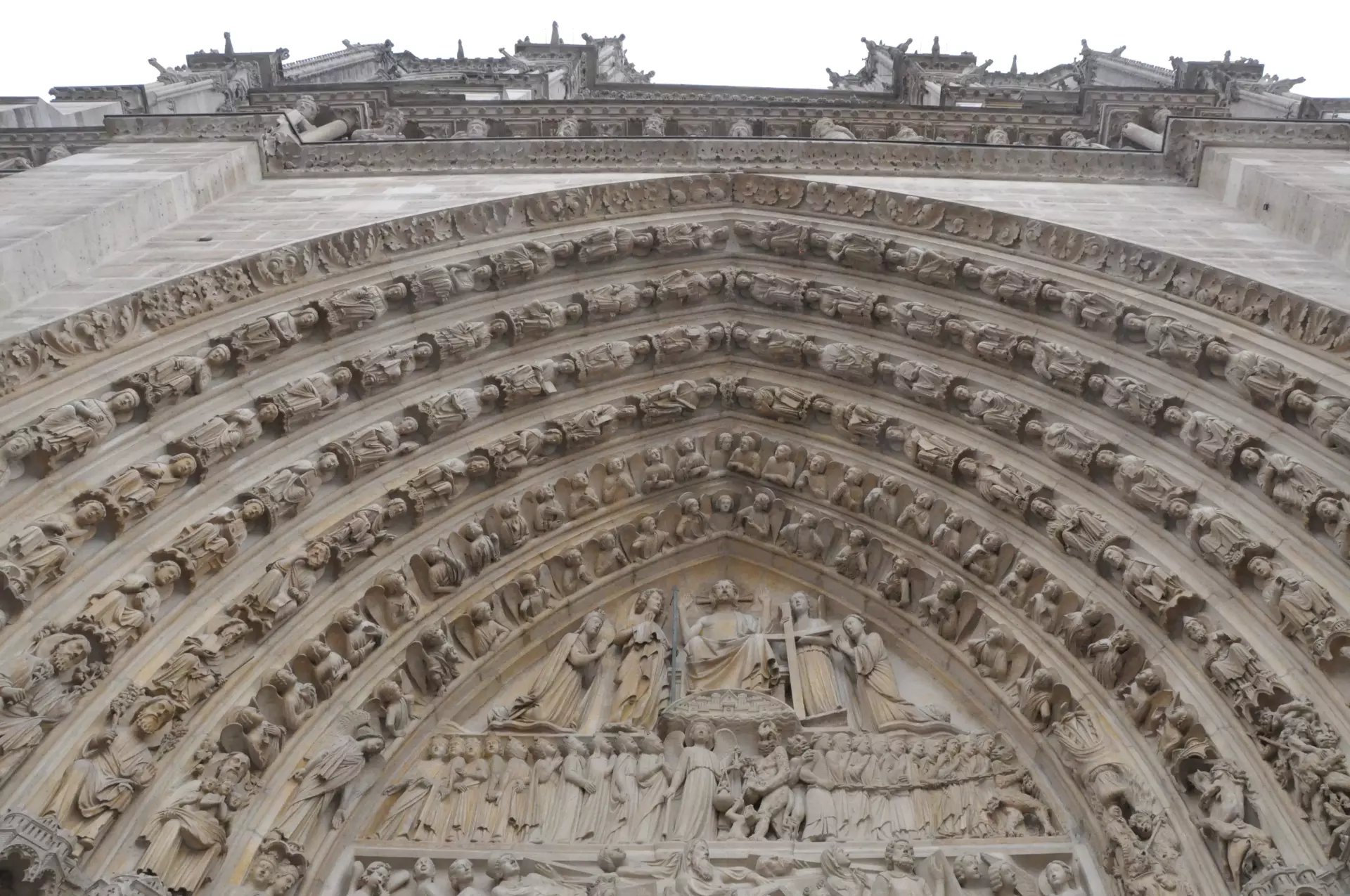
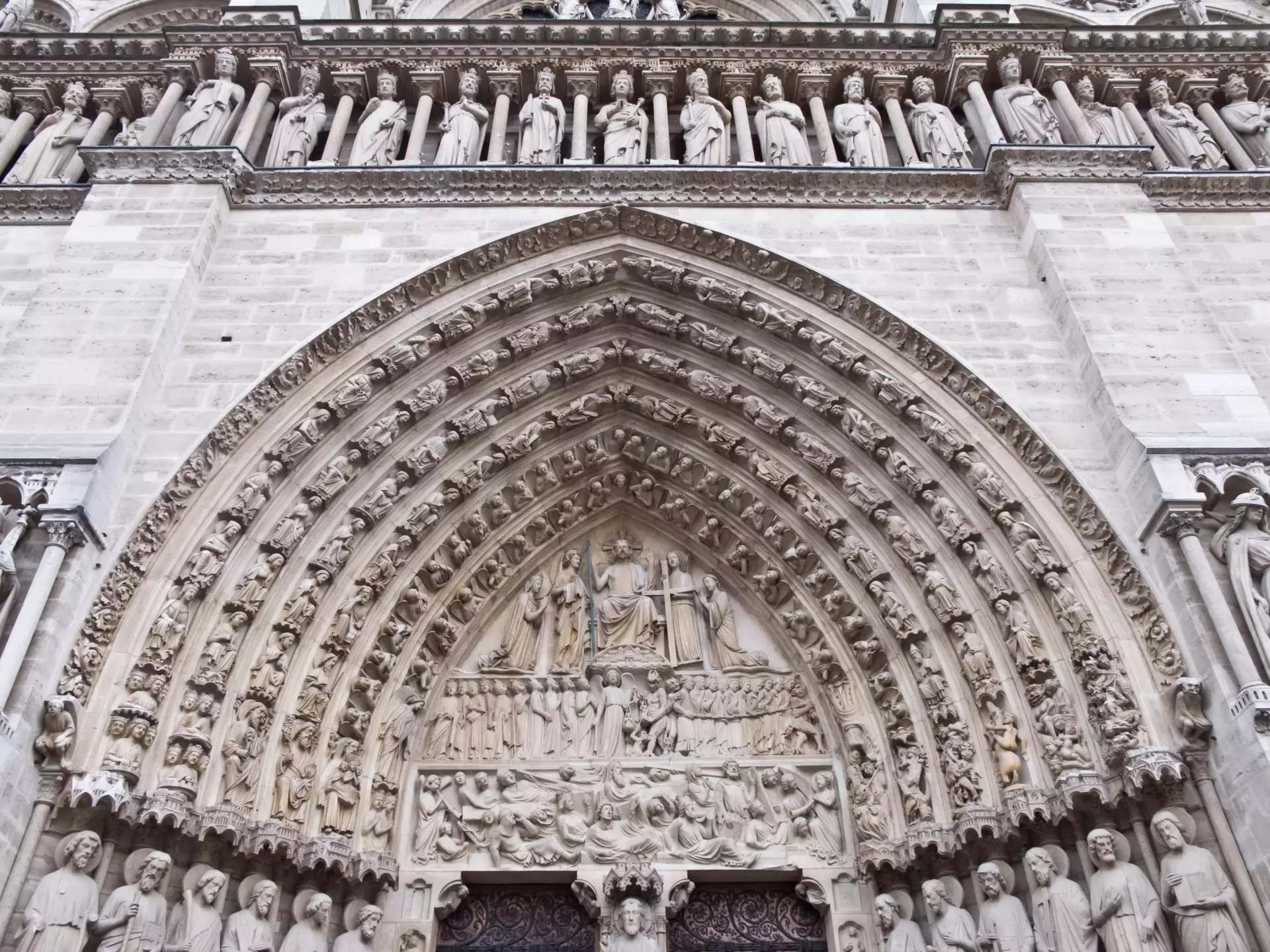
Close look of the details on the Tympanum of the Last Judgment.
Cathedral Notre Dame de Paris, West view, Paris, France. This building is classified as a historical monument of France. It is indexed in the base Mérimée, a database of architectural heritage maintained by the French Ministry of Culture, under the reference PA00086250.
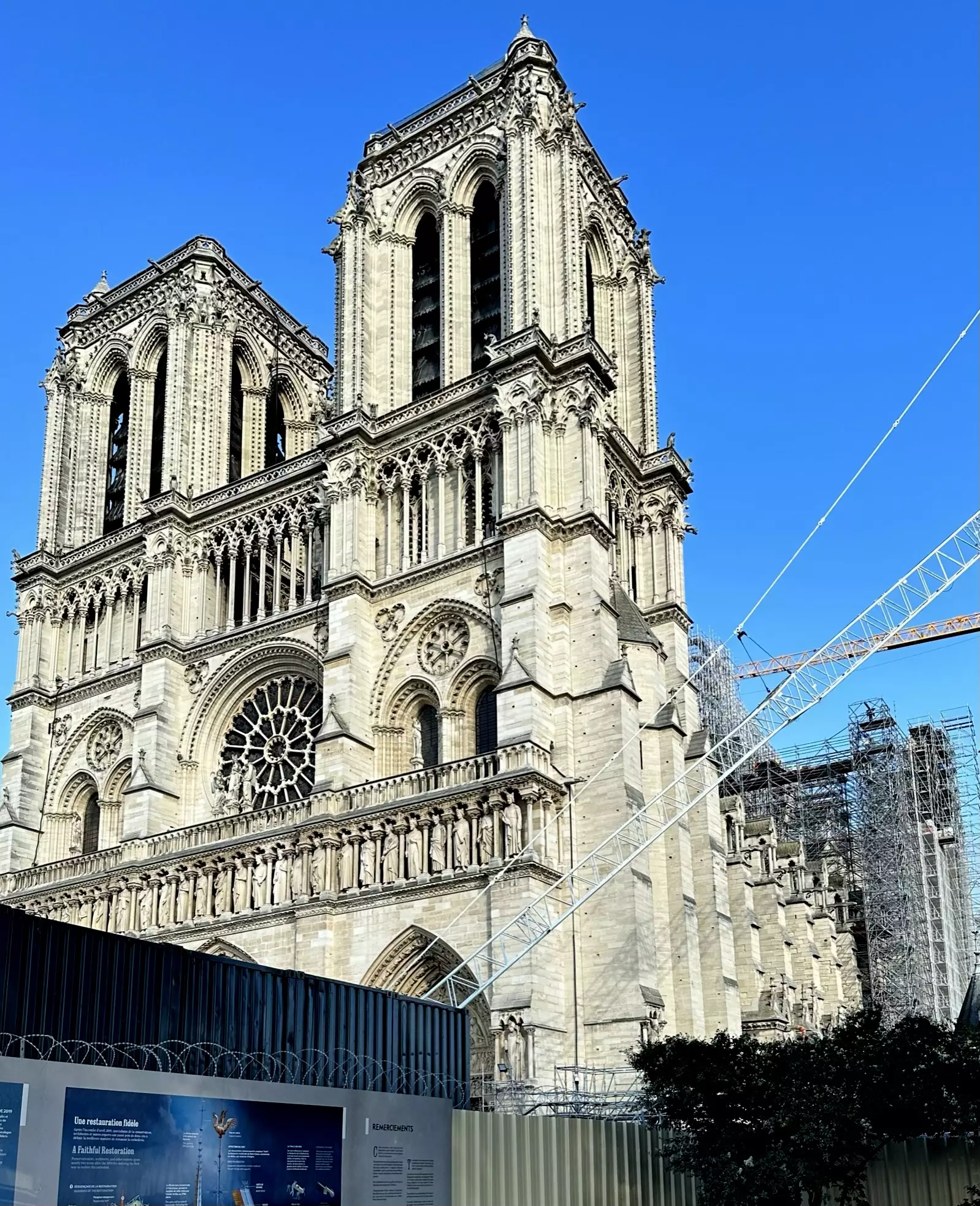
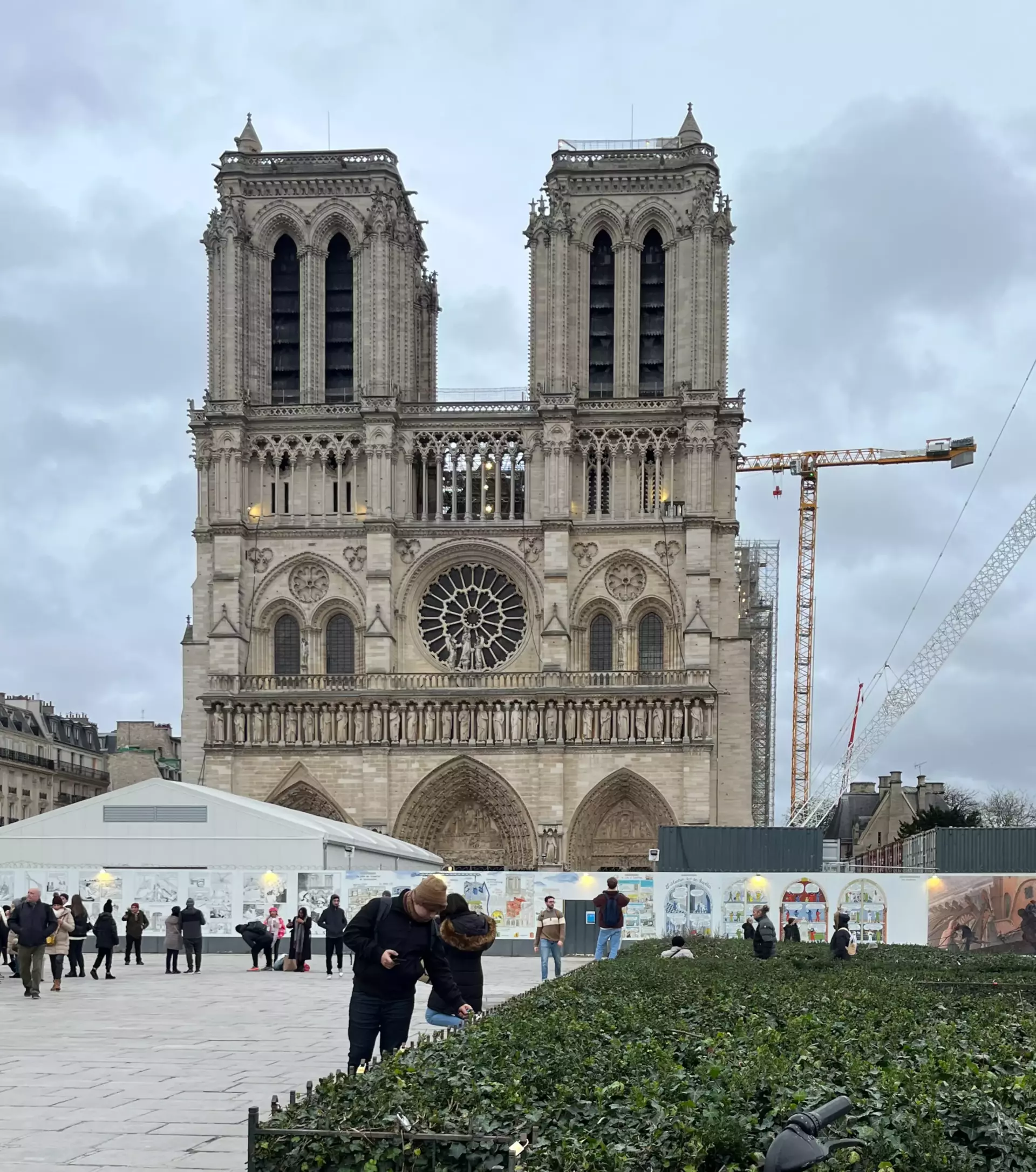
Notre-Dame under reconstruction in 2023.
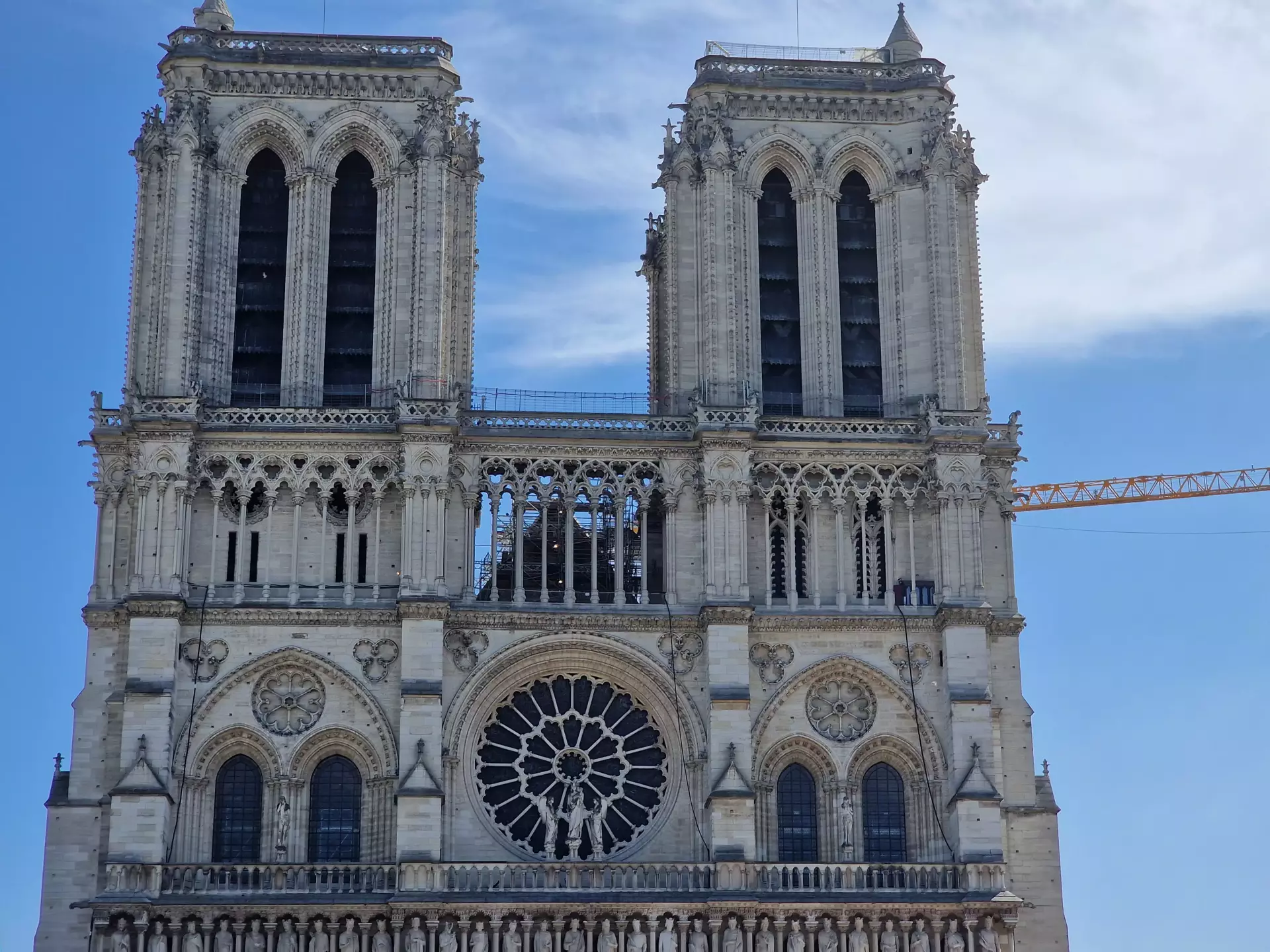
Notre-Dame de Paris in 2023 and the crane at the construction site.
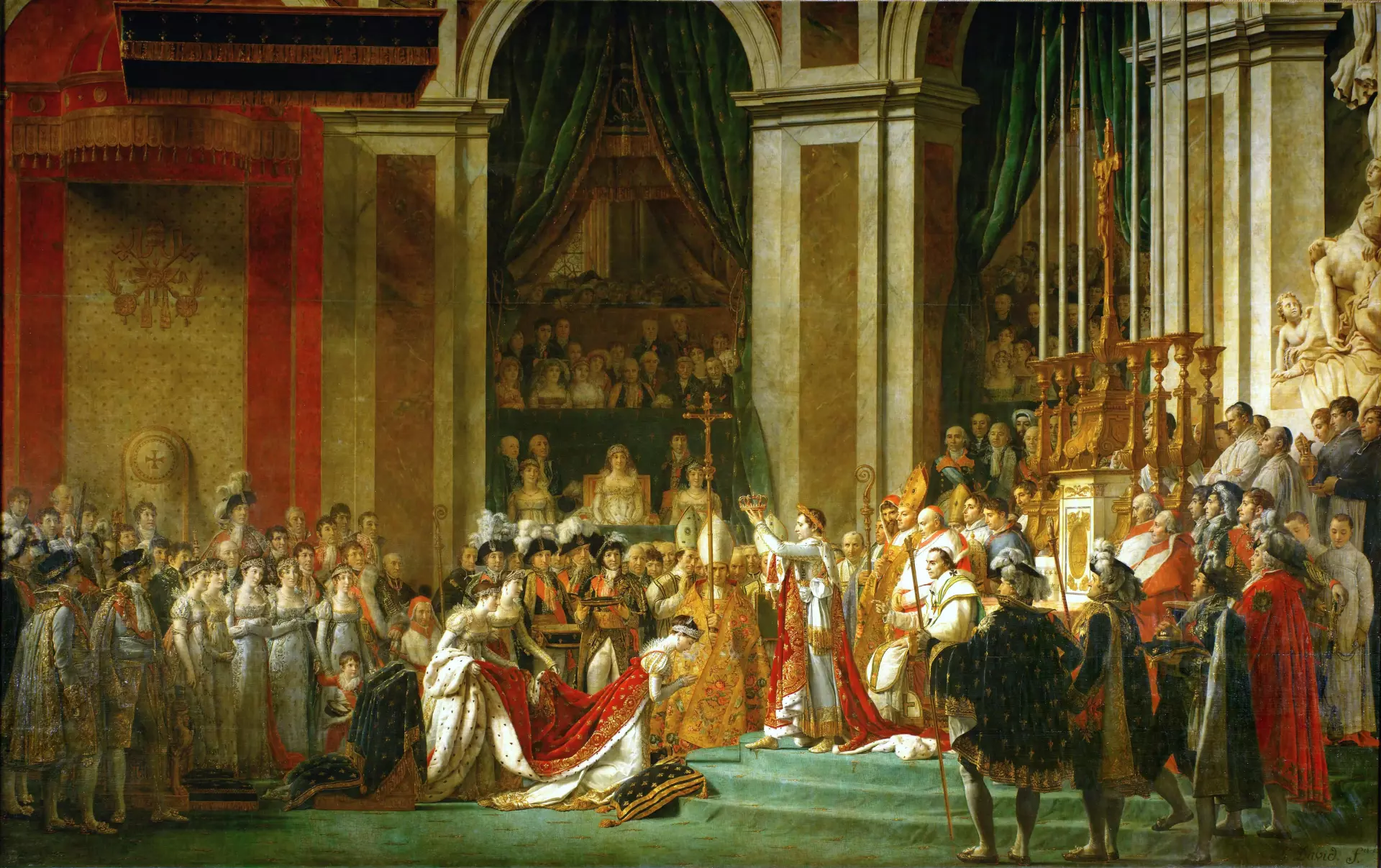
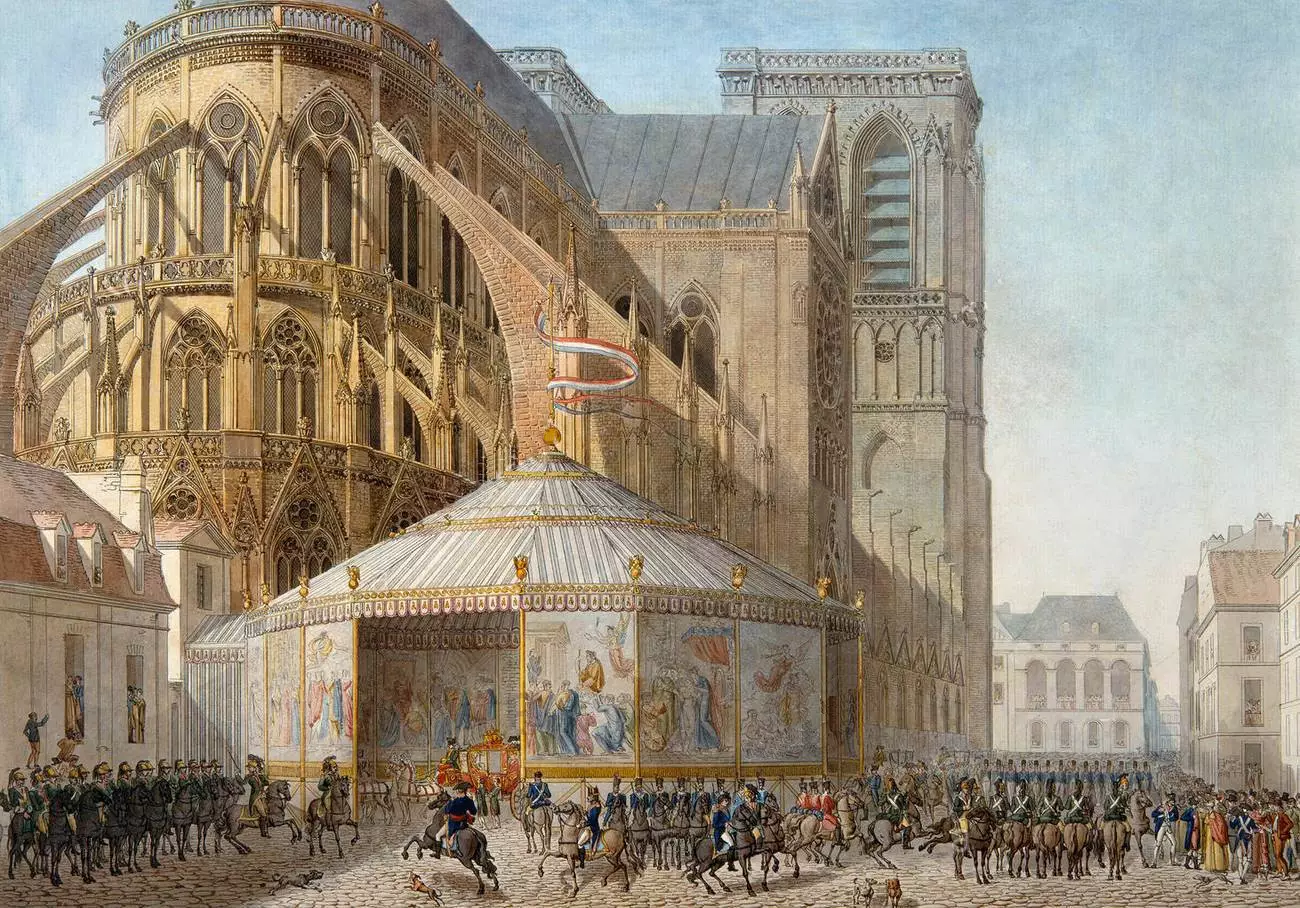
Arrival of Napoleon Bonaparte at Notre-Dame Cathedral for his coronation as emperor.
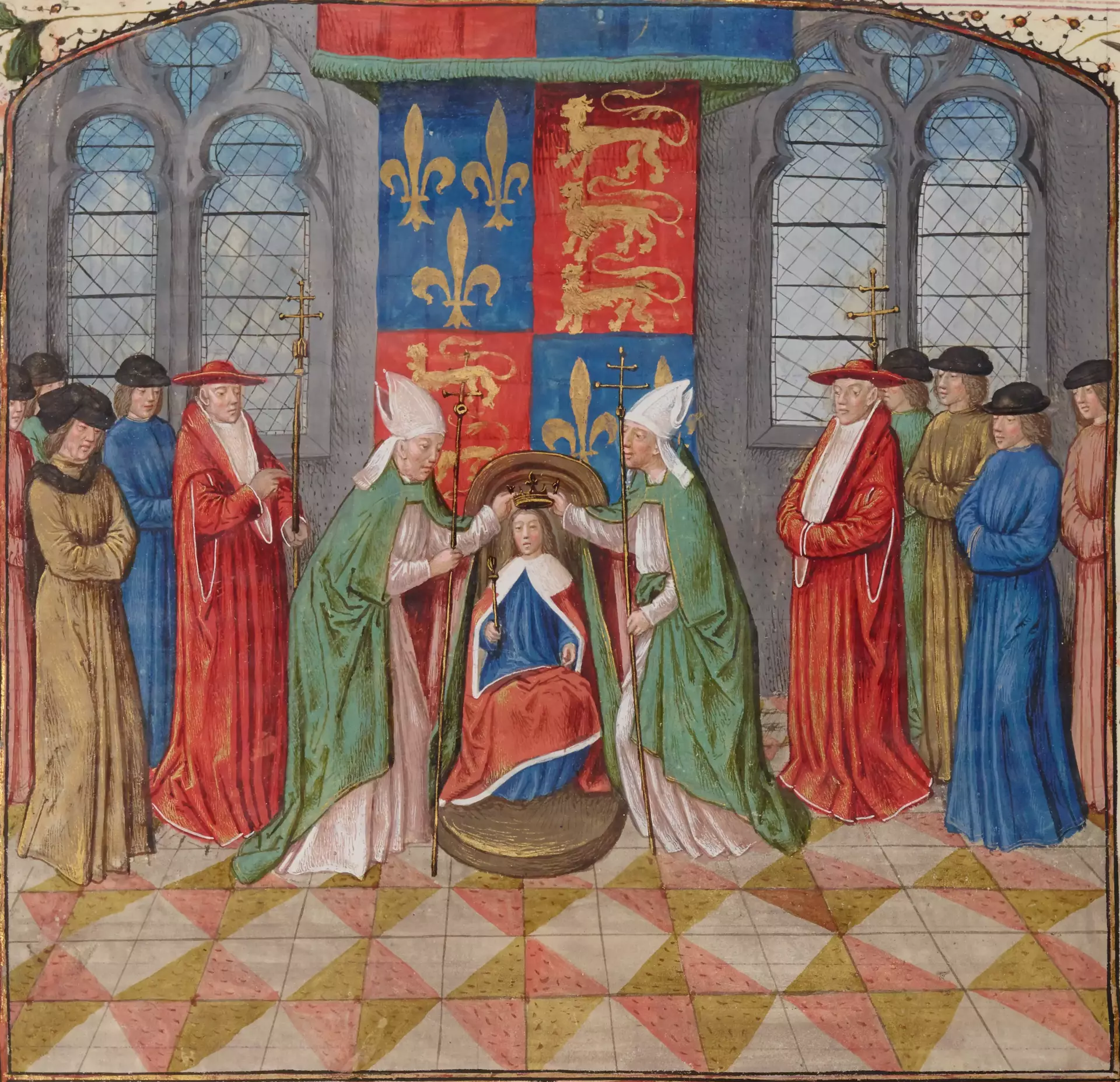
King Henry VI of England is crowned as King of France. (Bibliothèque nationale de France, MS Francais 83, fol. 205.)
Tympanum of central portal of Notre-Dame de Paris.
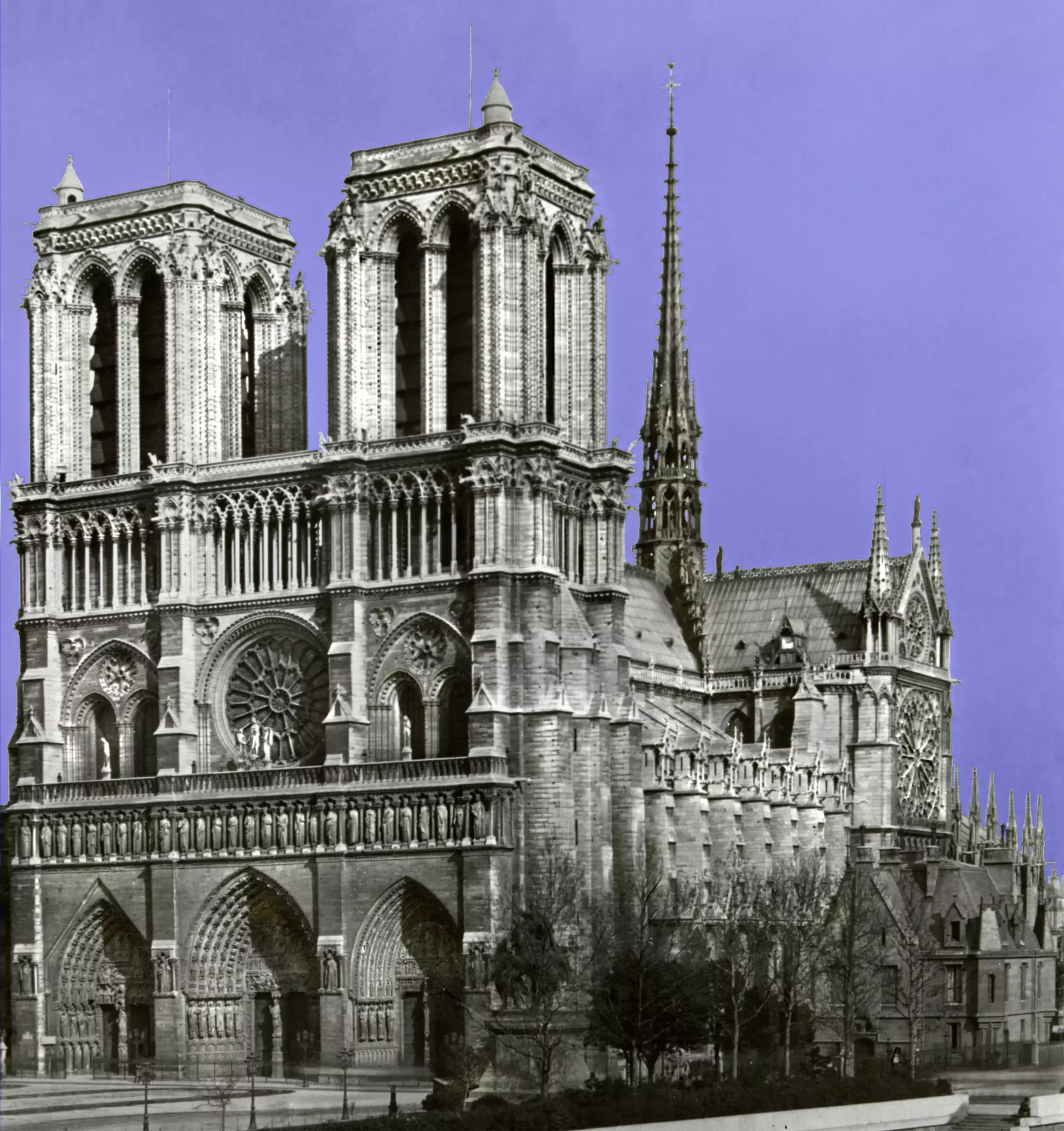
Maison Braun & Cie, Notre Dame de Paris, ca. 1930 – cropped, adjusted chiaroscuro and perspective, color added, black spots removed by Paolo Villa 2019.
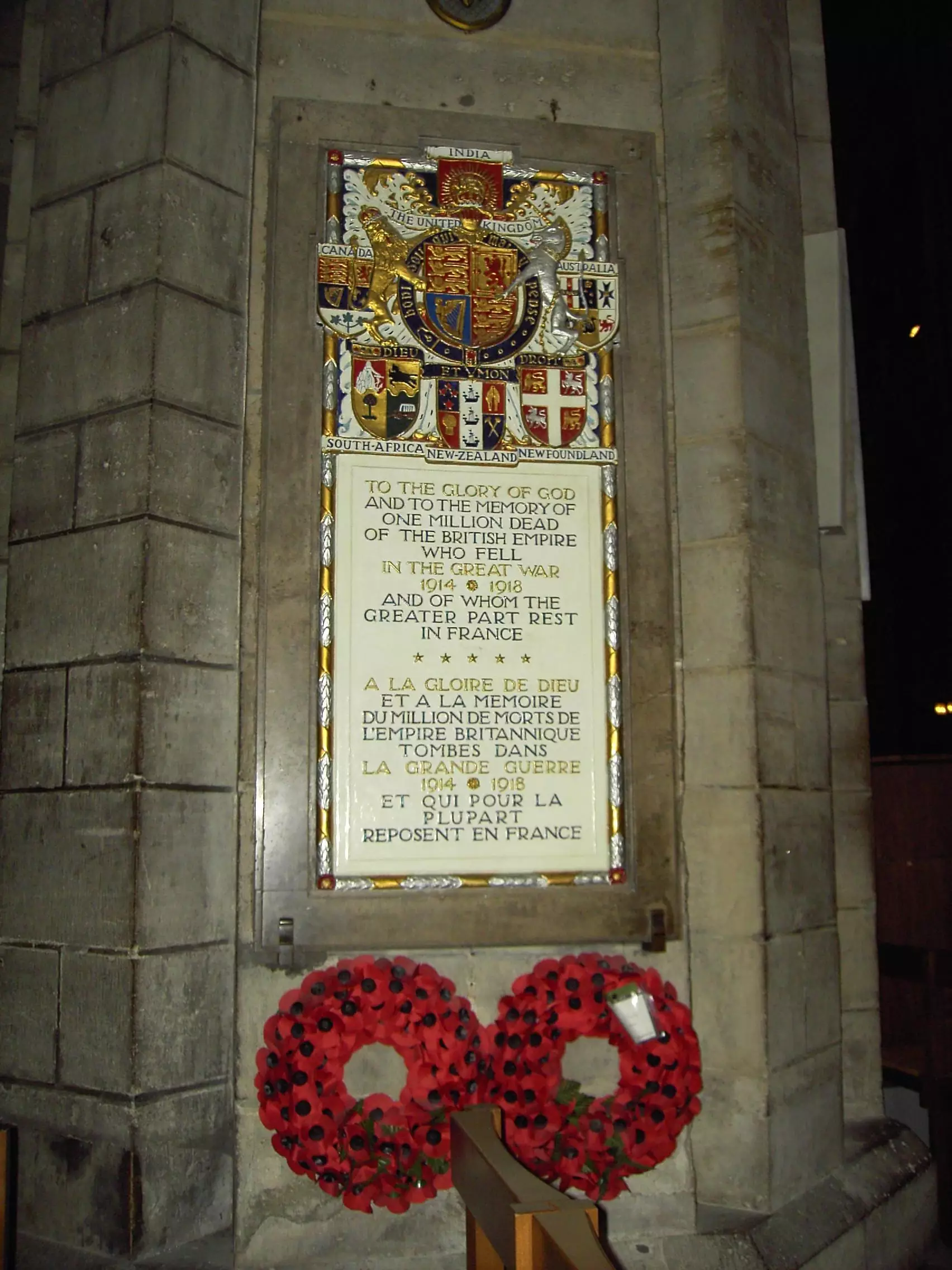
Notre-Dame de Paris: To the glory of God and to the memory of one million dead of the British Empire ... 1914-1918.
Notre Dame de Paris, a medieval Catholic cathedral on the Île de la Cité in Paris, France, is widely considered to be one of the finest examples of French Gothic architecture. The cathedral is distinguished by its size, antiquity, and architectural interest, featuring iconic flying buttresses, rose windows, and sculptural decorations.
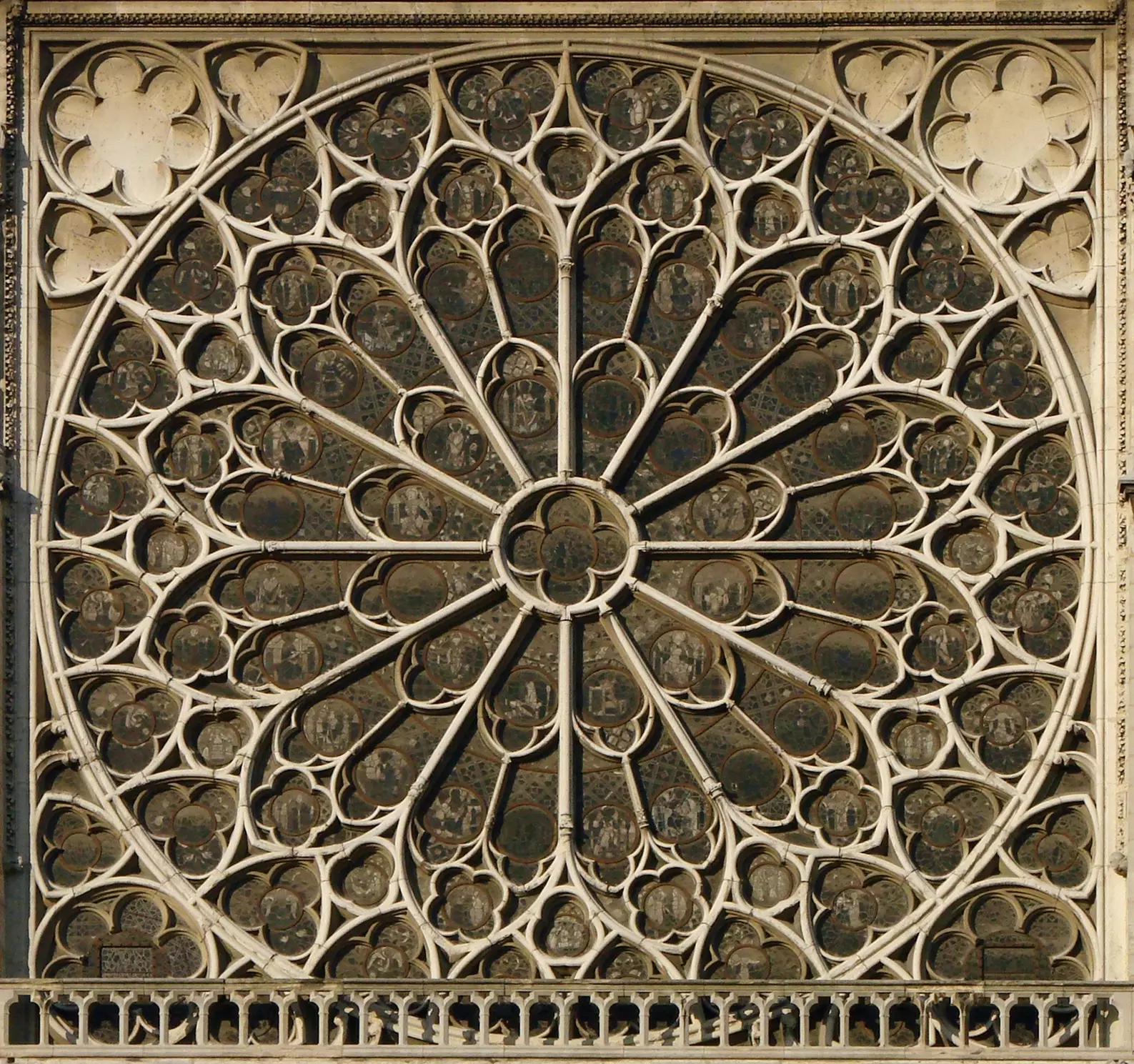
The large rose window of the south transept of Notre-Dame Cathedral in Paris.
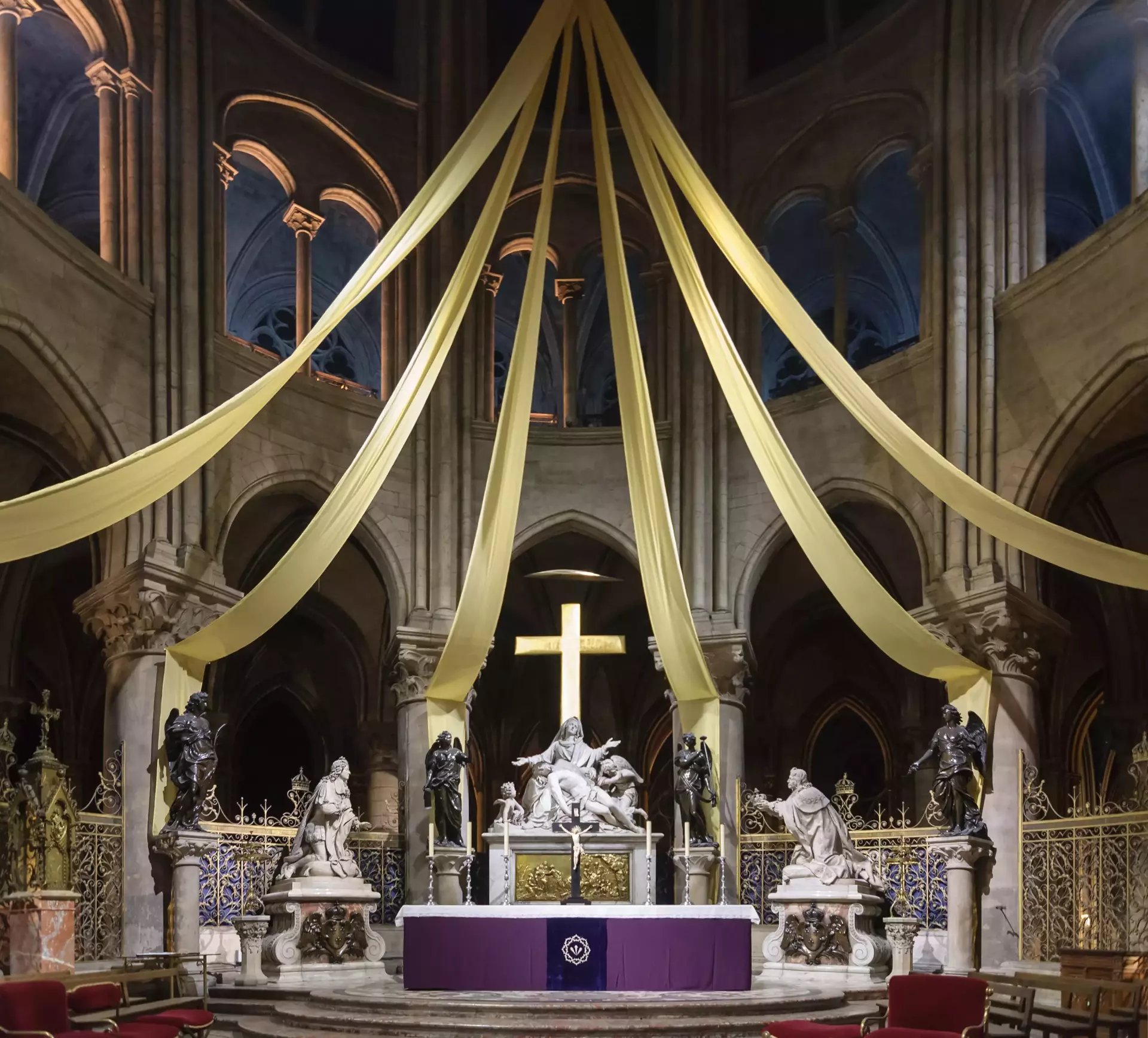
High altar of Notre Dame de Paris. Descent from the Cross, sculpture by Nicolas Coustou with a relief by François Girardon, surrounded by the kneeling statues of Louis XIII on the right (by Guillaume Coustou) and of Louis XIV on the left (Antoine Coysevox).
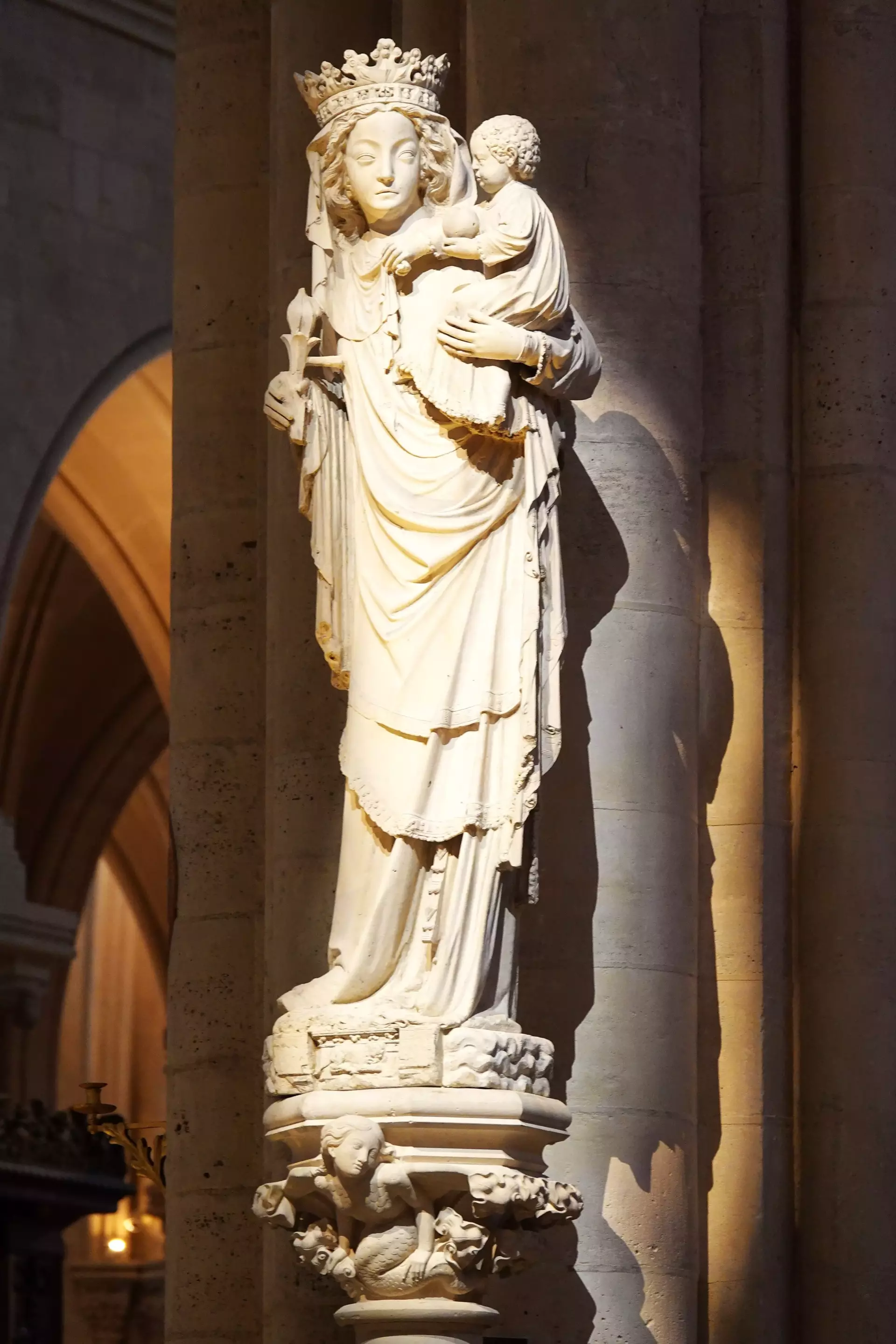
Statue of the Virgin Mary with Child, known as "Notre Dame de Paris" or "Notre Dame du Pilier," in December 2024.
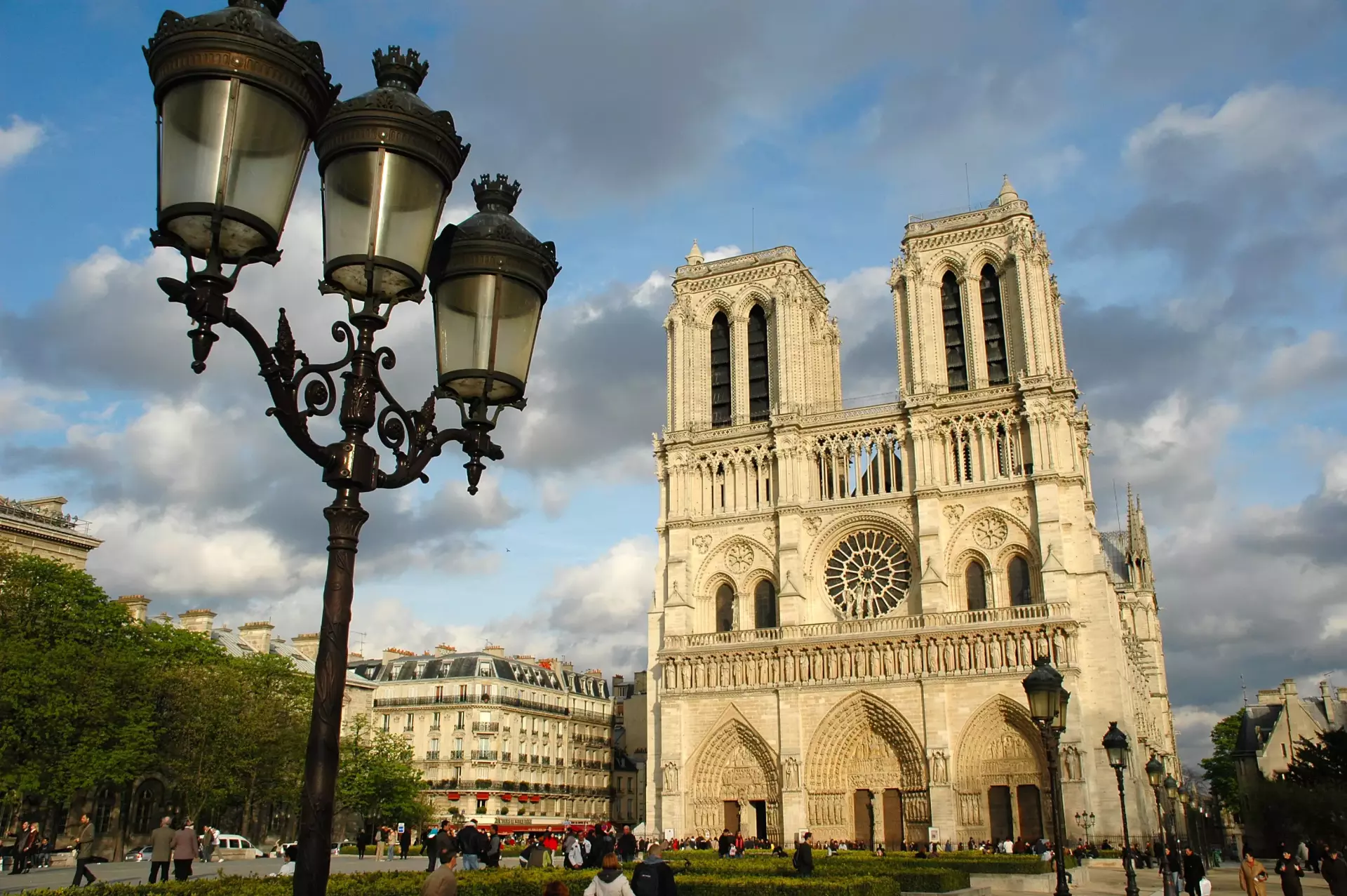
Notre Dame de Paris on the Île de la Cité with lantern / candelabrum.
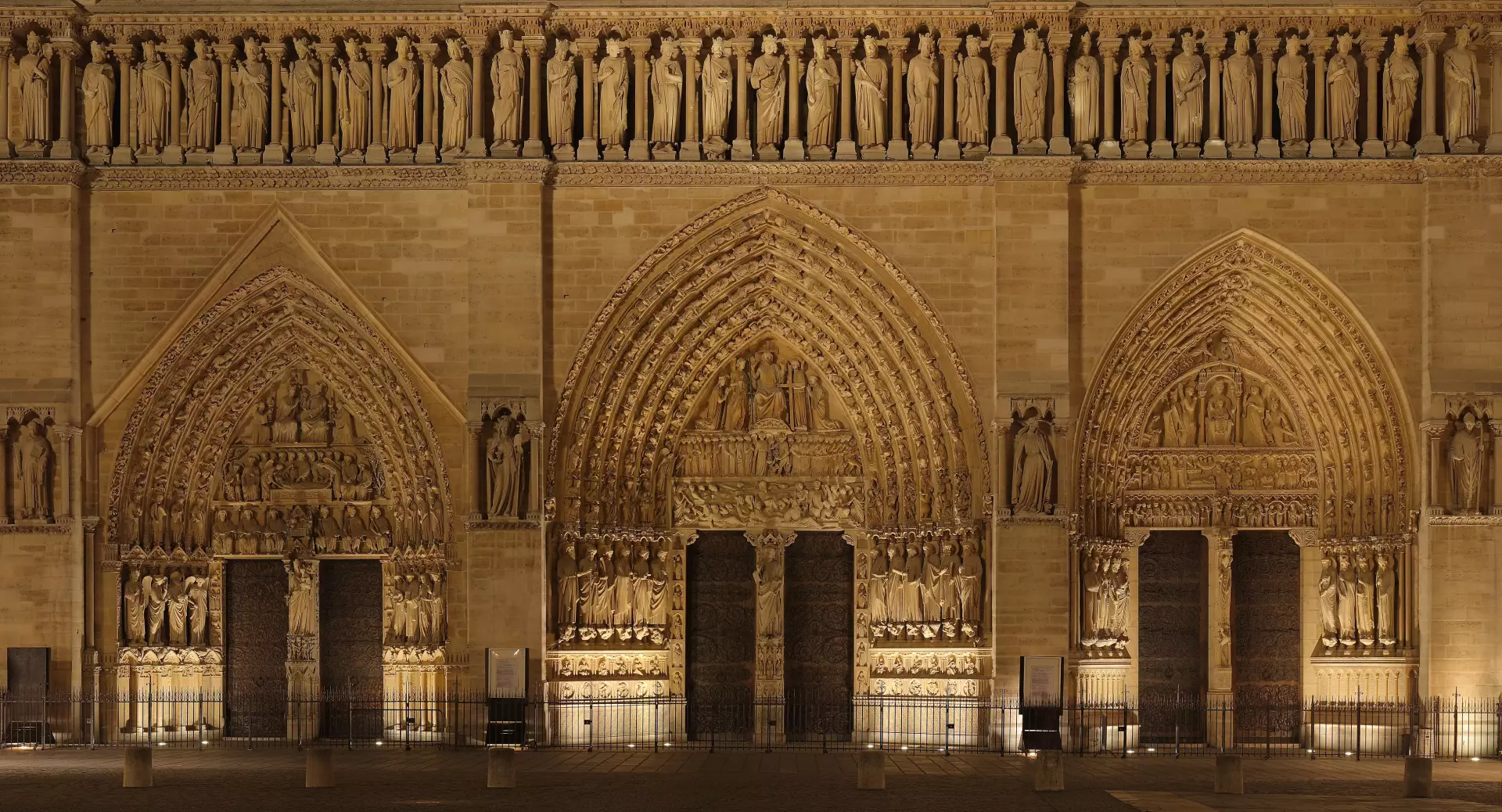
Lower part of the front façade of the Notre-Dame Cathedral in Paris at night. On the upper part are the 28 kings of Judea and Israel. On the lower part, from left to right, are the portal of the Virgin, the portal of the Last Judgement, and the portal of Saint-Anne. This picture is a mosaic of 12 photos (4x3) taken with a Canon EOS 400D+EF-S 17-55mm f/2.8 IS, at 55mm, f/8.0, 6 sec, and ISO 100. Stitching was done with Hugin and Enblend.
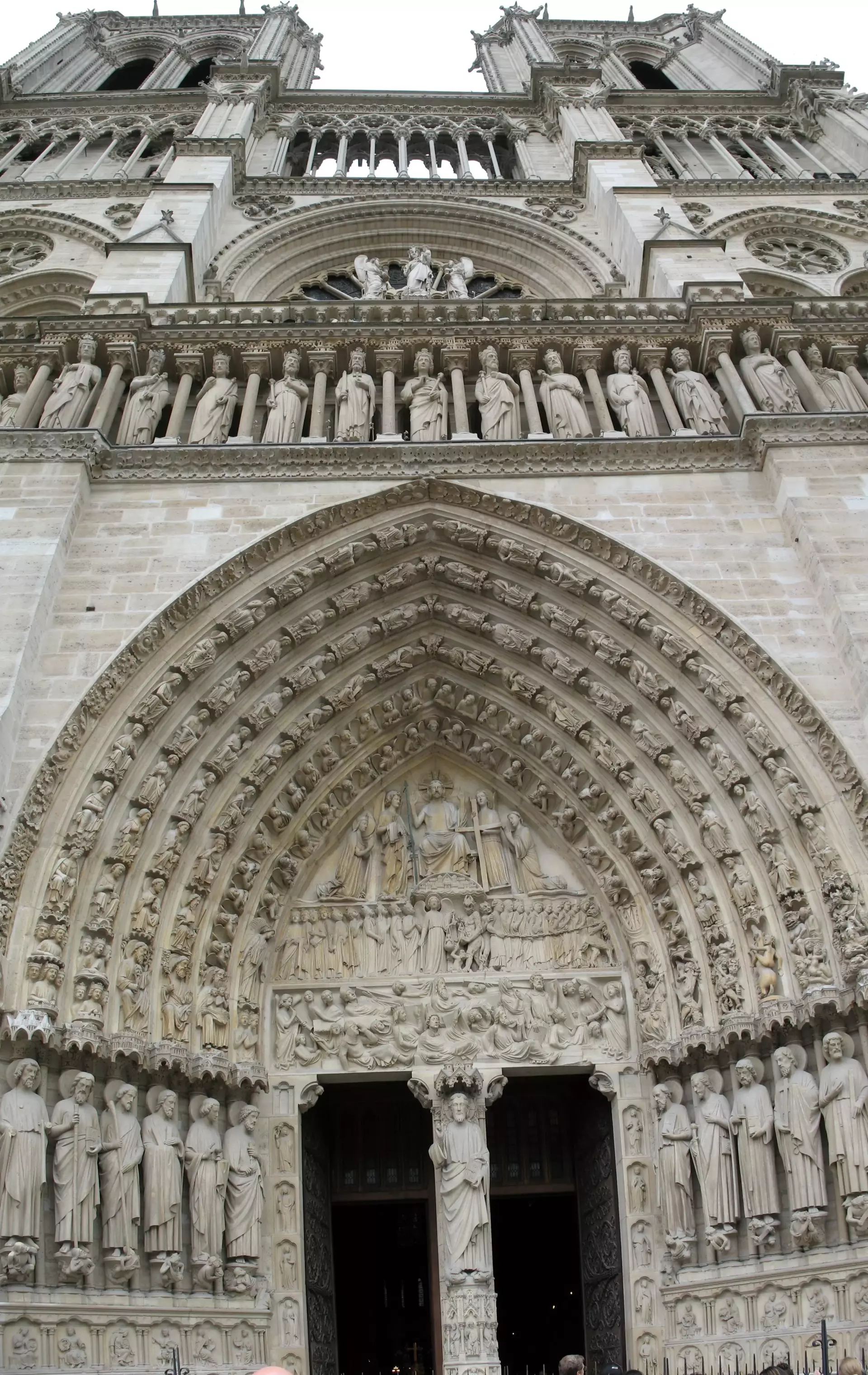
Notre Dame Cathedral, Paris, photographed from an extreme angle on the morning of October 11, 2006, by Andwhatsnext. The original series of digital photographs was taken with a Canon PowerShot A630 8MP digital camera and assembled with PhotoStitch software. Copyright (c) 2006 by Nancy J Price.
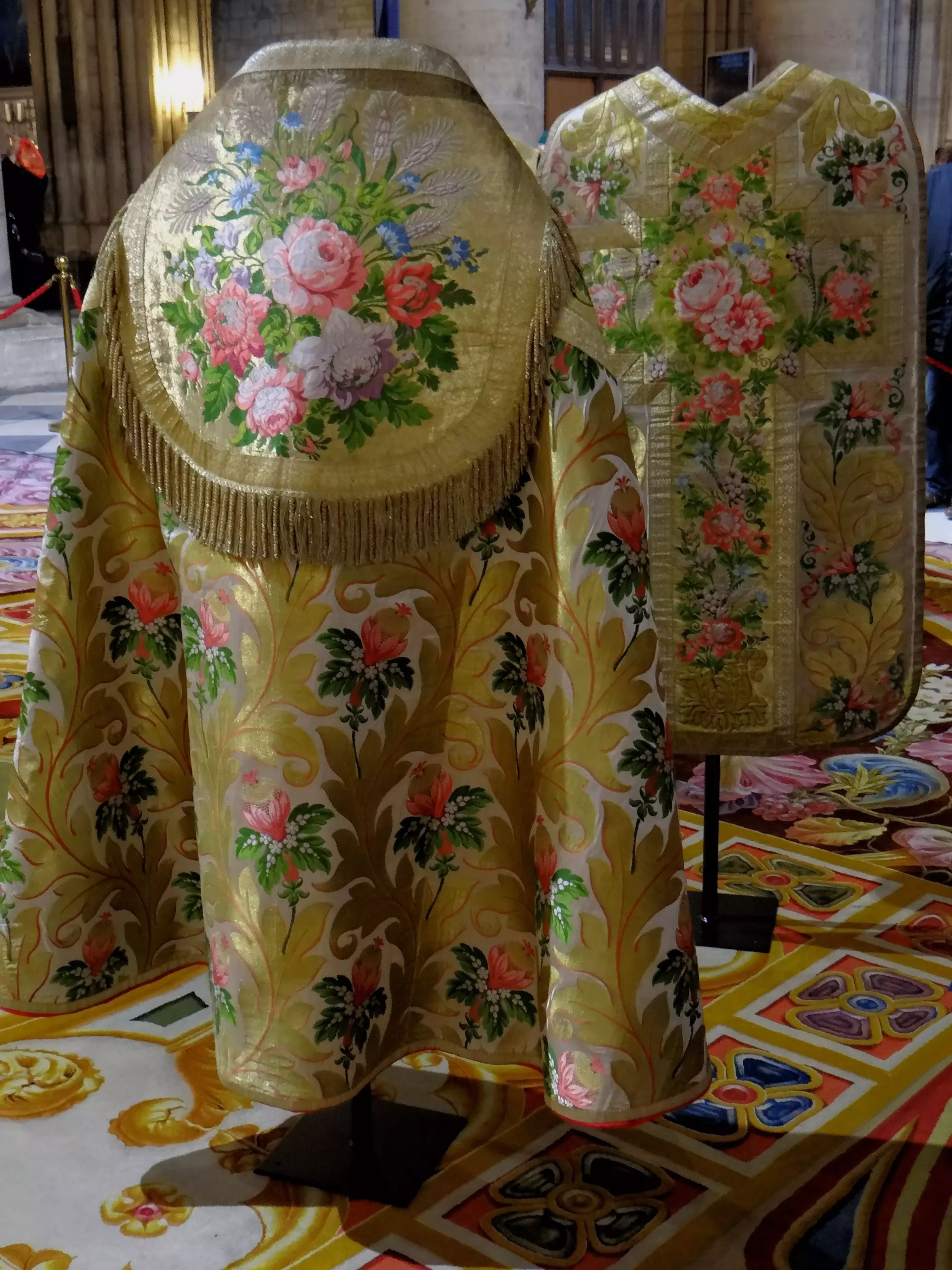
Chasuble and cope from the "Napoléon III" set. Large pontifical ornament in gold brocade, with a leaf design on a white satin brocaded background; the decoration is enhanced with "clouded" silks featuring motifs of flowers, grape clusters, and ears of wheat. Origin: commissioned by the Crown Furniture in 1837. Set of 2 chasubles with accessories, 2 dalmatics, 6 tunics, 16 copes, 2 lectern covers for the Epistle and the Gospel, 1 gremial. Maker: Grand Frères, silk fabric manufacturers in Lyon, 1837-1839.
Notre Dame Cathedral
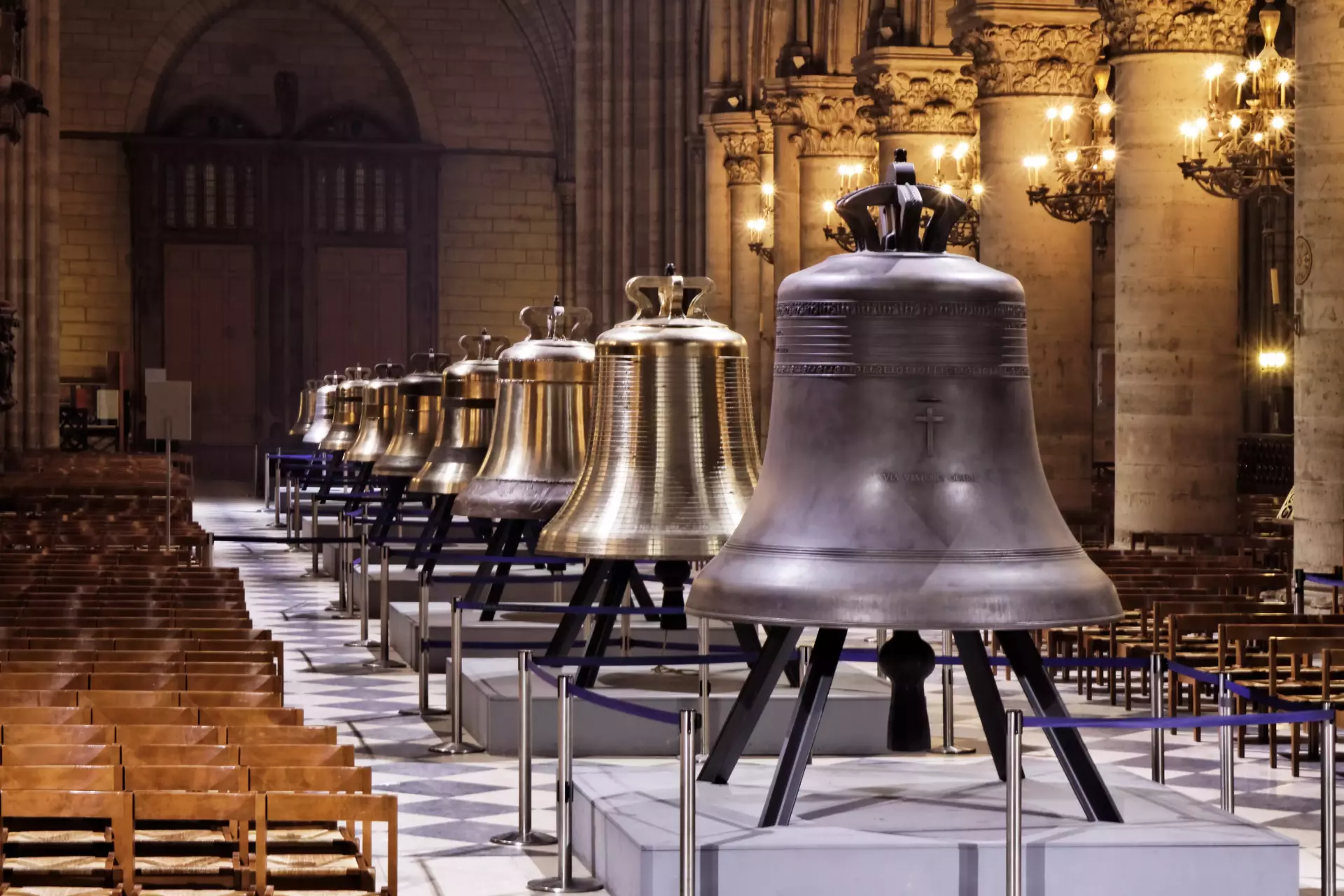
The new bells of Notre-Dame Cathedral in Paris displayed to the public in the nave from February 2 to 25, 2013, before their installation in the towers of the monument. From foreground to background: the bourdon Marie (6.1 tons, sounding a G# in octave 2), Gabriel (4.2 tons, A# 2), Anne-Geneviève (3.5 tons, B 2), Denis (2.5 t, C# 3), Marcel (1.9 t, D# 3), Étienne (1.5 t, F 3), Benoît-Joseph (1.3 t, F# 3, thus an octave above the historic bourdon Emmanuel), Maurice (1 t, G# 3), and Jean-Marie (782 kg, A# 3). The bourdon Marie was made on September 14, 2012, by the Royal Eijsbouts foundry in the Netherlands. The other eight bells were cast by the Cornille-Havard foundry in Villedieu-les-Poêles, France: Marcel and Étienne on August 3, 2012; Denis, Maurice, and Jean-Marie on September 16, 2012; Gabriel and Benoît-Joseph on November 19, 2012; and Anne-Geneviève on December 15, 2012.
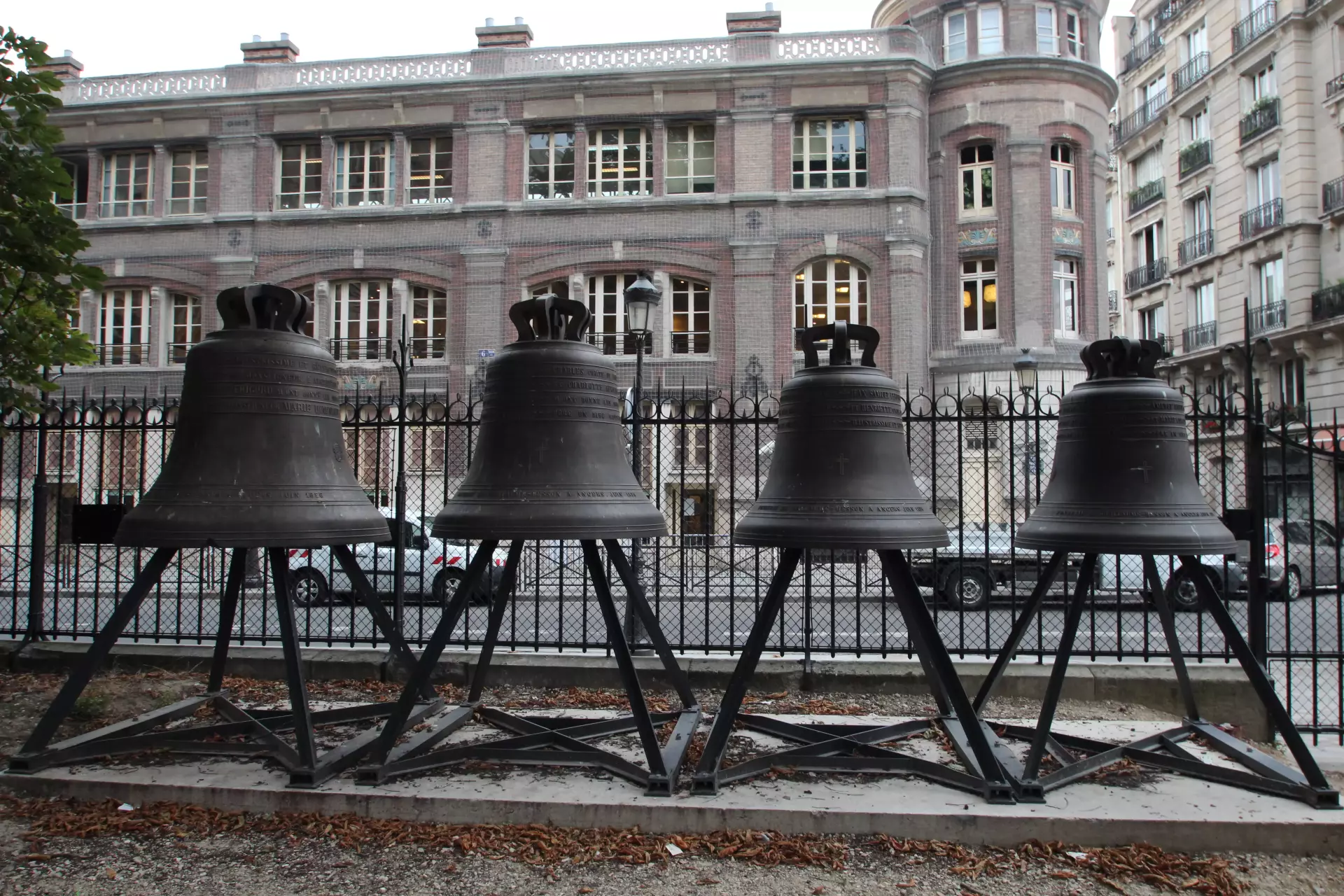
Old bells of Notre-Dame de Paris presented at the back of the cathedral in Paris, France.
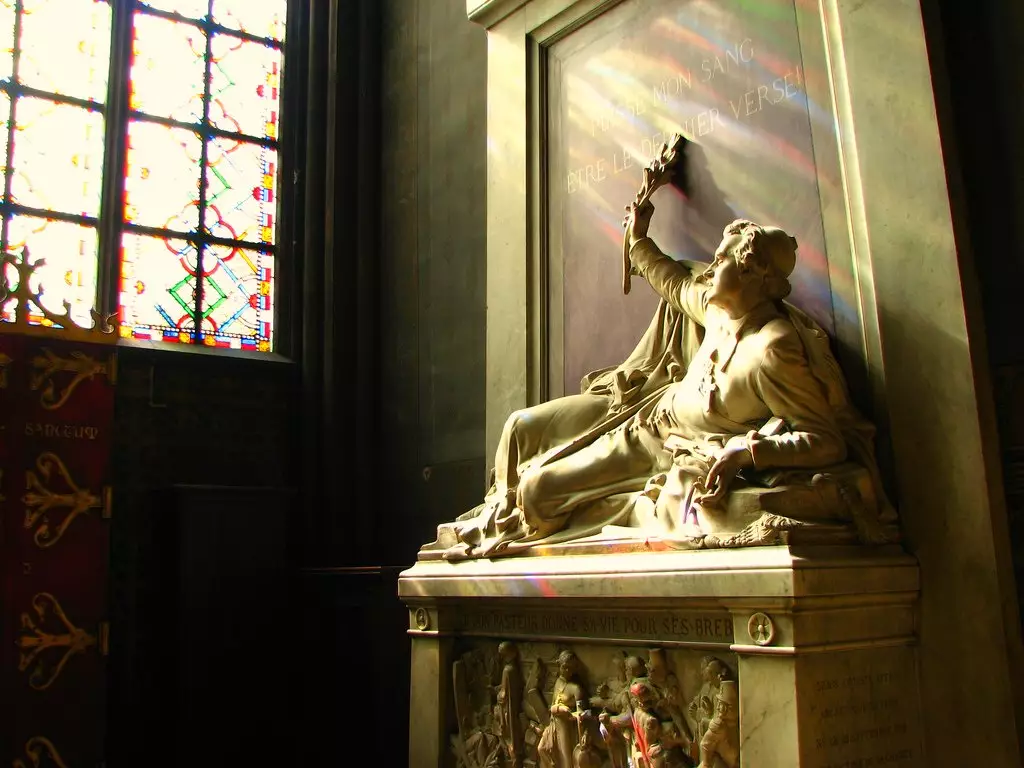
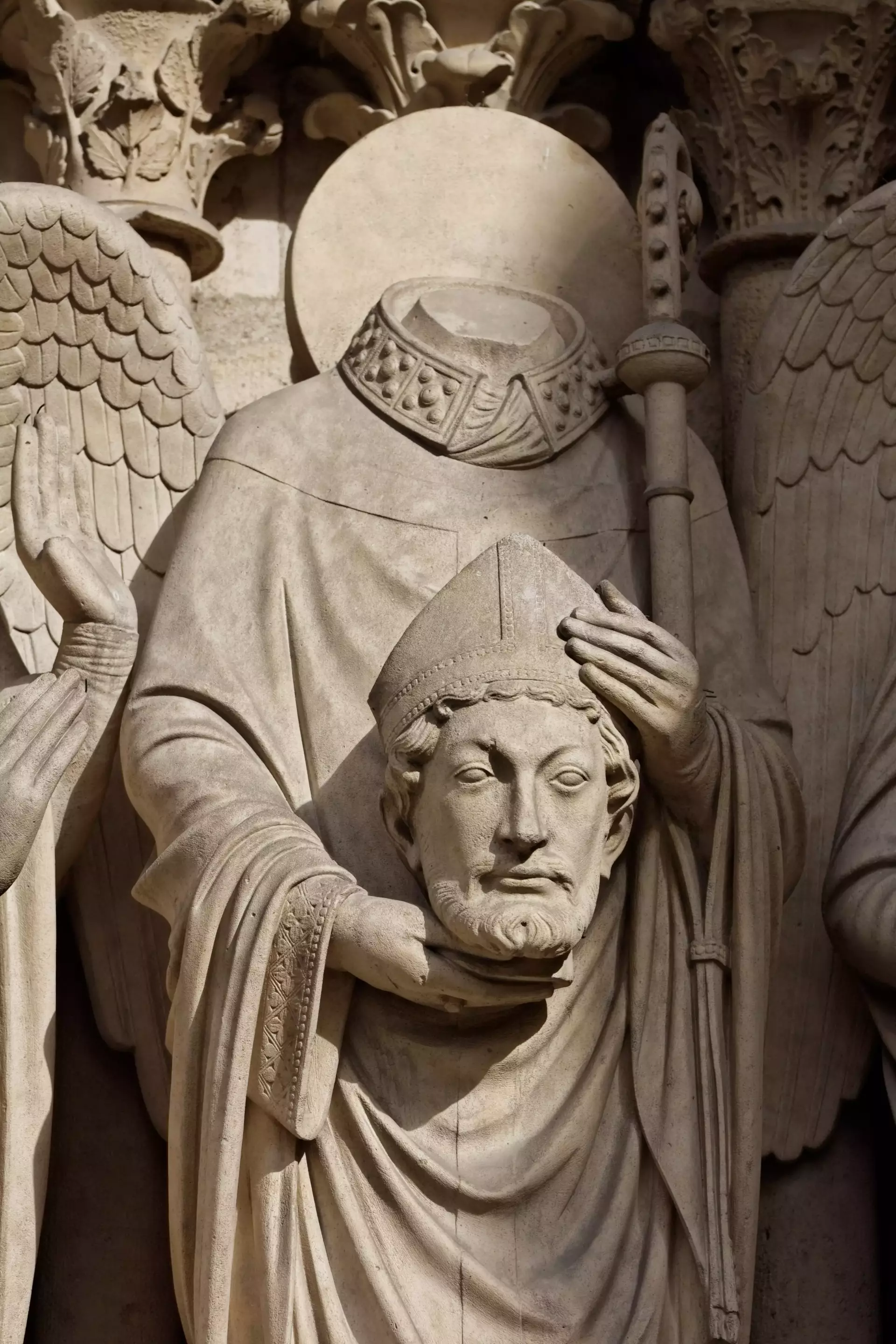
Commemorative monument of the death of Mgr Affre. Saint Denis Chapel, Notre Dame.
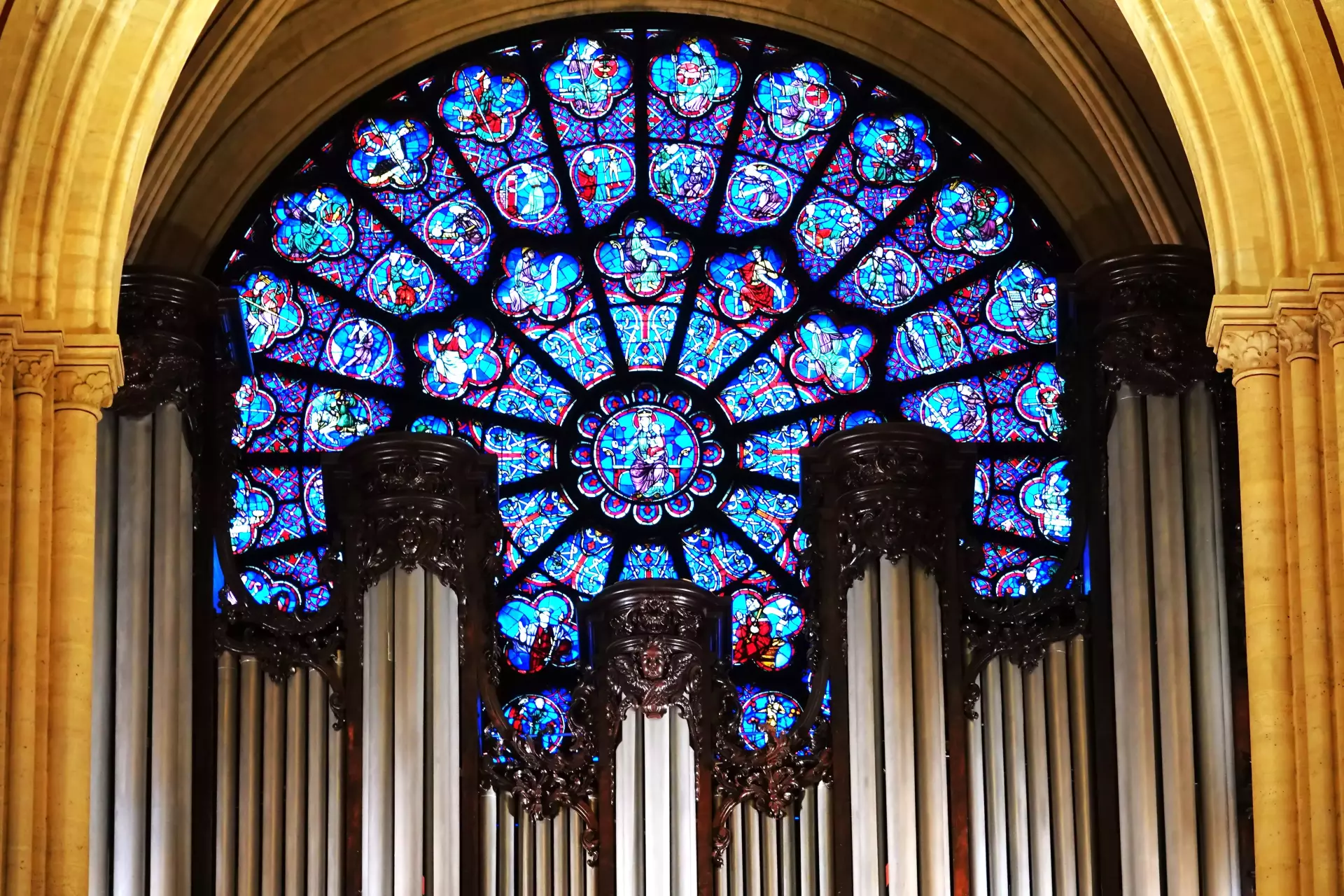
Great organ of Notre-Dame de Paris, December 2024.
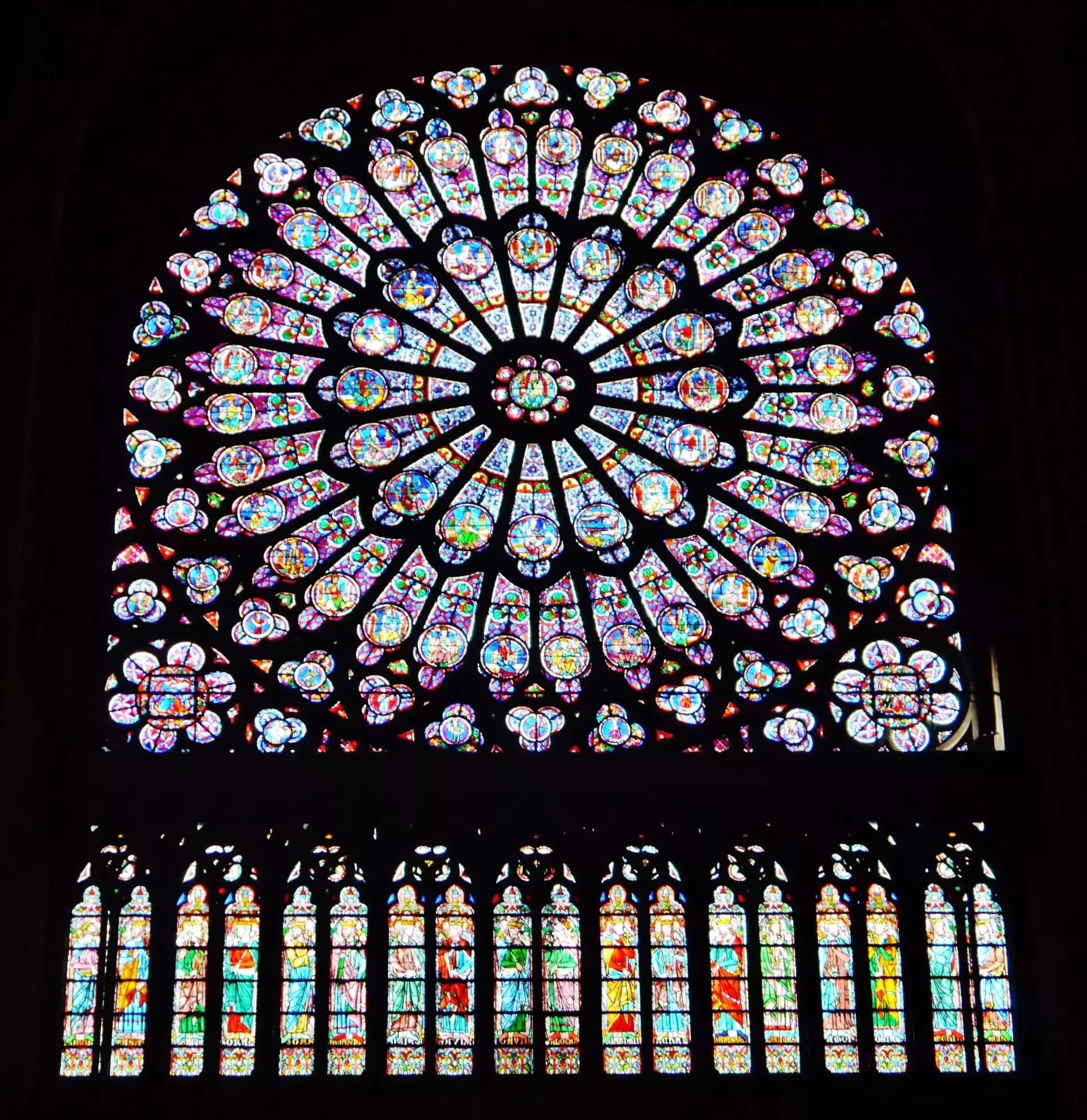
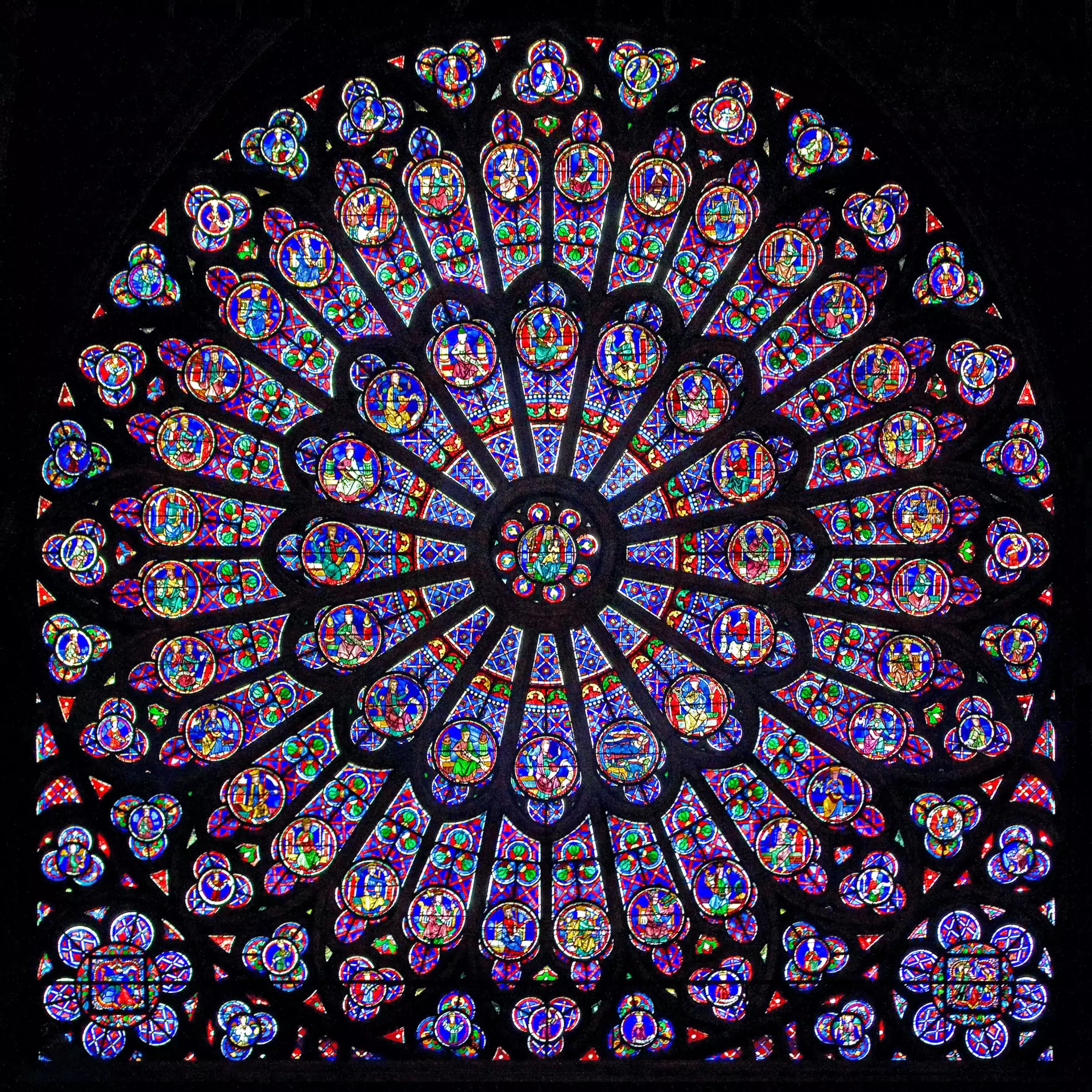
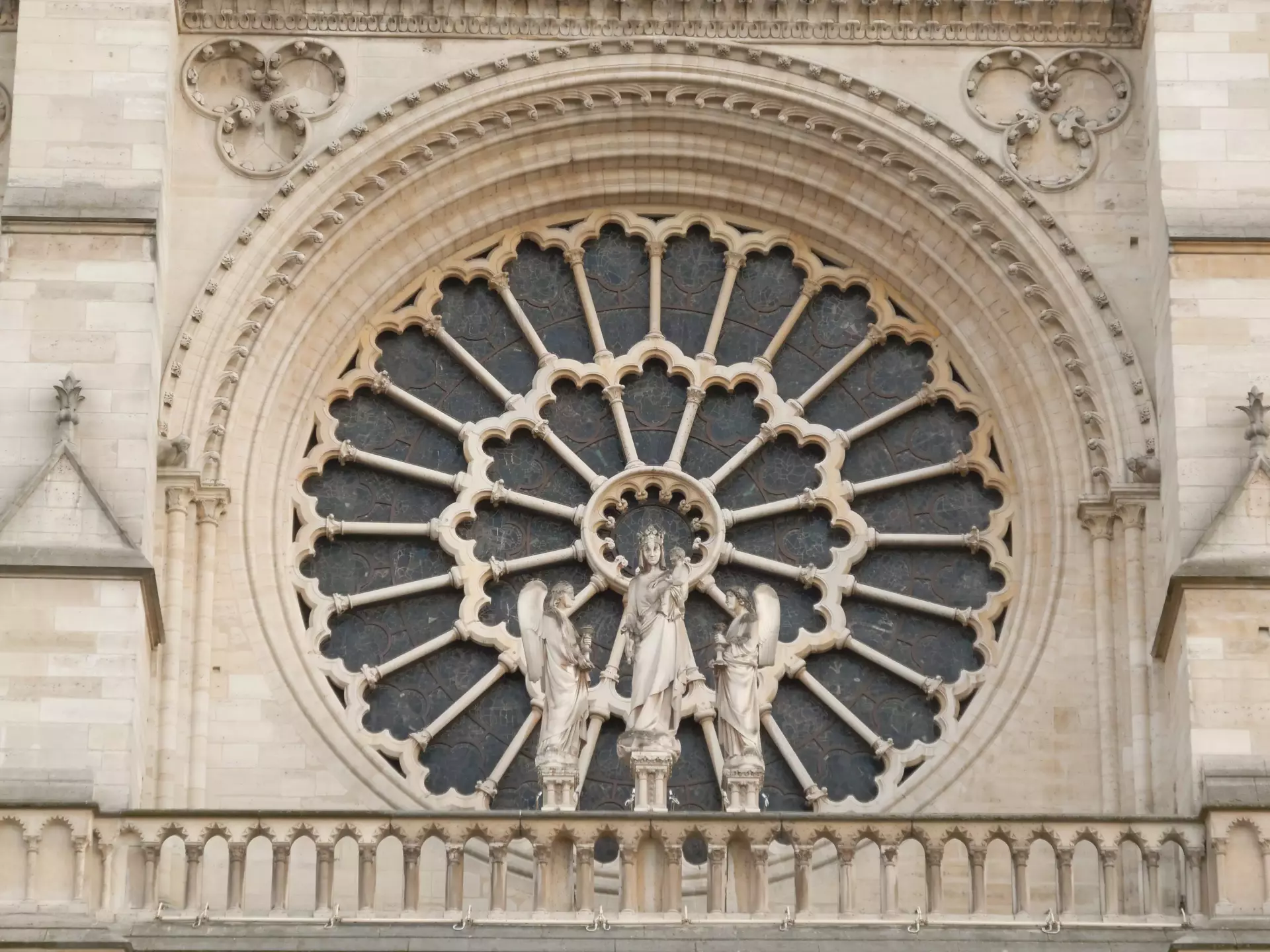
North Rose Window of the Cathedral of Our Lady, Paris, Region of Île-de-France, France.
Rayonnant Gothic rose window (north transept), Notre-Dame de Paris Cathedral.
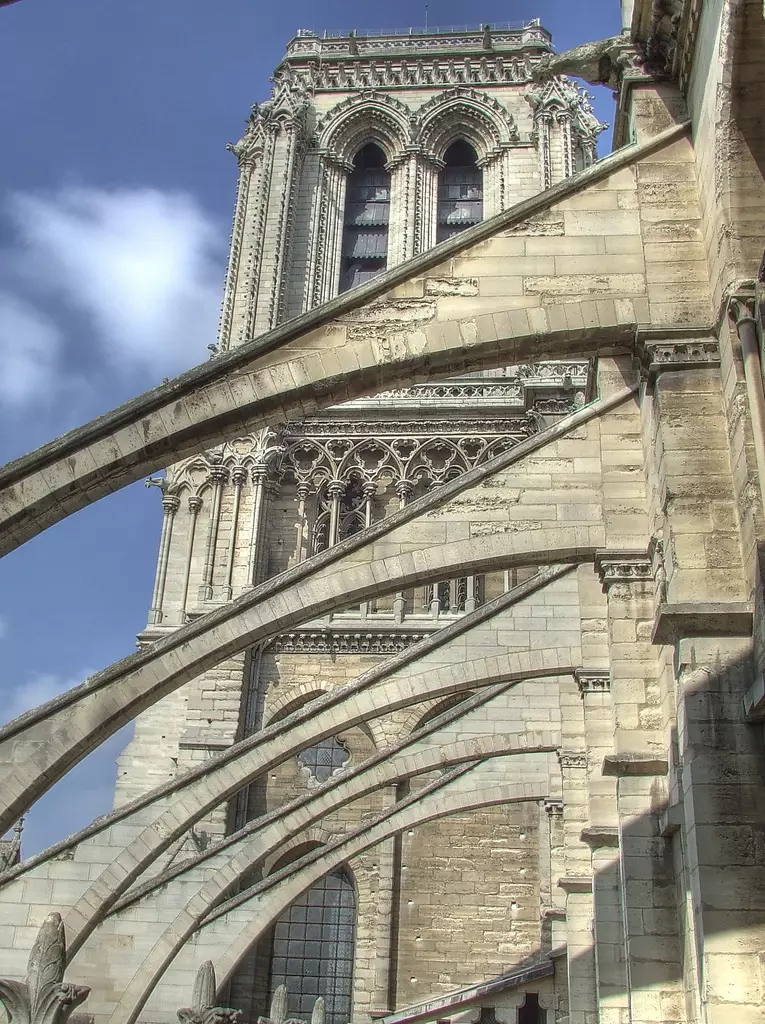
Paris: Detail of the Notre-Dame Cathedral.
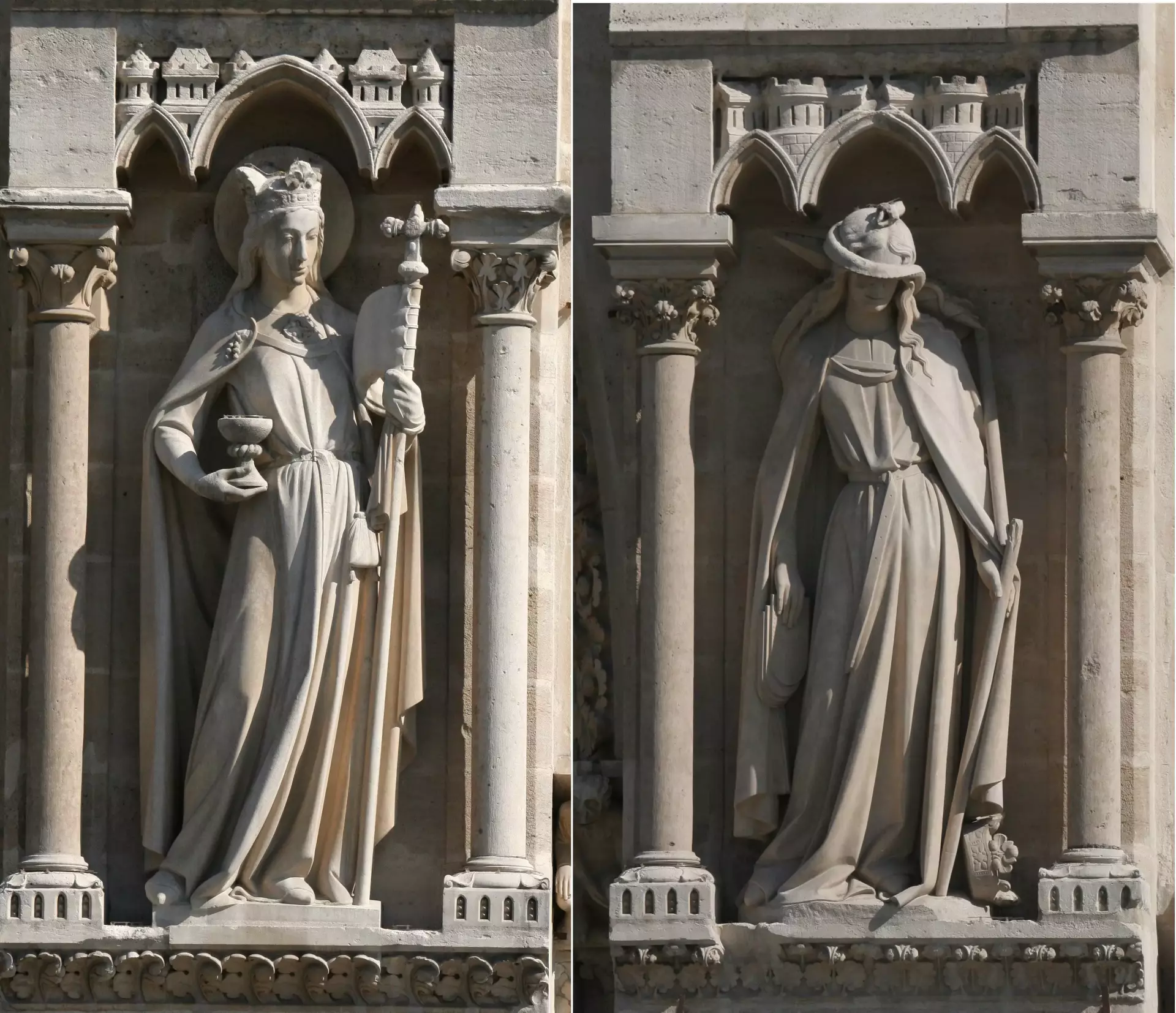
Notre-Dame de Paris. Third statue (from left to right) on the West Entrance: the Synagogue. Author: Nitot.
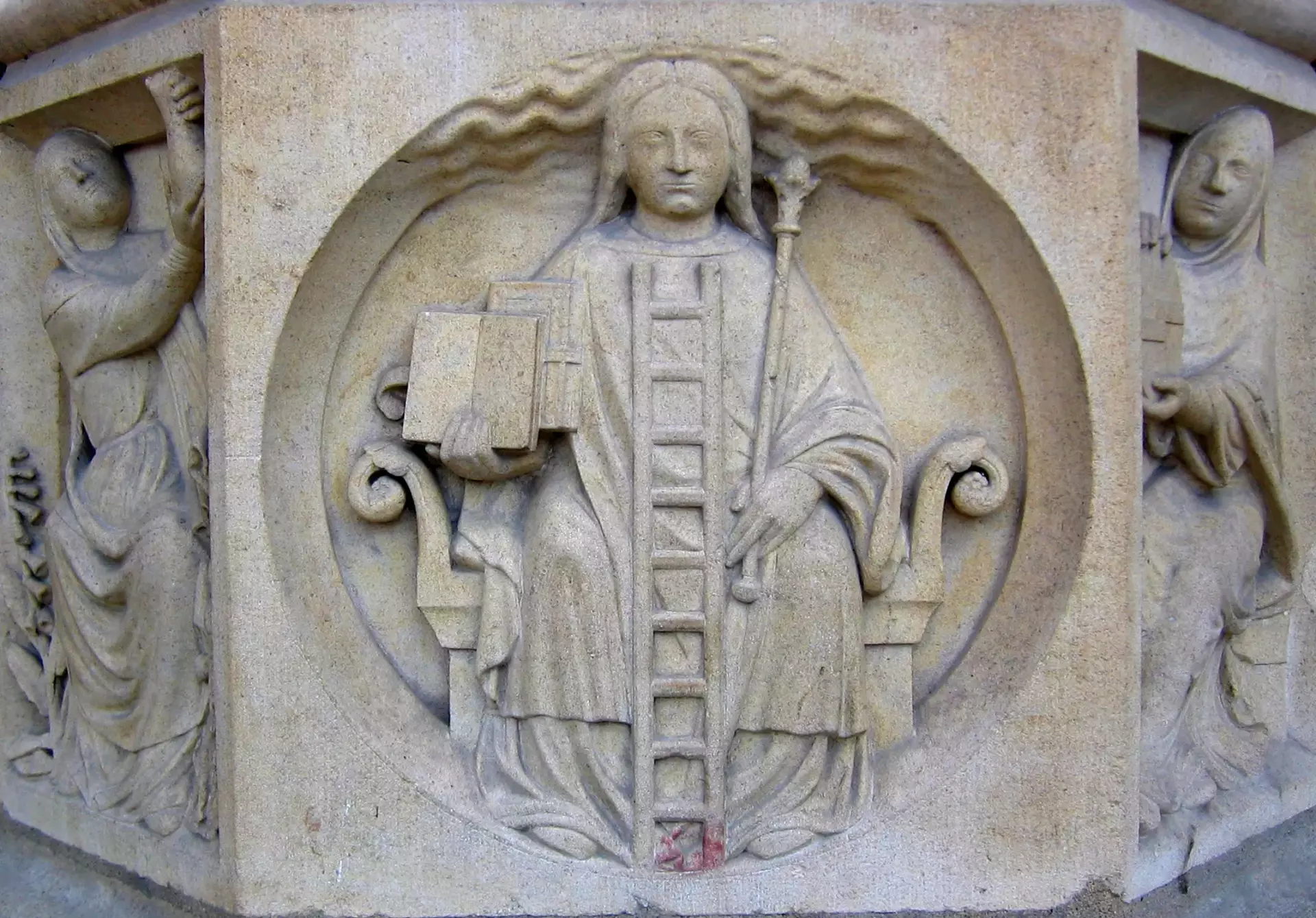
This relief is located on the pillar of the central entrance of the Notre-Dame cathedral in Paris. According to Fulcanelli, it represents philosophy. Author: Chosovi.
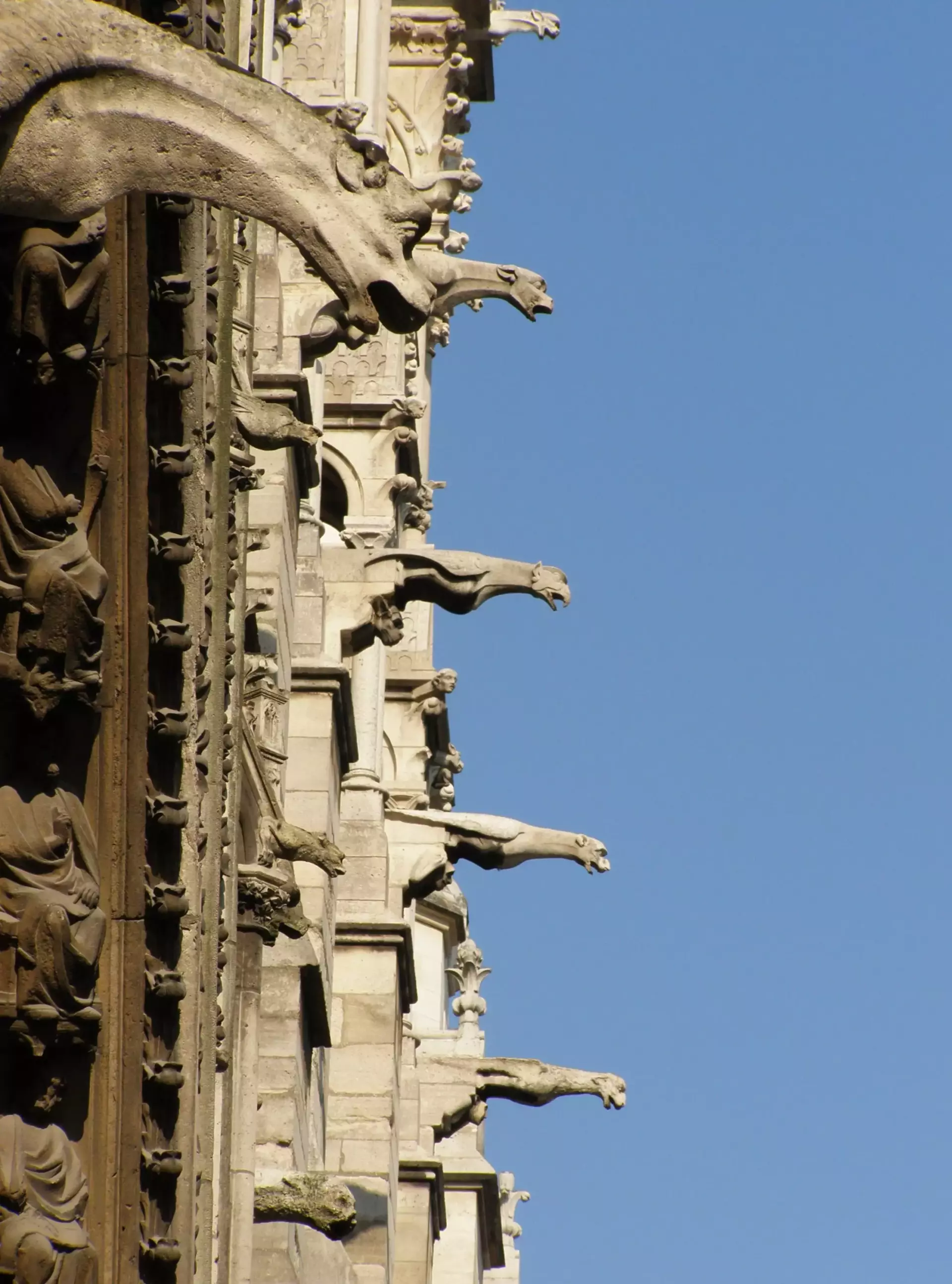
Gargoyles of Notre-Dame de Paris
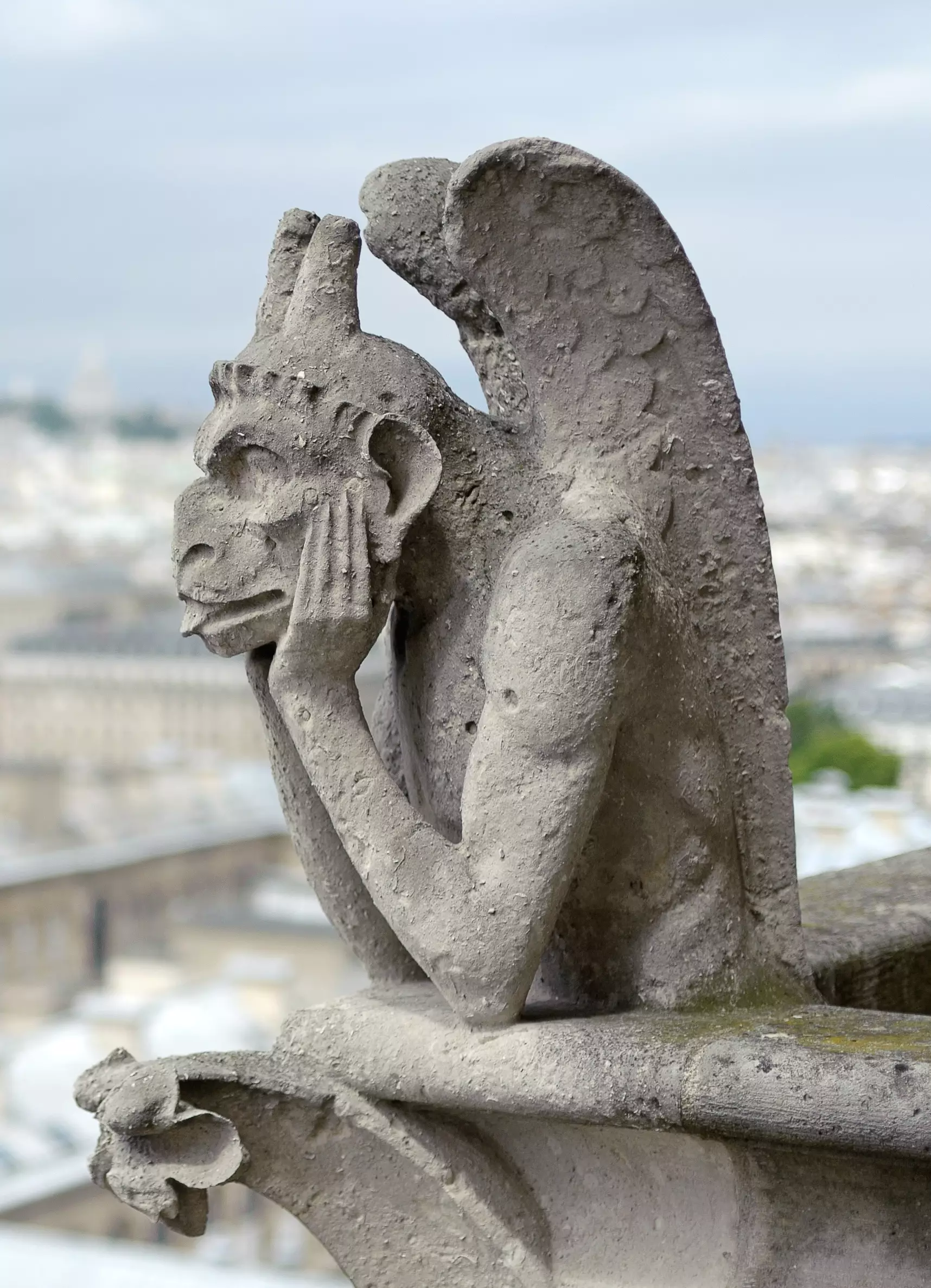
Chimera at Notre Dame de Paris.
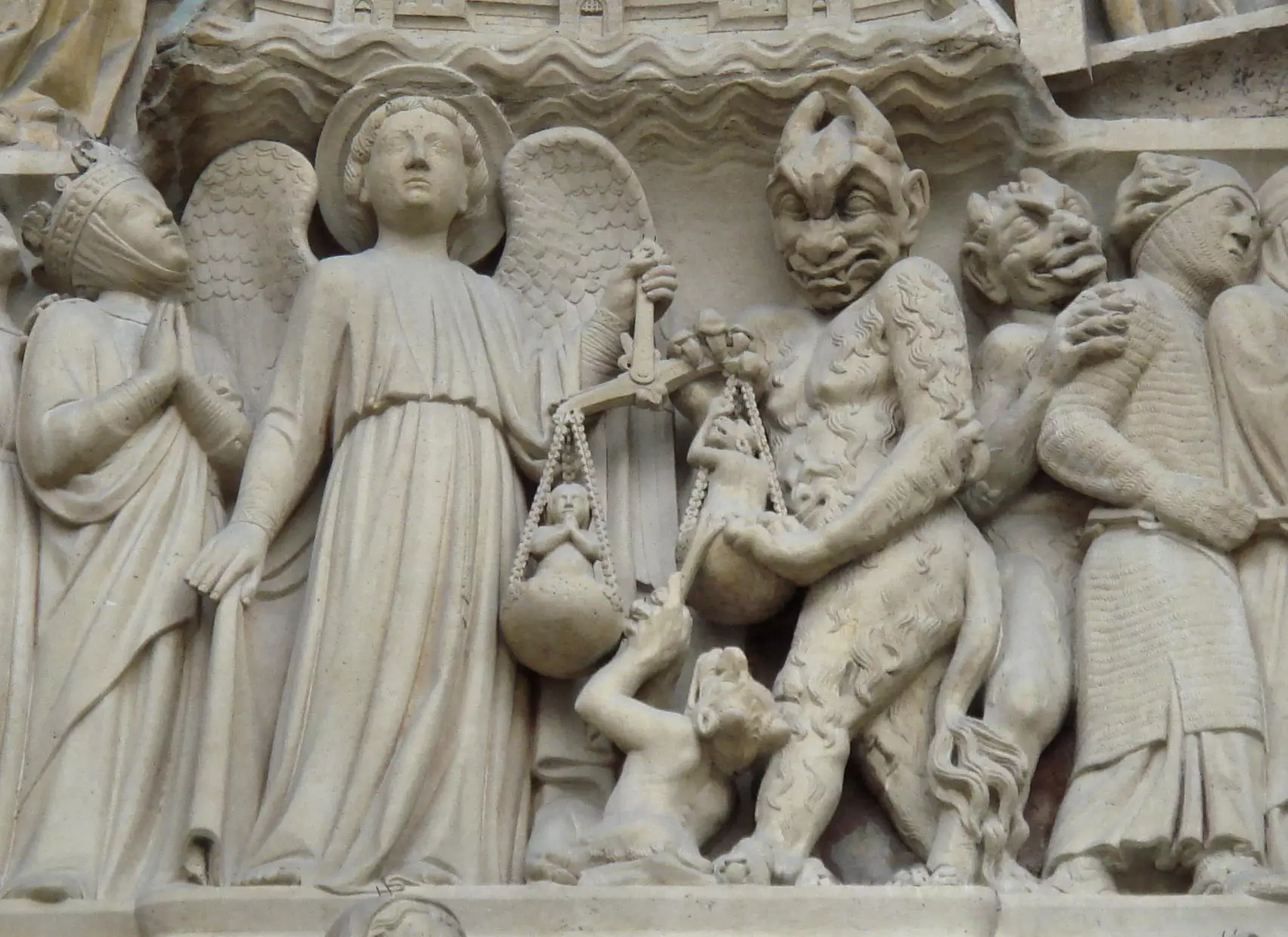
Devil, Central Gate, Notre Dame, Paris.
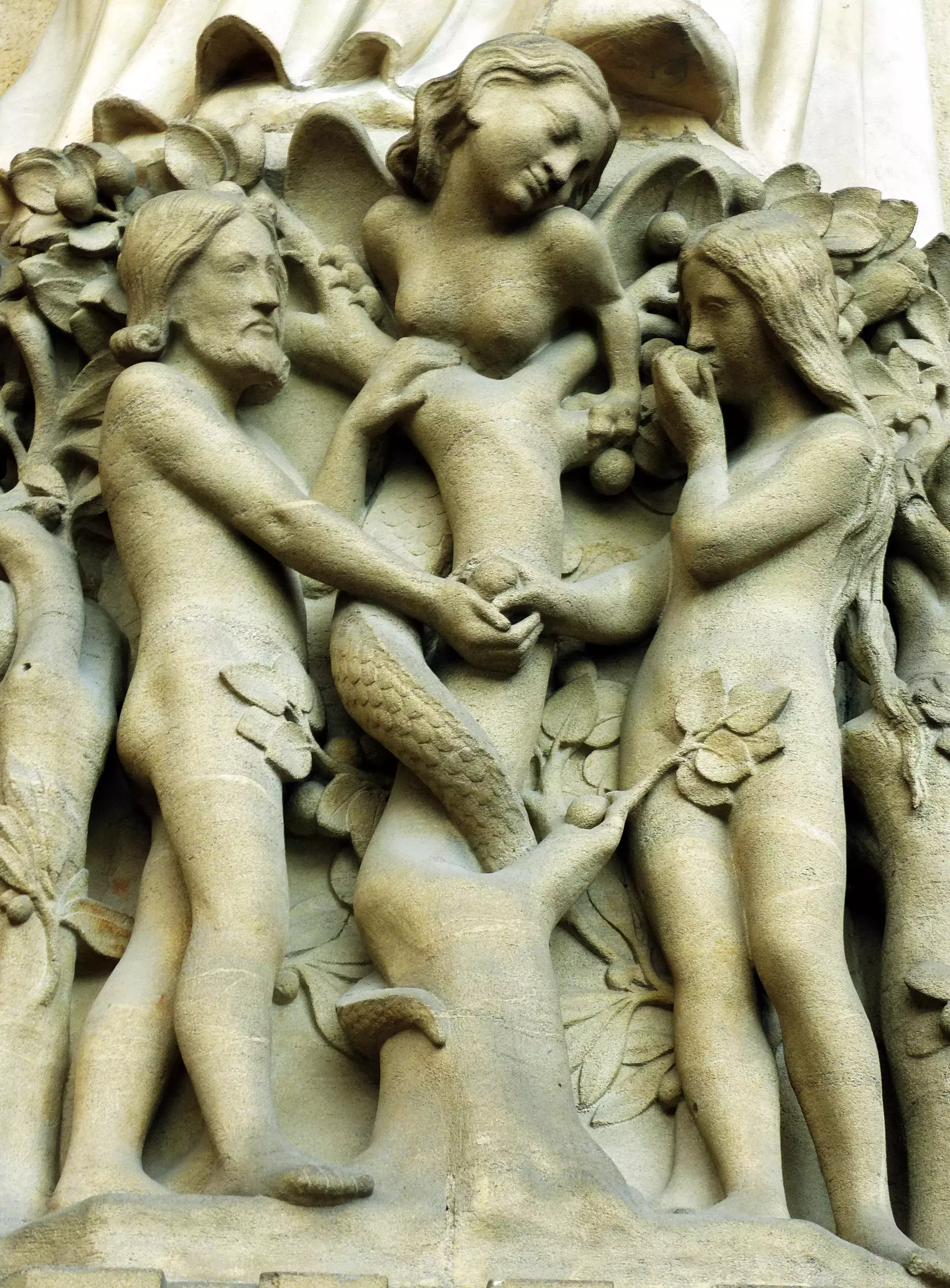
Notre-Dame de Paris cathedral. Details of the portal of the Virgin: Lilith, Adam and Eve. This building is indexed in the base Mérimée, a database of architectural heritage maintained by the French Ministry of Culture, under the reference PA00086250.
View of a detail of the Virgin's portal on the west facade of Notre-Dame de Paris cathedral.
Portal of the Last Judgement of the Cathedral of Notre-Dame of Paris, France.
North view, shot from the gallery, Notre-Dame Cathedral.
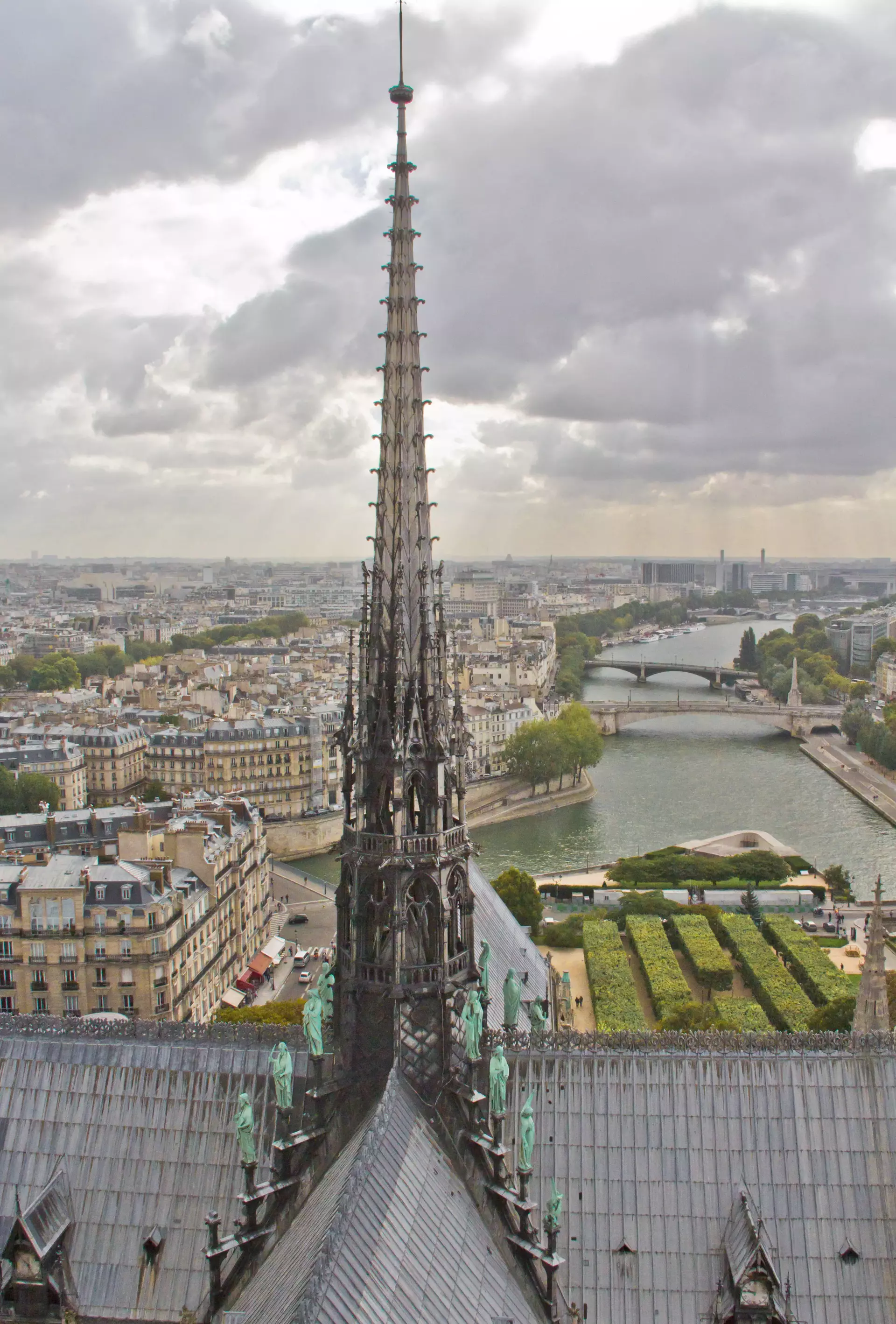
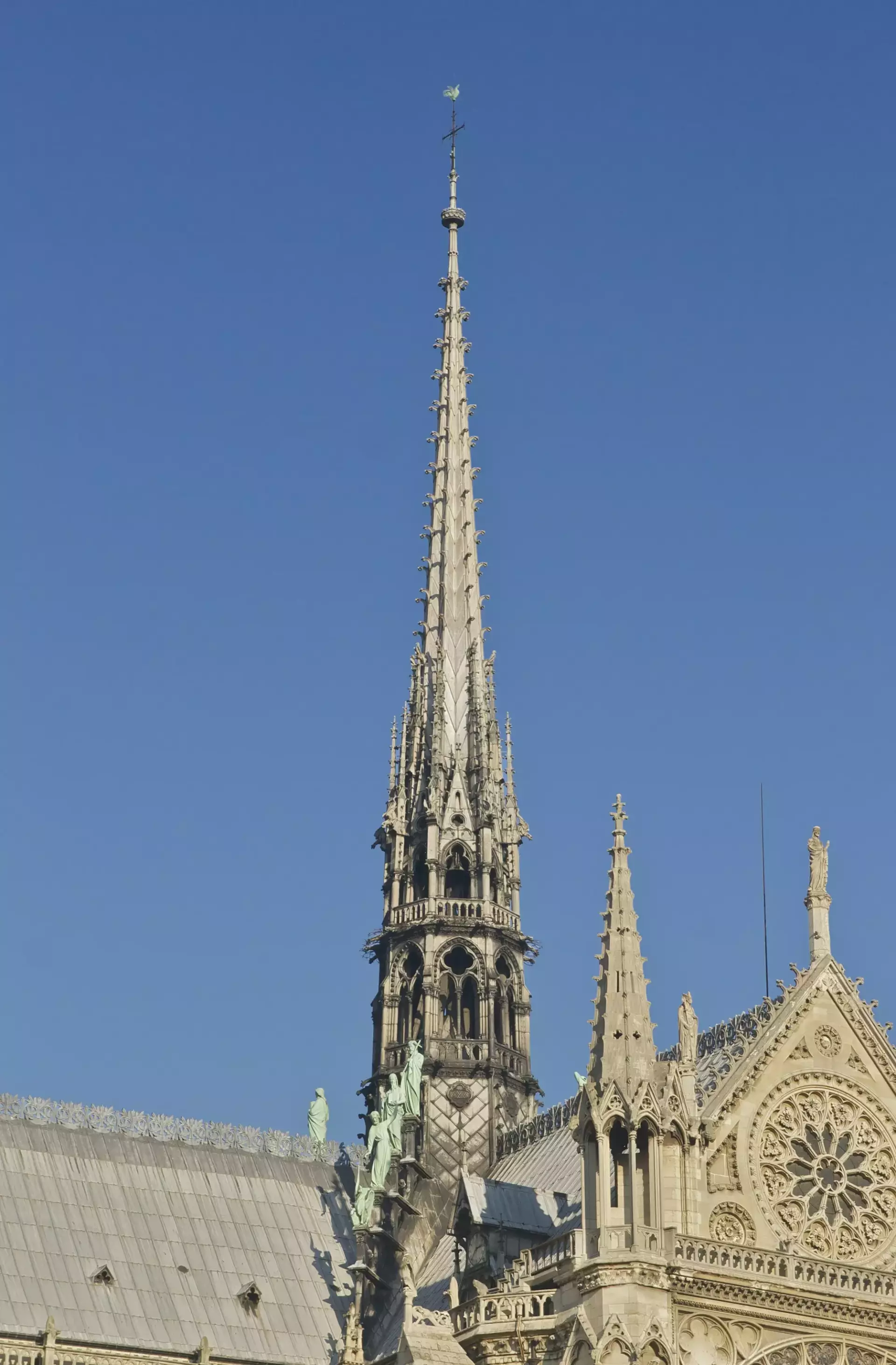
The spire of the Cathedral Notre-Dame de Paris is not medieval but a Gothic revival work by Viollet-le-Duc, made by Ateliers Monduit during the 19th century in oak covered with lead, weighing 750 tons. Since 1935, the rooster at the top contains a relic of the Holy Cross, a relic of Saint Denis, and one of Saint Genevieve, the patrons of the city of Paris.
Cathedral Notre Dame de Paris, West view, Paris, France
Cathedral of Notre-Dame de Paris (detail of the south facade and the return of the south transept facade with its clock) - Paris IV
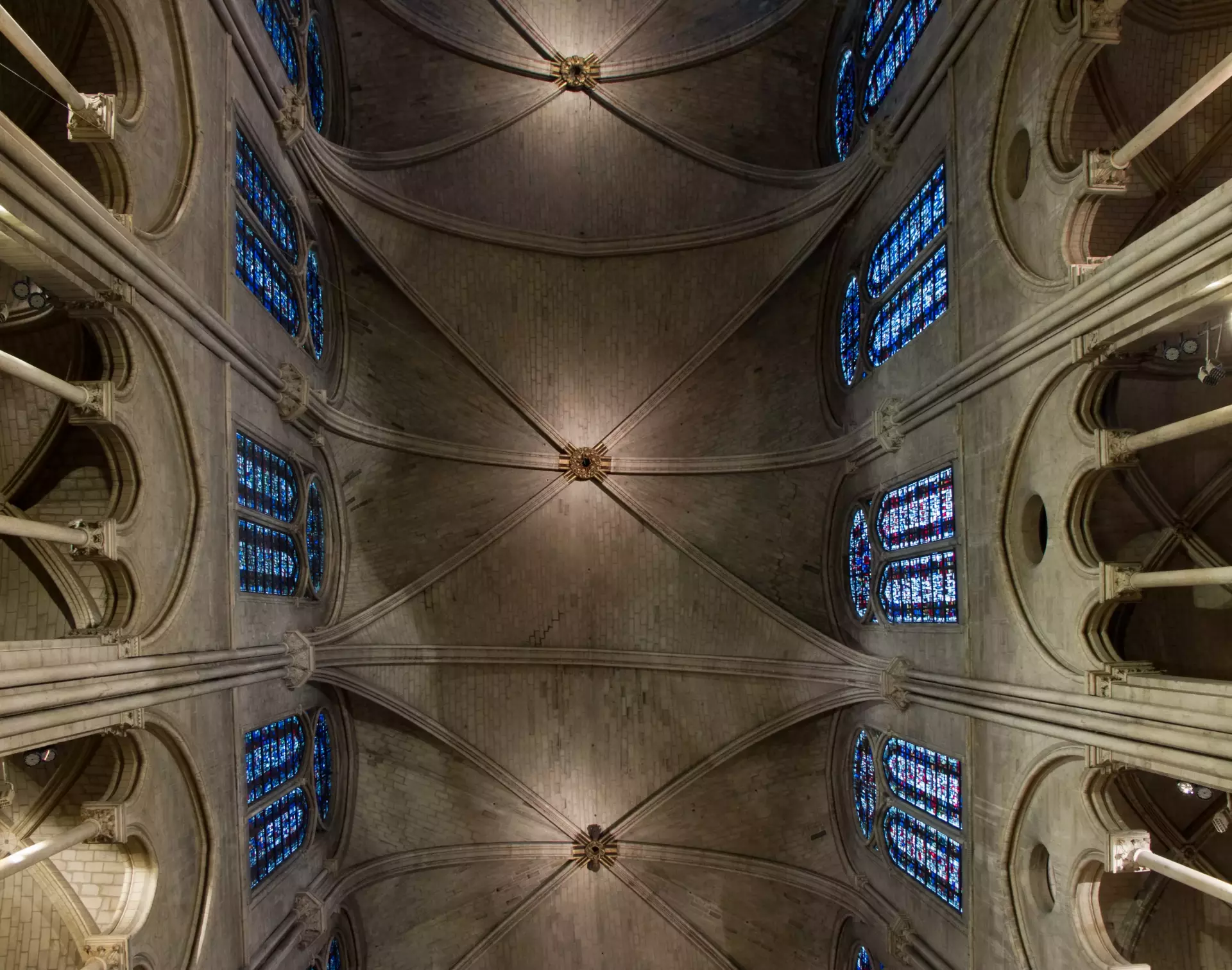
Gothic rib vault in the cathedral of Notre-Dame de Paris, France.

Notre-Dame de Paris

Paris, France

Notre-Dame de Paris stands as a remarkable example of early Gothic architecture. Its original design dates back to the 12th century, yet construction was not fully completed until the 14th century. Over the centuries, the cathedral has witnessed many changes, providing an impressive record of the evolving Gothic style. One distinct feature is the west, or main, portal, which is noted for its unusual rigidity compared to the more fluid lines found elsewhere in Gothic design.

A Story of Ruin and Renewal

In April 2019, a major fire caused severe damage to Notre-Dame. Flames swept through the historic structure, destroying the wooden roof and leading to the collapse of the spire. The event left many parts of the cathedral in ruins and shocked people around the world.

Restoration efforts began soon after the fire. Expert craftsmen and workers spent years repairing the damage, preserving every detail possible. After extensive renovation, Notre-Dame de Paris welcomed visitors once again when it reopened in December 2024.

Source - https://en.wikipedia.org/wiki/Notre-Dame_de_Paris

Developed by Reflex.com.ua
Contacts
  • info@reflex.com.ua
Social media