

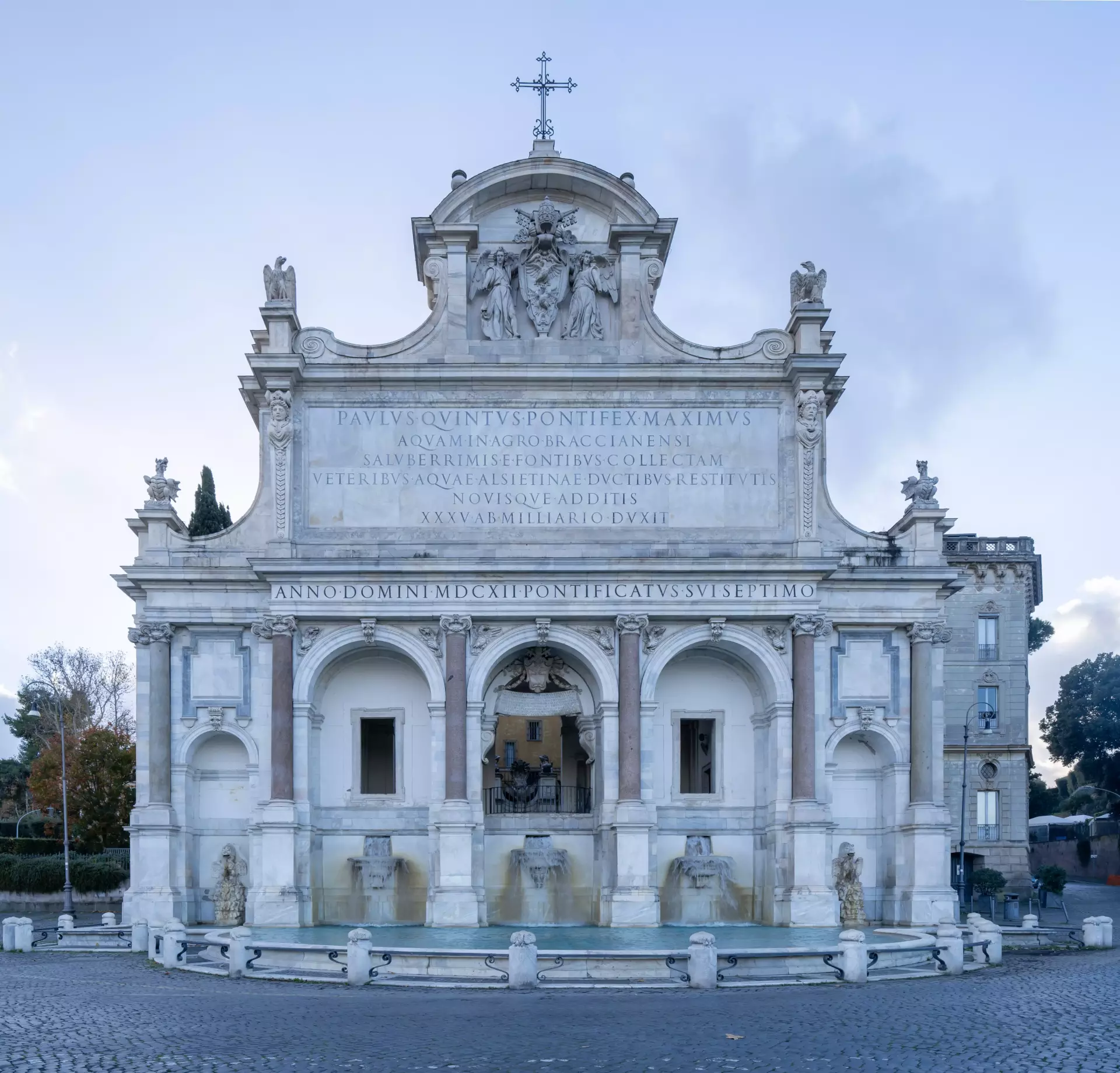


Fontana dell'Acqua Paola
The Fontana dell'Acqua Paola stands as a grand example of early 17th-century Baroque architecture. Its impressive size and detailed design make it a significant landmark from the period when monumental fountains became popular in Rome.
The Legacy of Water in Roman Times
Long before the fountain was built, water shaped life in this area of Rome. In ancient times, the neighborhood was known for its water mills, where grain was processed using the power of flowing water. This tradition highlighted the essential role that water played in daily Roman life and local industry.
Aqueduct Revival and Baroque Grandeur
The construction of the Fontana dell'Acqua Paola celebrated the reopening of an old Roman aqueduct. By restoring this ancient waterway, fresh water once again flowed into the city, marking a new era and providing Romans with a source of clean water. The fountain became a symbol of renewal and the enduring importance of water to the city’s development.
Source - https://en.wikipedia.org/wiki/Fontana_dell%27Acqua_Paola