

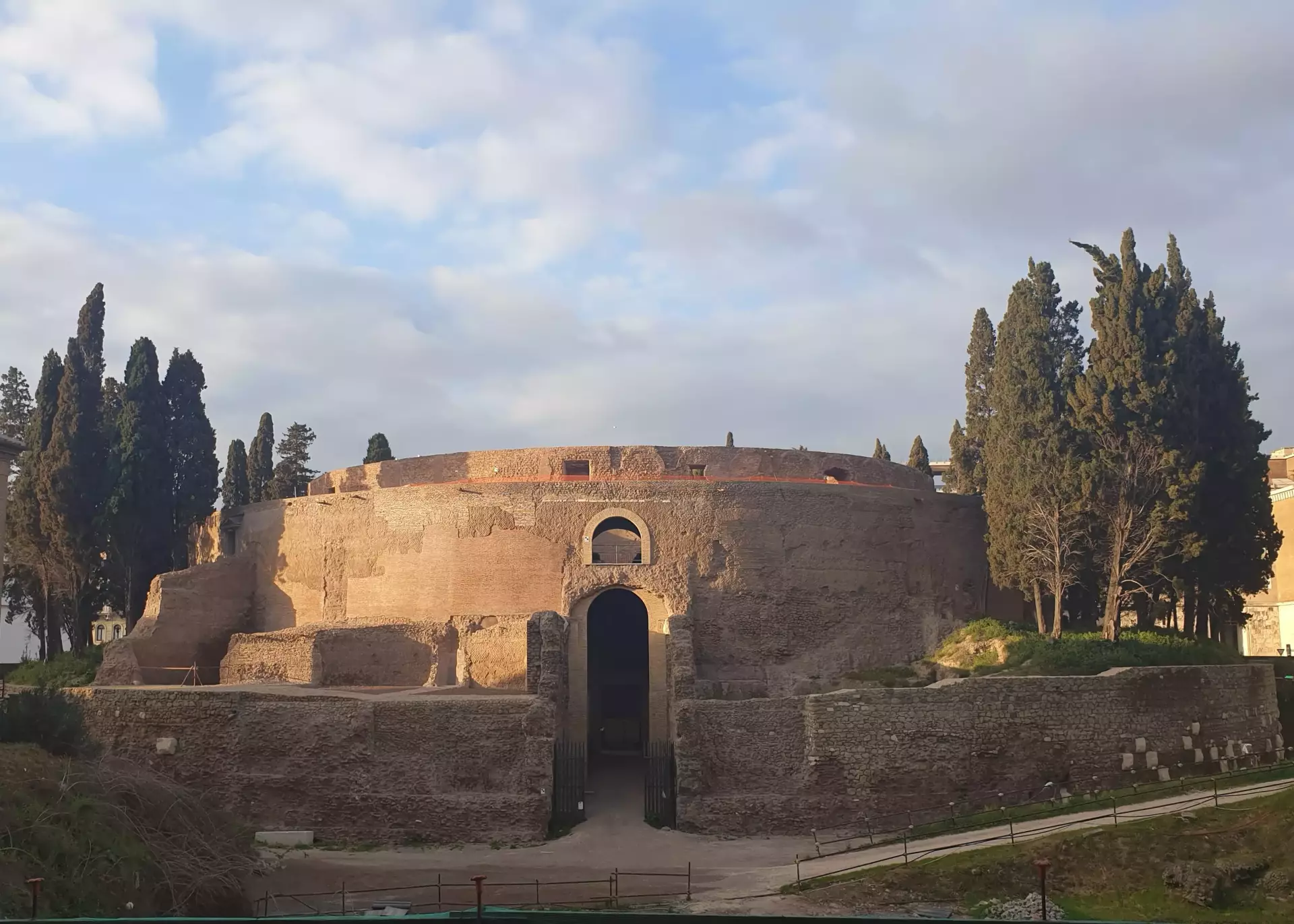


Mausoleum of Augustus
The Mausoleum of Augustus stands as a monumental testament to Rome’s imperial past. Constructed in 28 BC by Emperor Augustus, this impressive tomb was designed in the shape of a massive stone ring, covered with an earth mound. The structure’s circumference measures 87 meters, formed by a thick brick wall that once supported a lush mound draped with cypress trees. High above, a bronze statue of Augustus crowned the summit, bringing the total height of the mausoleum to an impressive 44 meters.
The Approach to the Mausoleum
Visitors in ancient times would have approached the tomb along an alley flanked by two towering Egyptian obelisks. These striking landmarks guided people toward the grand entrance, setting a majestic tone for all who arrived. Beside the doorway, bronze plates inscribed the "Res gestae"—a list of the emperor’s significant achievements, offering a reminder of Augustus’s enduring legacy.
Resting Place of the Imperial Family
Inside the mausoleum, the ashes of Augustus found their final resting place alongside those of his family members and close companions. Urns containing the remains of Marcellus, Octavia, Agrippa, Drusus, and other prominent figures from the Julian Claudian dynasty were honored within, making the tomb an important site of Roman reverence and memory.
The Mausoleum Through the Centuries
Over the centuries, the mausoleum took on new roles. In the Middle Ages, it was transformed into a fortress by the powerful Colonna family. This period of the structure’s history ended in 1241 when Pope Gregory IX ordered its destruction. Later, the monument became the site for another important event: the body of Cola di Rienzo, a popular leader from the mid-14th century, was burned here following his death.
Today’s Mausoleum
Today, the Mausoleum of Augustus is not open to the public and is surrounded by fencing. While visitors can view it from the outside, the tomb itself remains inaccessible, preserving its mysteries behind locked gates and ancient brickwork.
Source - https://en.wikipedia.org/wiki/Mausoleum_of_Augustus