

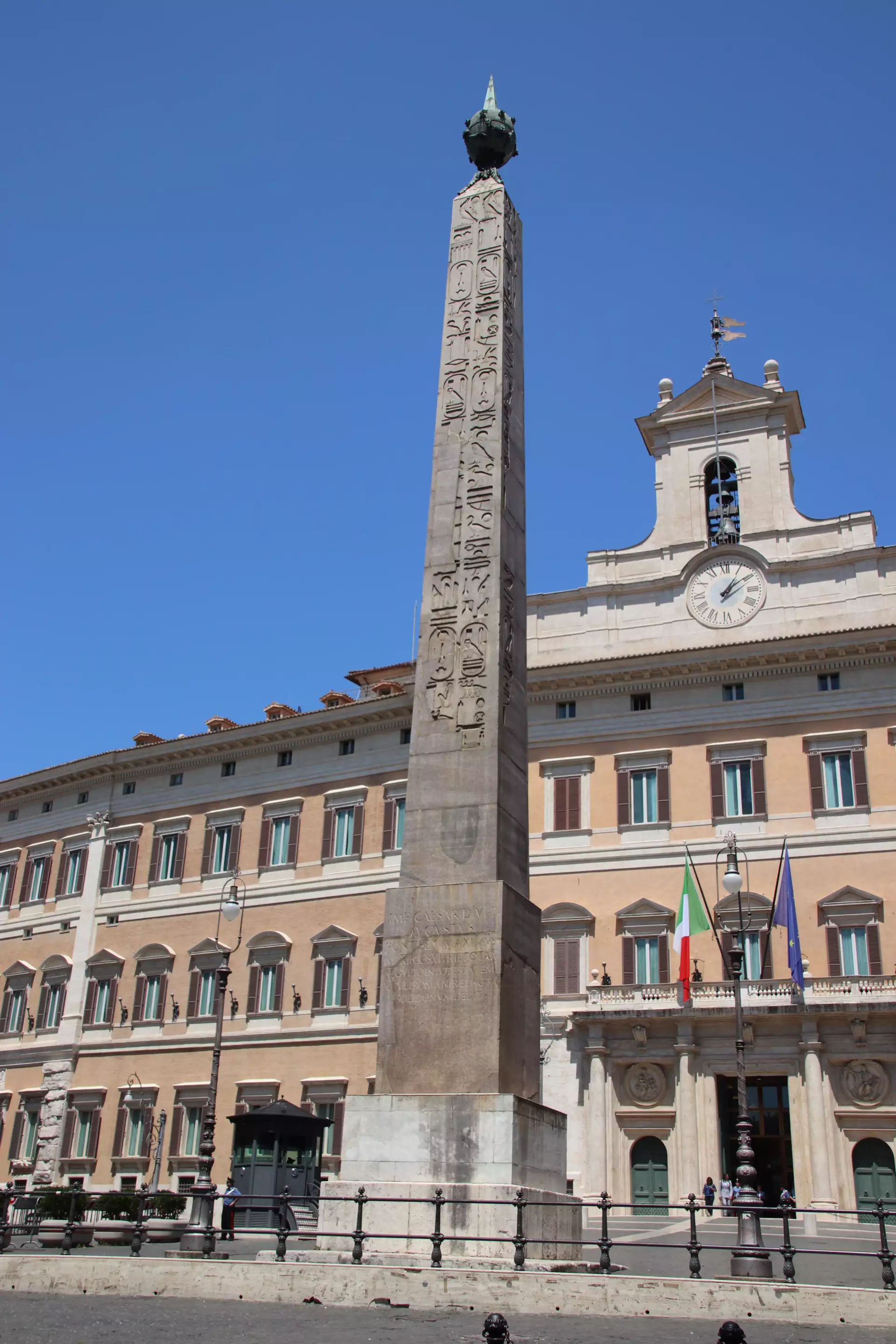


Obelisk of Montecitorio
The Obelisk of Montecitorio is an impressive monument with a fascinating story. Originally carved in ancient Egypt, this obelisk was brought to Rome in the year 10 BC, during the rule of the Roman Emperor Augustus. It stands as a striking link between two great civilizations, showcasing the Roman love for Egyptian art and culture.
Egyptian Origins and Roman Arrival
The obelisk was first created in Heliopolis, a major city in ancient Egypt known for its grand temples and monuments. Made of red granite, it was decorated with hieroglyphics that honor Pharaoh Psamtik II. In 10 BC, Augustus decided to transport the obelisk to Rome as a symbol of Rome’s power and their admiration for Egypt.
Purpose and Placement in Ancient Rome
Once in Rome, the obelisk was placed in the Campus Martius, a large public area used for assemblies and celebrations. It served as the gnomon, or shadow-casting pointer, of a giant sundial called the Solarium Augusti. The movement of the shadow across the markings on the pavement allowed the Romans to tell time and mark important dates.
A Monument Through the Ages
Over the centuries, the obelisk suffered damage and was eventually buried by floods and shifting ground. It was rediscovered and restored in the 18th century and now stands in Piazza Montecitorio, in front of the Italian parliament building. Today, the Obelisk of Montecitorio remains a testament to the enduring connections between ancient Egypt and Rome.
Source - https://en.wikipedia.org/wiki/Obelisk_of_Montecitorio