

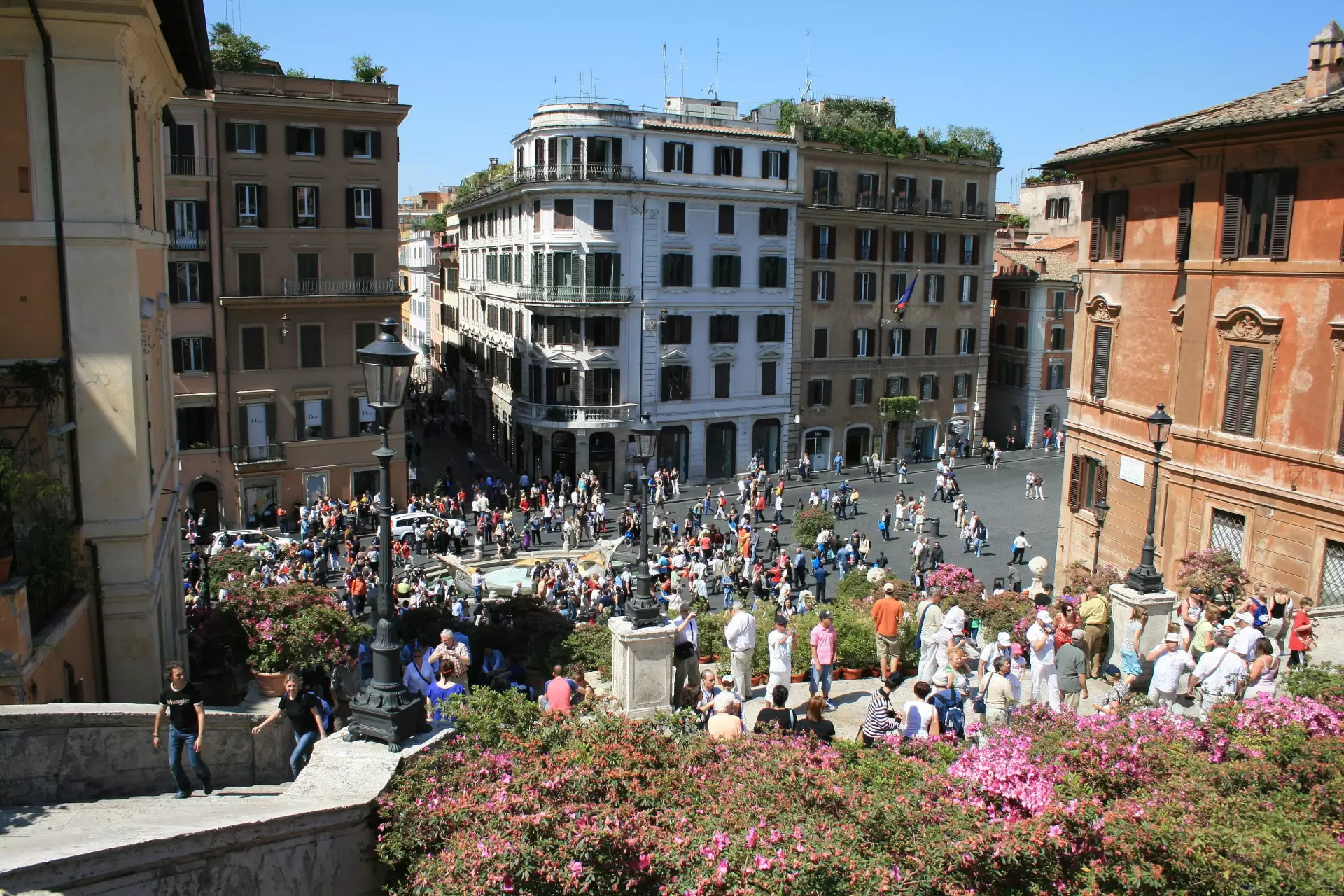


Piazza di Spagna
Piazza di Spagna, also known as Spanish Square, stands out as one of Rome’s most recognizable public spaces. For centuries, it served as a popular meeting point for travelers from all over the world. Its historic importance began in the 17th century, when the Spanish Ambassador to the Holy See made his residence here. At that time, the area around the ambassador’s home was considered Spanish territory. Foreigners needed official permission to stay; otherwise, they risked being forced into service in the Spanish army.
The Landmark Fountain and its Story
In the center of the square sits the Fontana della Barcaccia, or Old Boat Fountain. Created between 1627 and 1629 by Pietro Bernini and his son, Gian Lorenzo Bernini, the fountain is a tribute to Rome’s history with the Tiber River. Long before flood barriers protected the city, the Tiber often overflowed, and on one occasion, a boat landed in the square after the floodwaters receded. This event is depicted in the fountain’s unusual shape. Its decorations reflect the coat of arms of Pope Urban VIII Barberini, who ordered its construction during his papacy.
Modern Additions and Religious Traditions
The square also holds Italy’s first McDonald’s, which opened in 1986. This modern addition stands out among the centuries-old buildings that surround it.
Another notable feature in the piazza is the column dedicated to the Immaculate Conception, erected in 1856. The tall monument is topped with a statue of the Virgin Mary. At its base stand statues of four biblical figures: Moses, David, Isaiah, and Ezekiel. Every year on December 8th, the Pope visits Piazza di Spagna to honor the feast of the Immaculate Conception, continuing a long tradition that brings locals and visitors together.
Source - https://en.wikipedia.org/wiki/Piazza_di_Spagna